
Mickey Mouse, one of the most beloved Disney cartoon characters in the history of the world, is entering the public domain. But what does that mean? Will other companies start making Mickey Mouse movies? Horror films starring Mickey Mouse from clever opportunists? Merchandise featuring Mickey doing things you would never expect him to be doing?… Possibly… read on…
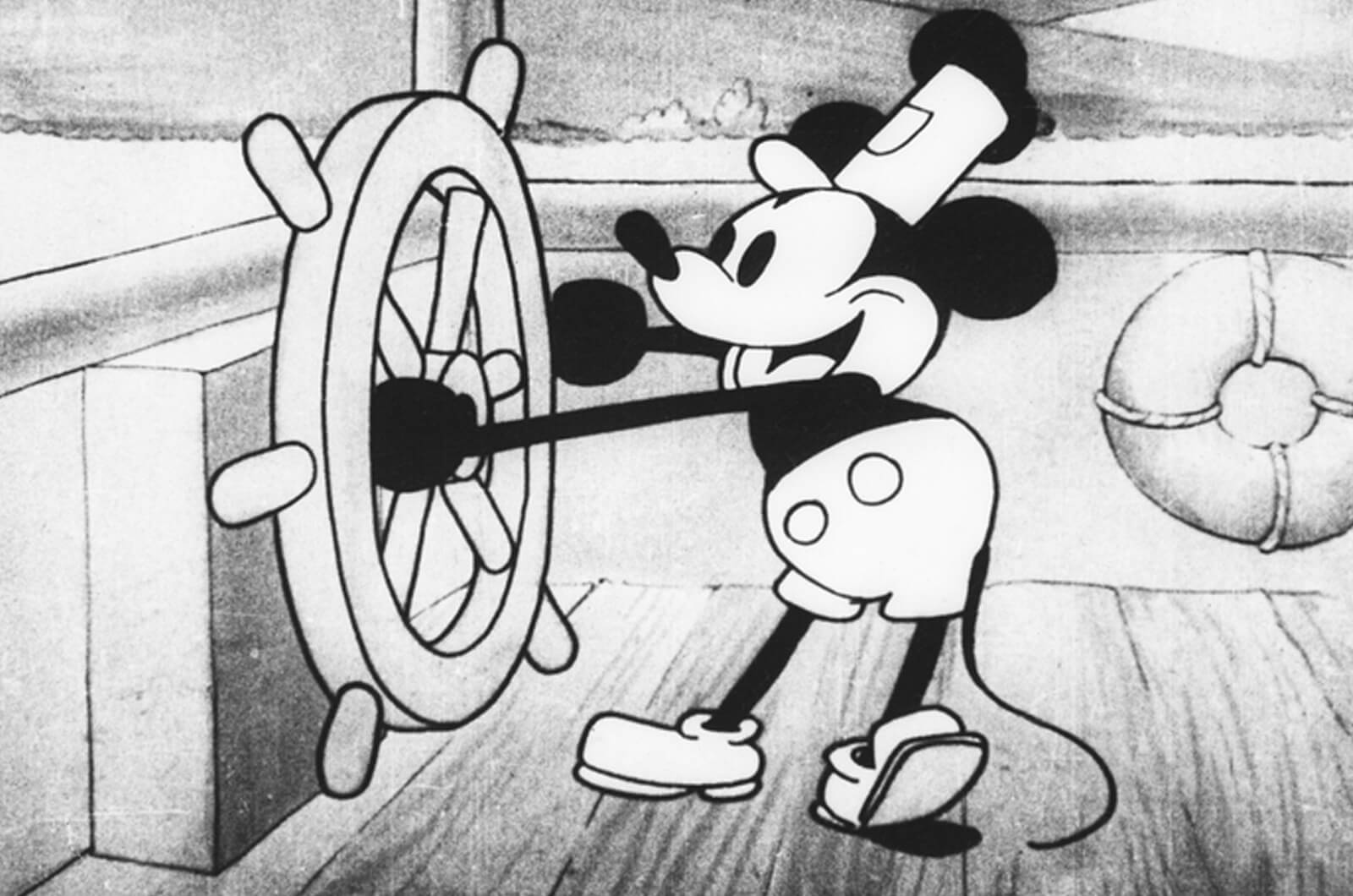
The 1928 animated short “Steamboat Willie” will join the list of characters, films, and books that will become public domain on January 1, 2024. This effectively brings the 1928 iterations of Mickey and Minnie Mouse available for public use, marking the end of Disney’s exclusive copyright over the characters’ earliest versions.

Directed by Walt Disney and Ub Iwerks, “Steamboat Willie” was the first animated short to feature synchronized sound with visuals. The groundbreaking film depicts Mickey with a mischievous personality, a stark contrast to the more lovable character he has evolved into in modern-day animated projects.
While it was the third cartoon featuring Mickey and Minnie to be produced, it was the first short to be theatrically released. “The Gallopin’ Gaucho” and “Plane Crazy,” both released in 1929, remain under copyright until 2025.
In 2024, some of the notable works that will join Mickey Mouse include Charlie Chaplin’s “The Circus, In Old Arizona,” “Noah’s Ark,” “Lights of New York,” and Harold Lloyd’s final silent feature “Speedy.”
What Does Public Domain Mean?
The term “public domain” refers to creative materials not protected by intellectual property laws like copyright, trademark, or patent laws. All creative works without exclusive rights fall into the public domain and “can expire, be forfeited, expressly waived, or prove inapplicable.” The public, rather than an individual author or artist, owns these works. In the case of “Steamboat Willie,” the copyright expires but the trademark does not (I’ll explain that further below).
In the public domain, people can freely use, share, and build upon works without permission or facing legal restrictions. These works are part of the collective cultural heritage and do not have individual or entity ownership.
However, the application of trademark law hinges on preventing consumer confusion, rather than impeding creativity. Confusing? Yes, but let’s take a closer look…

Copyrights And Trademarks: What Are They And What’s The Difference?
Copyrights and trademarks play distinct roles: copyrights protect creative works to foster cultural production and distribution, while trademarks prevent consumer confusion by identifying product sources.
The US Constitution mandates limited durations for copyrights to ensure public access. Trademarks, however, endure as long as they are “used in commerce.” Although trademarks can outlast copyrights, their scope is more restricted.

In cases of overlap between copyrights and trademarks, much like the case of Mickey Mouse, both protections can kick in at the same time. However, once copyrights run out while trademarks continue, the Supreme Court has emphasized that trademarks cannot undermine the public’s right to use expired copyrights.
The court emphasized that using trademark law to circumvent copyright law, especially when a work enters the public domain, is not appropriate. As the copyright for “Steamboat Willie” approaches expiration, Disney continues to retain trademark rights for a range of Mickey-related products and merchandise, including clothing, backpacks, watches, toys, lunch boxes, hats, and water bottles.
For example, Disney just produced a line of products featuring Steamboat Willie earlier this year:
NEW Disney100 Decades 20s Merchandise Collection with Steamboat Willie
So, just what might happen with early Mickey? For that, we can look to a certain silly old bear…
Winnie The Pooh, A Blustery Horror Film, And Tigger Too
In 2022, Winnie the Pooh, Piglet, Kanga, Roo, Owl, Eeyore, and Christopher Robin entered the public domain when the U.S. copyright on A.A. Milne’s 1926 book, “Winnie-the-Pooh,” with illustrations by E.H. Shepard, expired after 95 years of protection. On New Year’s Day 2024, they will be joined by their old friend Tigger, who was introduced in “The House at Pooh Corner” by A. A. Milne.

Disney acquired the rights to the original Winnie the Pooh in 1961 and then created a newer version for film, which featured the lovable bear in his iconic red shirt. The Disney versions of “Winnie the Pooh” remain protected, and some elements are off-limits. While a bouncing tiger named Tigger based on the original line drawings of the book might appear in upcoming non-Disney projects, the updated Disney version of the characters may not.
In the age of digital distribution and social media, some wonder how creatives will reinterpret iconic characters. Recent examples, like “The Great Gatsby Undead” and “Winnie-the-Pooh: Blood and Honey,” tested the waters of artistic expression.
Disney Will Continue To Fight For Its Mouse
For intrepid content creators who want to reimagine the 1928 Mickey and Minnie, it may prove to be tricky. If new iterations or the use of Mickey as a mascot by another organization creates consumer confusion, Disney has made it clear that it will remain vigilant. Disney said it “will work to safeguard against consumer confusion caused by unauthorized uses of Mickey and our other iconic characters.”
“Ever since Mickey Mouse’s first appearance in the 1928 short film Steamboat Willie, people have associated the character with Disney’s stories, experiences, and authentic products,” a Disney spokesperson said in a statement to The Associated Press. “That will not change when the copyright in the Steamboat Willie film expires.”
The spokesperson continued, “More modern versions of Mickey will remain unaffected by the expiration of the Steamboat Willie copyright, and Mickey will continue to play a leading role as a global ambassador for the Walt Disney Company in our storytelling, theme park attractions, and merchandise.”
Let’s Hear From You
While Copyright law can be complicated, we fully expect to see someone test the waters with Mickey’s entry into the public domain (Steamboat Willie version), much as was done with the Winnie the Pooh horror film. But Disney is a behemoth with deep pockets and a lot of lawyers. They will fight to protect Mickey’s honor, even if the law isn’t on their side. This will certainly be something to keep an eye on.
Mickey will soon be in good company, other iconic characters will join him over the next decade, many of them Disney’s. We’ll see Pluto enter the public domain in 2025, Donald Duck (2029), Superman (2033), characters from The Hobbit (2033), James Bond (2034), Batman (2034), and Captain Marvel (2034), among others.

Mickey entering the public domain is a very big deal. It’s not often that a character that is still highly in demand enters the public domain, much less one that is the mascot of one of the most powerful entertainment companies in the world. How do you expect to see others use Steamboat Willie and Minnie Mouse? How should Disney respond? Should they use the weight of their lawyers and deep pockets to exhaust the resources of those who would use Mickey without Disney’s consent? Or, should they follow the letter of the law and allow Mickey to slowly slip away from their grasp? The wheel of time marches on.