


To all who come to this Disney pin trading guide, welcome! Trading pins at the Disneyland Resort is a hobby beloved by many guests. And over the years, the selection of pin options has expanded to include more sizes and types of pins, more brands and franchises, and even third-party licensed contributors. In this guide, we’ll walk you through the varieties of pins available, the ins and outs of the trading experience at the Disneyland Resort, and even how to avoid fake pins. Let’s go!
Trading Pins – A Brief History

As the story in the pin world goes, former Disneyland and Walt Disney World President George Kalogridis was attending the Olympics when he noticed some people trading Olympic-themed pins. Reportedly, he thought this would be a great idea to adapt for the upcoming Millennium celebration in the Disney Parks, and a near-quarter-century-long collecting obsession was born …
Of course, pins had been sold as souvenirs at the Disney Parks & Resorts before the pin trading craze. Often, however, these were what are now considered “brooch-back” or “clasp-back” pins, rather than the single or double-post pins you may see filling the racks of stores at Disney Parks locations today. They were also generally epoxy-style lapel pins, with a smooth, clear coating over the top that would yellow over time, rather than the hard-enamel style typical to trading pins today.

Early on, a mix of hard-enamel and soft-enamel pins were made both by Disney and its licensees. However, hard-enamel – where a metal base is filled to the top with color between the metal lines – became dominant and is generally considered the standard for high-quality collectible Disney pins.
Recently, though, soft-enamel, where the color is not entirely filled to the top of the pins, creating an indented feel when you run your finger across them, has made a comeback for licensed pins.
The difference between Disney-created trading pins and licensed Disney pins by other companies has become a bit blurred in recent years as Disney Parks began selling pins from third parties, such as Loungefly or Figpin, mixed in with their own on the racks.
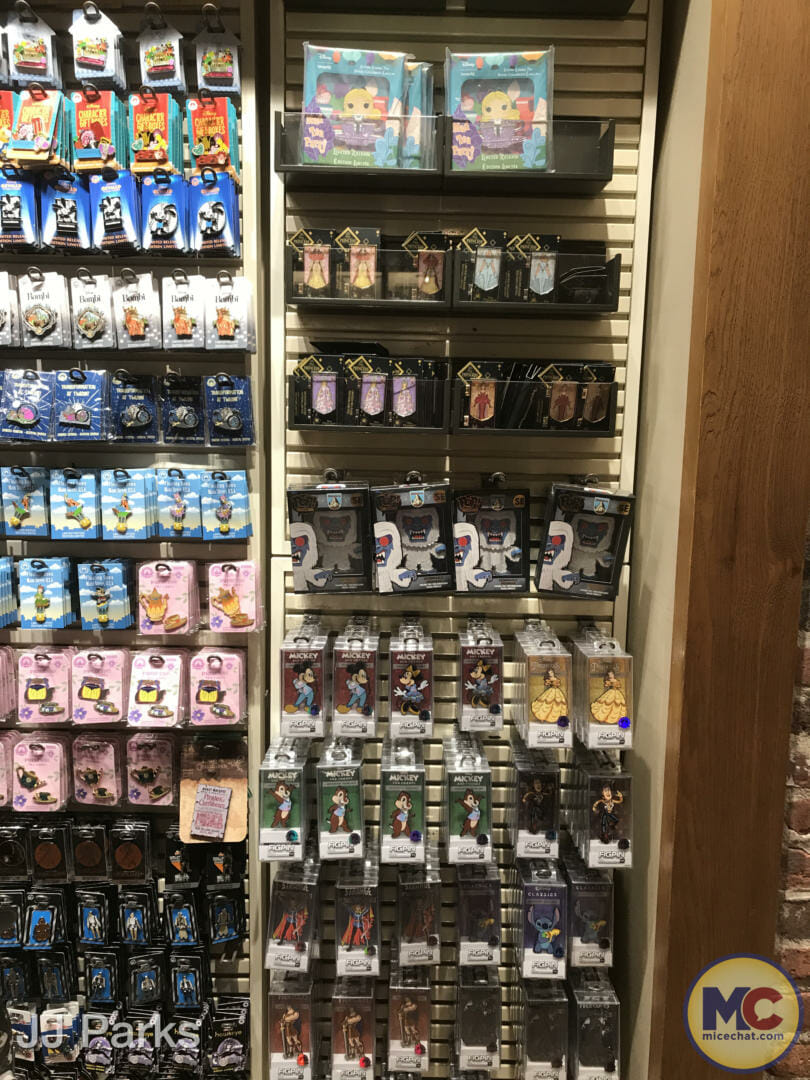
Whether these third-party pins are considered trading pins is something I’ll address a little bit later in the article.
Disney pins have always been a great inexpensive way to commemorate a visit to a Disney Park, though, as with everything else, their cost has risen over the years. However, there are multiple price points for pins, depending on what you are buying.
PINS FOR SALE IN THE PARKS
If you are just looking for a token of remembrance, pins are available for many characters, films, and attractions. There are also pins to commemorate each park and resort hotel, as well as holidays or special events.
The most plentiful kind of pin for sale are Open Edition (OE) pins, also sometimes referred to as “rack pins”.

These are pins of popular themes or characters that you may find sold in the parks year after year with no end date. Currently, open-edition pins generally cost $12 and up.
Also available with no limits on how long they may be for sale are starter sets, booster sets, and mystery packs.

Starter sets generally include a lanyard with four to six pins on it. The idea is that you can choose to keep some and trade some – or trade them all. But they provide a cheaper way to buy multiple pins than just individually. Such sets generally cost $30 and up.
Booster sets are usually groups of four to six pins on a backer card. These are often themed to characters, such as the Fab Five, or locations, such as Galaxy’s Edge.
Mystery packs are sold in sealed bags and often contain one, two, or five pins in a bag. At around $30 and up for the bags of five, these are very common sets to see people trying to complete and trade out their duplicates.

Another option is mystery boxes, which usually contain one or two pins – you don’t know which ones you’ll get until you open the box. A popular version of these is mystery puzzle boxes, where you buy a box and try to form an entire set one puzzle piece at a time. These can be themed to one film or a character grouping like villains. Sometimes these sets contain harder-to-find chaser pins, which are rarer than the regular pins in the set.

As noted, such pins are sold for as long as the company chooses to make them and may disappear over time and be brought back years later randomly.
Occasionally, you may also find Purchase With Purchase (PWP) pins available for sale where you can buy them for an additional small fee if you are buying other items.
Another category is Limited Release (LR) pins. These are a finite amount of pins, whose total edition size is unknown, that are intended to only be sold for a limited time. Examples would include pins celebrating a movie release or a holiday season. Limited Release pins are usually marked as such on their cards, boxes, or packs.

Probably the most desirable type of pins for collectors, however, are Limited Edition (LE) pins. These are made in smaller quantities that are marked on the pin (i.e., Limited Edition of 1000), and once they are sold out, they are gone forever! Collectors prize such pins due to their scarce availability, though, as with all collectibles, certain characters or themes are more popular than others.
These pins are often kept behind the counter or in glass cases in stores, and you may have to ask a Cast Member to get them for you for purchase. There is a limit of two Limited Edition pins of the same style per purchase.
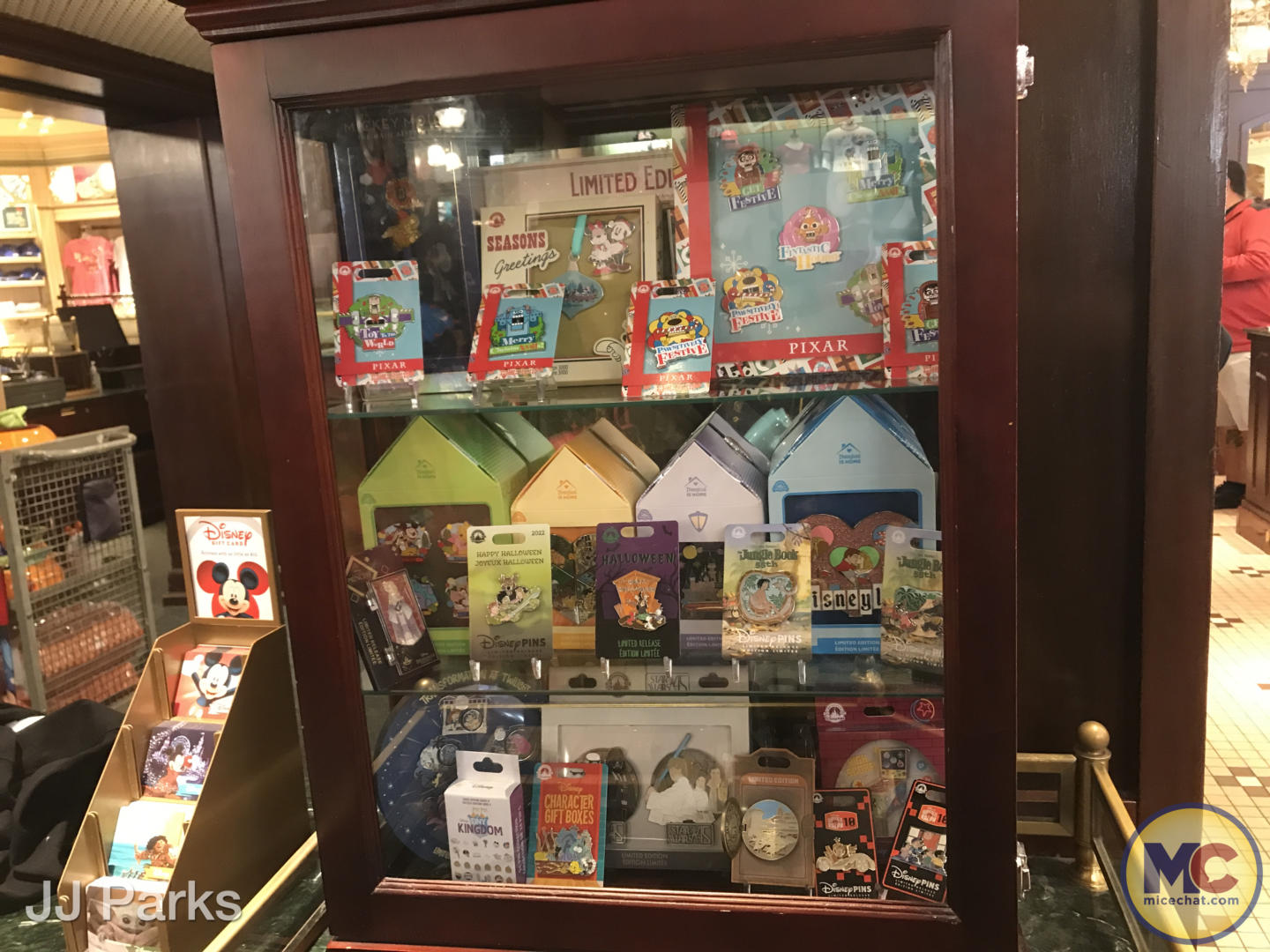
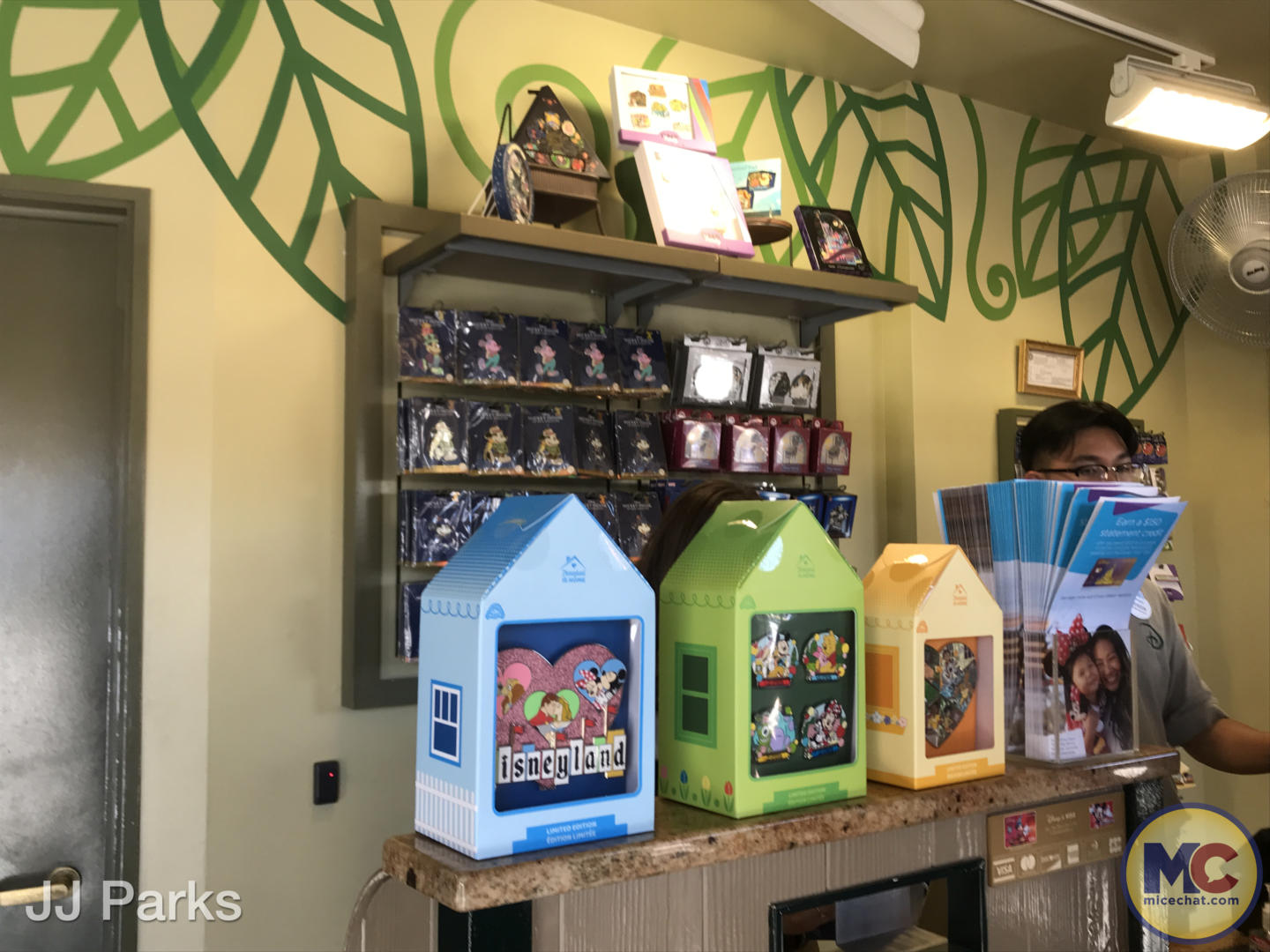
Limited edition pins may come in singles or sets, including boxed sets and jumbo (around three inches or so) or even “super-jumbo” size (four inches or larger). The latter is really meant more for home display than wearing around your neck on a lanyard, and price points can reach $100 or more.
And then, if you’re really willing to drop the big bucks, there are framed pin sets available for sale as well that may cost hundreds of dollars.
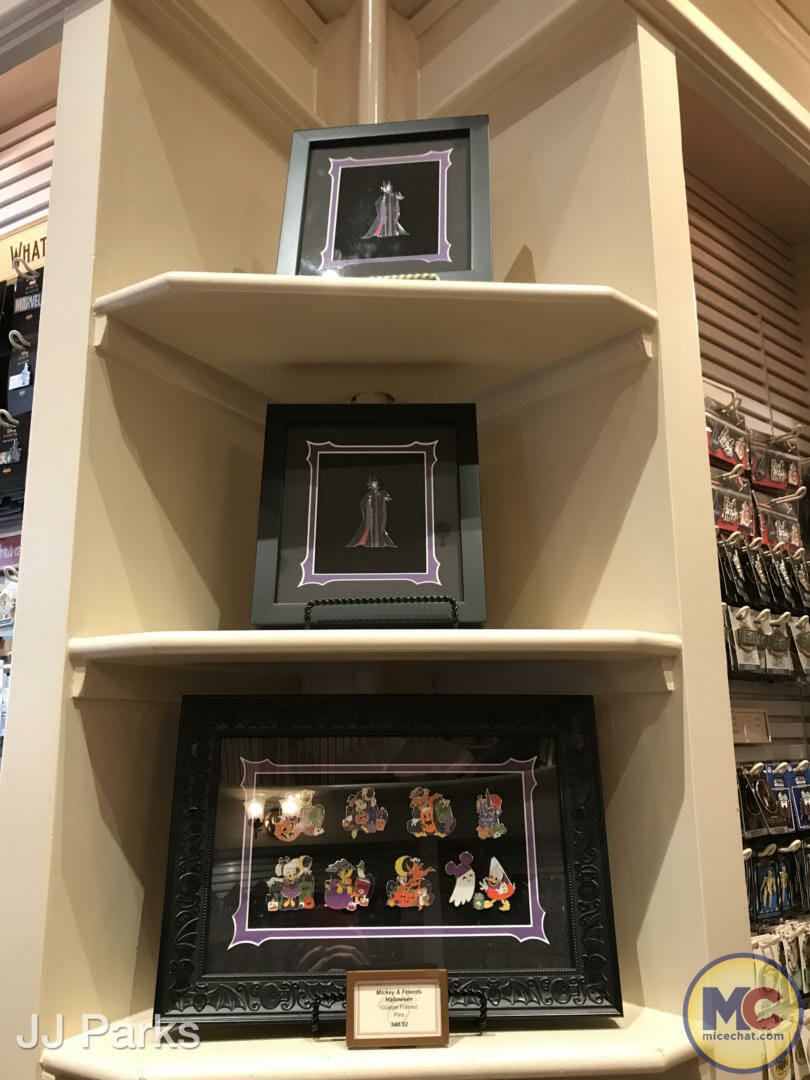
Please be aware that while some pins are unique to the framed sets, others may be less-rare pins that Disney has framed together that you could buy cheaper individually off the rack. They also frame common pins with some of their original character sketch artwork.
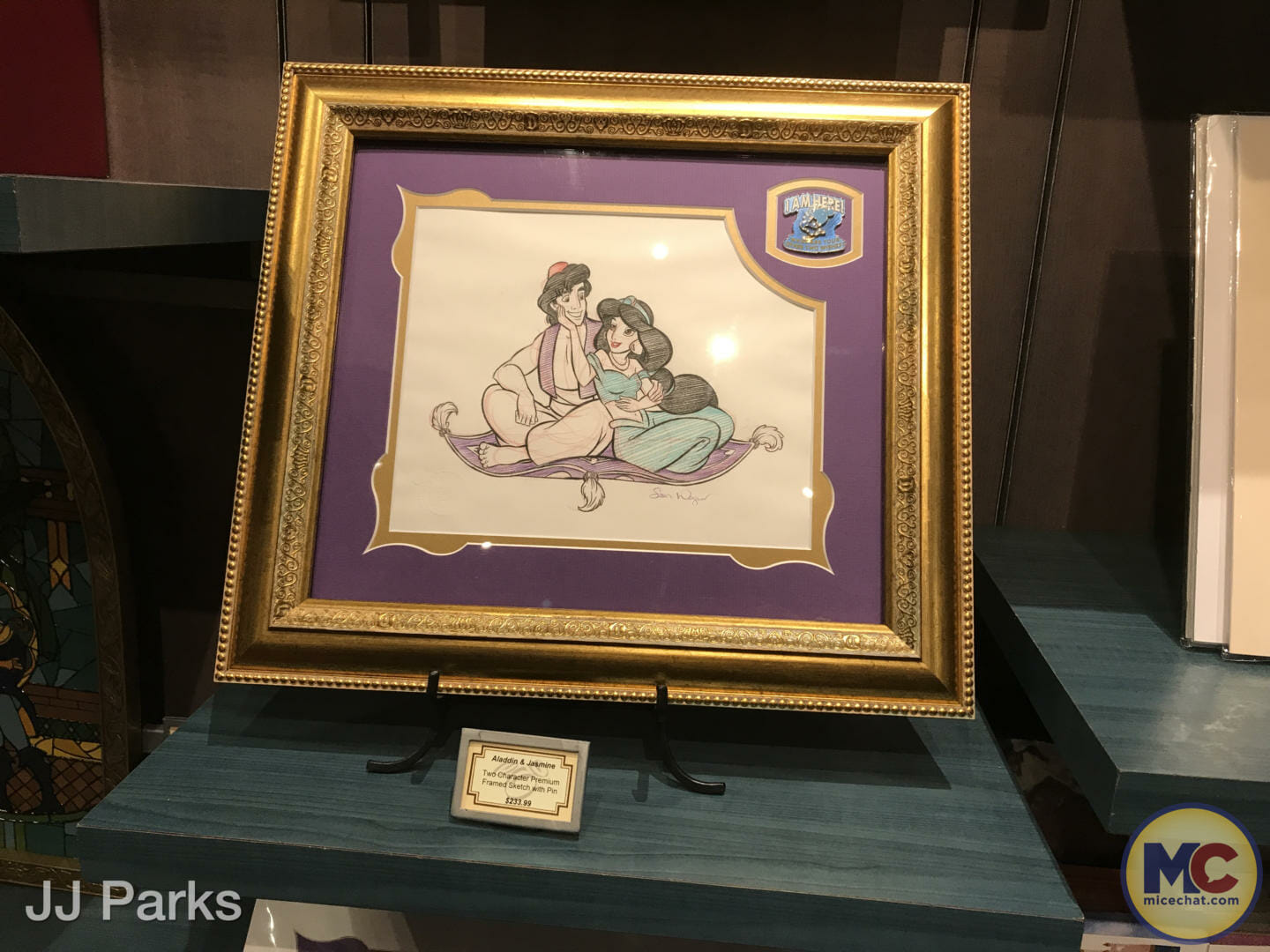
So, what may begin as a budget souvenir, if taken to the collector level, can become quite an expensive hobby! On the secondary market, rare pins can be resold for thousands of dollars. But the majority of pins released are really just worth their retail value.
HIDDEN MICKEYS
There is, however, one type of pin available in the parks that many people love to collect and trade, but it is not available for sale at all! These are the pins initially known as “Cast Lanyard Pins” and later as “Hidden Mickeys.” Most recently, the line was expanded to include Pixar, Marvel, and Star Wars pins and has been rebranded as “Hidden Disney.” But most people still call them “Hidden Mickeys.”
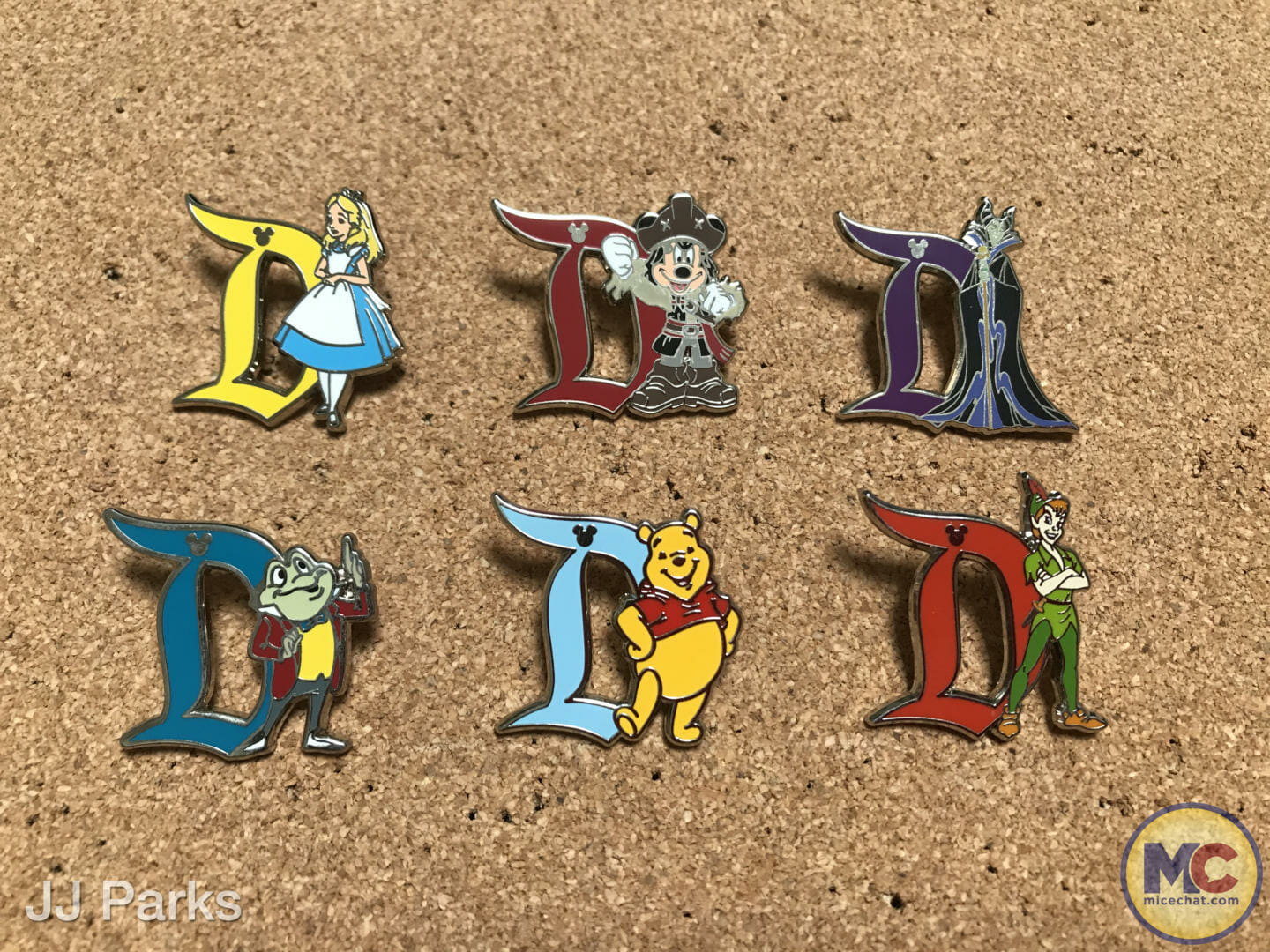
When they originally debuted, they had a small Mickey head located somewhere on the front of the pin, which gave them their name. The current ones, however, may have other icons more appropriate to the branding, such as a tiny Avengers “A” on the Marvel set.
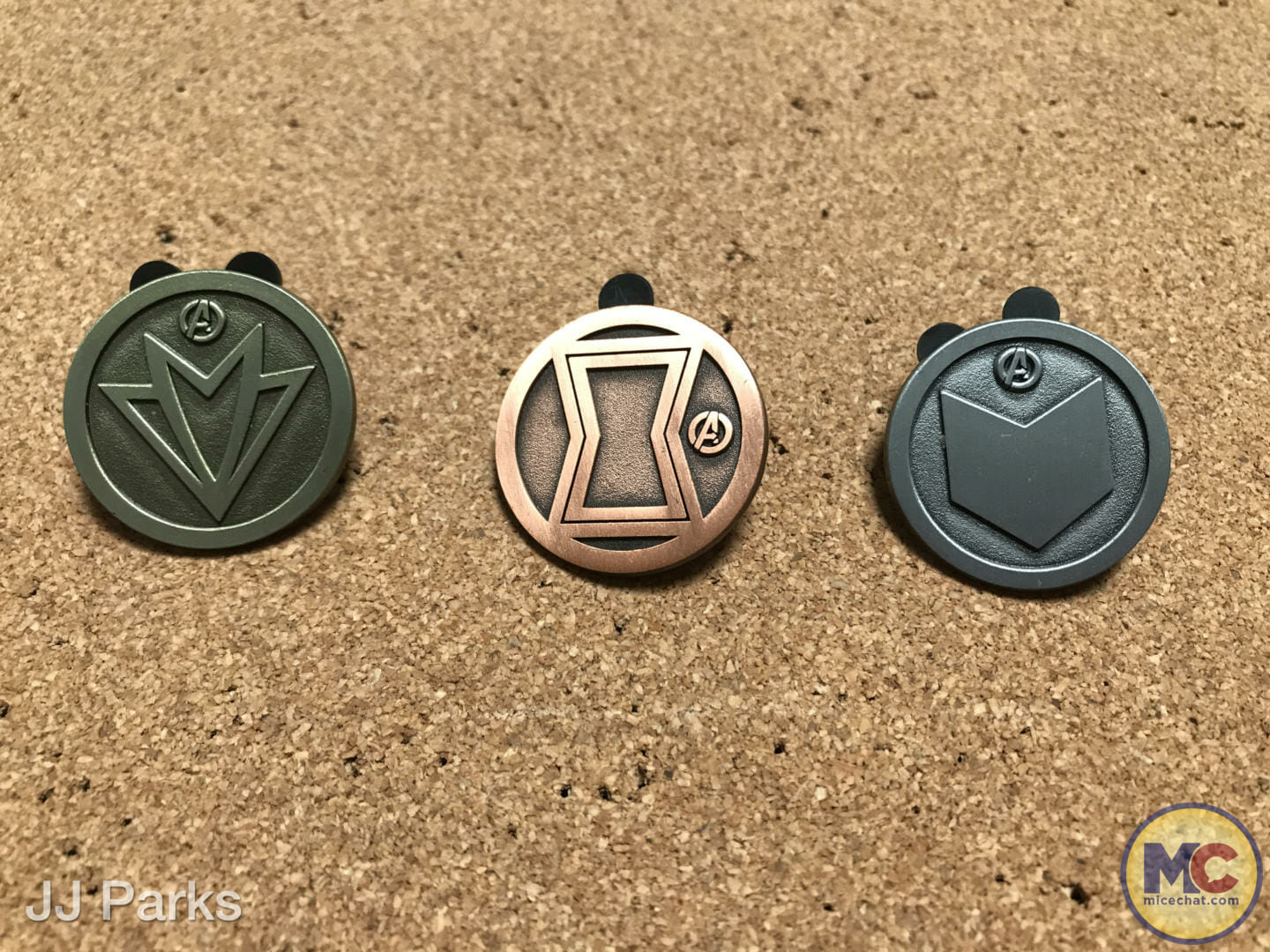
You can only get these pins by trading, as they are provided to Cast Members in limited numbers. They have been themed to anything from attractions to the alphabet to astrology!
Aside from their availability only in trade, people love hunting for Hidden Mickeys because they are released in sets, and it’s fun to run around attempting to complete your set. This task can be more challenging, though, as many sets include chaser pins that are released in even smaller numbers than the rest of the set! There’s a definite feeling of accomplishment when you complete it, however!
Disney has also, at times, sold “completer pins” for these sets in mystery packs at the stores. Completer pins would be an additional pin that matches a released Hidden Mickeys set available for trade.
For example, Disney released a set of five different colors of Mad Tea Party teacup pins – burgundy, orange, yellow, pink, and green. The chaser pin was an all-silver metal pin. And the completer pin, if you were lucky enough to receive one in a purchased mystery pack, was purple!

With Hidden Mickey pins, Disneyland and Walt Disney World have historically gotten some separate sets that are totally unique and distinct, some complementary sets that share a theme but different contents, and some shared sets where the same pins are available on both coasts.
PIN ACCESSORIES
Disney offers products that allow you to wear a handful of pins with easy access for trading and showing off your collection, such as variously themed lanyards.
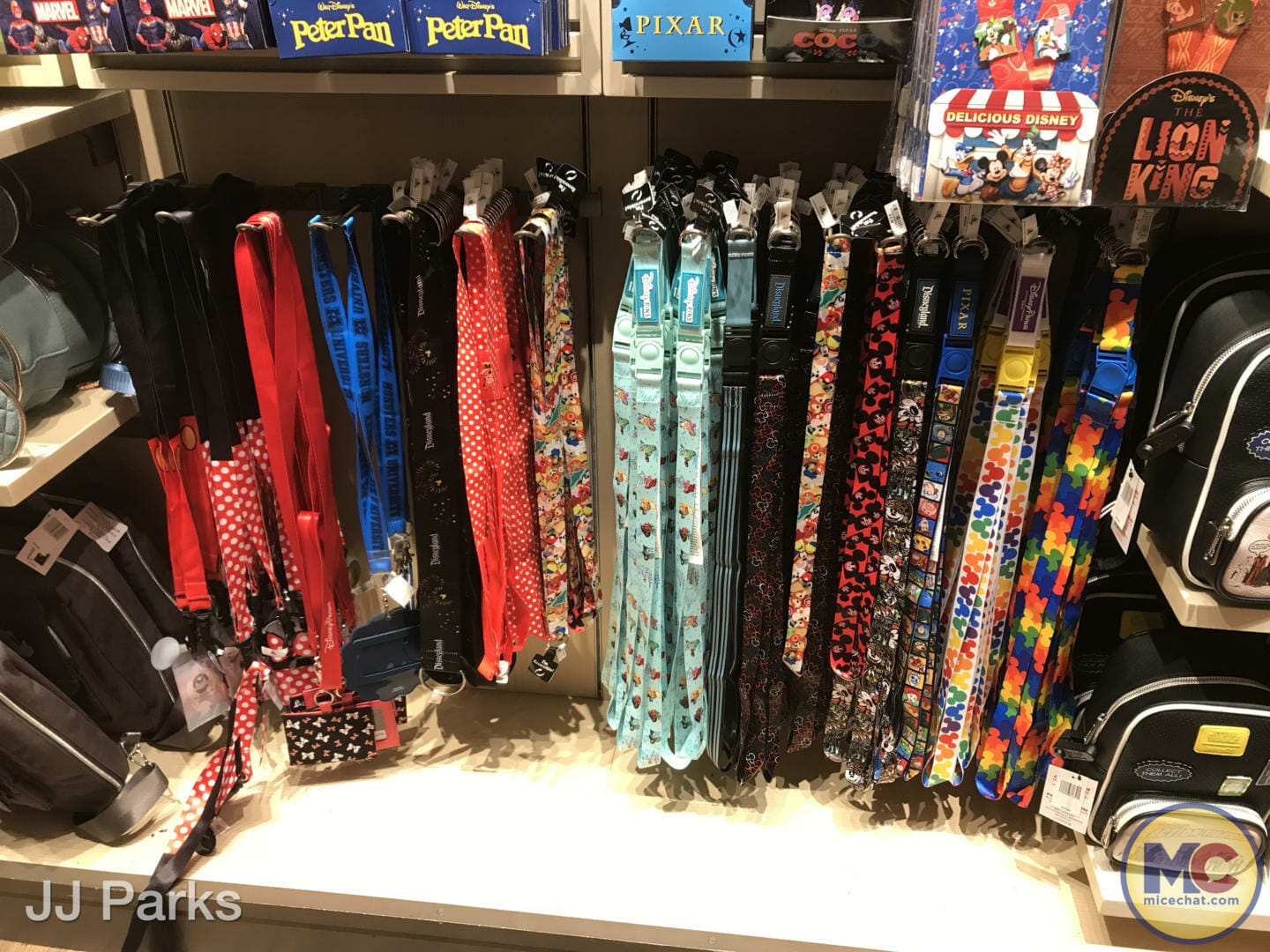
Lanyard medallions are also for sale that can add a little bling to the bottom of your lanyard.

But some of the most popular accessories are pin bags.
Seasoned pin collectors and traders with more than just a lanyard’s worth of pins frequently choose to display or trade their pins in bags. Over the years, Disney has sold many styles of these. Currently-available pin bags in the park include a mini backpack, a shoulder sling bag, and a Mickey-head-shaped denim bag.

But many people find used pin bags on eBay or from third-party sellers. Some of these are licensed by Disney, such as the “Ita” style bags found at stores like Hot Topic or Box Lunch. These are generally regular bags, purses, or backpacks with a clear plastic front that allows you to show off a few favorites without the risk of them falling off.
Others are not licensed by Disney at all, and quality may vary.
PIN STORE LOCATIONS
Disney pins (and Pixar and Marvel and Star Wars pins, too) are sold throughout the Disneyland Resort. You may find them at carts or stores inside the parks, in Downtown Disney, and even in the hotel boutiques.
While some places only offer a small selection or only carry pins themed to their specific land or attraction, certain stores are designated as central pin locations and generally have the largest amount for sale with the widest variety of themes and characters.
These locations include:
Disneyland Park
- 20th Century Music Company (Main Street, U.S.A.)
- Westward Ho (Frontierland)
- Tomorrowlanding (Tomorrowland)
Disney California Adventure
- Julius Katz & Sons (Buena Vista Street)
- Humphrey’s Service & Supplies (Grizzly Peak)
Downtown Disney
- World of Disney
- Disney’s Pin Traders
Pins and pin accessories may also be available on shopDisney.com
PIN TRADING IN THE PARKS
If you’re interested in pins as more than one-off souvenirs, however, and are considering diving into the world of pin trading, there are many opportunities to do so at the Disneyland Resort!
You may spot Cast Members wearing lanyards with pins around their necks or on hip packs hanging from their belts.
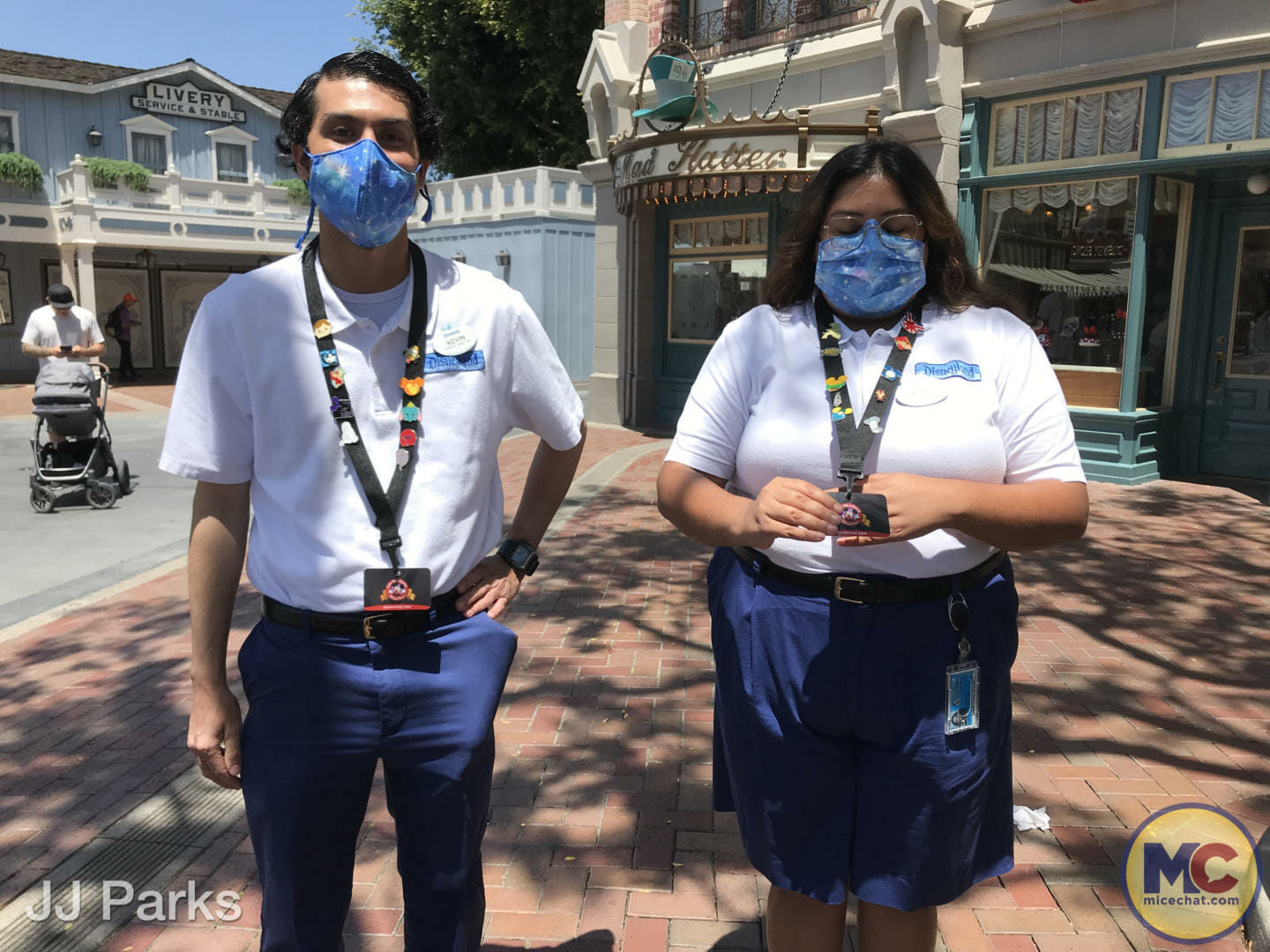
These are all available for trading with guests. They belong to the company, not the Cast Members themselves. However, if a Cast Member is wearing a pin on their shirt, that is likely their own and not for trade!
The two other ways to trade in the parks and resorts include pin boards – often, but not always, Mickey-head-shaped – where you can trade from the shown pins, or mystery boxes, where you can pick two drawer numbers and see what’s inside.

You may always decline to trade if what you see doesn’t interest you. There is never an obligation to trade with Cast Members – it’s all up to you!
These boards and boxes may be found at carts and stores or even randomly popped-up stands. If you don’t see one out, feel free to ask a Cast Member where the nearest pin board or box is for trade, and they can usually point you in the right direction!
The other option for in-park trading is to trade with other guests. This is where it can get a little tricky. Most guests walking around wearing lanyards are not looking to be stopped and asked if their pins are for trade, like the Cast Members’ pins.
Instead, dedicated pin traders tend to congregate in certain areas of the park with pin bags and boards of pins for trade. These spots have changed over the years but have included the picnic tables in Downtown Disney, tables in Paradise Garden at Disney California Adventure, and outside Little Green Men Store Command in Disneyland. Currently, however, the pin trading hotspot is right outside the Westward Ho pin store in Frontierland.
You may have noticed traders covering a few of the benches with their boards or bags of pins for trade. Note: these pins belong to the guests and not Disney, and they are not obligated to trade as Cast Members are.
Such guests may have pins ranging from common to exceedingly rare or valuable and are looking for the same in return for trading what they have. If you do not have something of equal value to what you would like to trade for, you may choose to go into the store and buy something to trade for what interests you.
As always, the phrase Caveat Emptor – or in this case, Trader Beware – still applies. If you are uncomfortable with a trade another guest has suggested, you can always say, “no thank you” or “let me think about it.”
My number one suggestion when pin trading is always to know the value of what you have and check the value of what you’re trading for. Most collectors and traders default to the current secondary market eBay value of sold items. However, I cannot emphasize this enough: know the values; do your homework. Because while the majority of pin traders are there to have fun trading and add to their own collections, it is your own responsibility to make a trade that is fair to you as well as to them. As someone who has been doing this for a while, I have made trades I later regretted, but most I’m quite happy with, so it evens out overall.
For parents who simply want their kids to enjoy the trading experience as a general activity while at the parks, I recommend sticking to trading with Cast Members who always have to say “yes” to a trade, rather than with other guests whose big, shiny, expensive pins may appeal but are simply not going to trade a $50 or $100 pin for a $5 one, no matter how adorable your little one’s smile is or how sweetly they ask. Although some regular traders may keep a “kids board” where the young ones can trade anything they want, just like with Cast Members, it’s best to check first rather than getting your or your little one’s heart broken when the other guest declines a trade offer.
Popular themes and characters for pin collecting and trading change over the years, so I always advise people to collect what they like rather than what they think may be valuable. However, if you are looking for pins that may trade better than others, princesses and villains never seem to go out of style!
PIN TRADING RULES & ETIQUETTE / DO’S AND DON’TS
There are certain rules to official pin trading that Disney has spelled out. Then there is basic etiquette in dealing with Cast Members, which also bears emphasizing.
Per Disney, a guest may trade up to two pins with a Cast Member (lanyard, board, or mystery box). The pins must be undamaged, authentic Disney pins, made of metal (not plastic, etc.), and have a Disney copyright on the back. You cannot trade a duplicate pin that a Cast Member already has on their lanyard or board.
Those are the minimum rules, however… there are other issues you may run into while trading.
It has never been an enforced rule that a pin must have a Disney pin trading logo on the back of it, nor Mickey heads inlaid on the back. Older pins may have neither. Same for promotional Disney pins. However, some Cast Members will not accept a pin unless it has the logo or Mickey heads on the backstamp. It’s not a rule, but some of them think it is. So it’s best to have more than one pin for trade if you spot something you like because some Cast Members can be sticklers about what they will or won’t accept. Others refuse pins with bent or wiggly posts. While it’s understandable that they wouldn’t want to accept a truly damaged pin, technically, the condition of the posts is a very grey area as some simply are wiggly or bent when you get them. Again, just be prepared. It’s pretty rare, but it can happen that they will just say no.
And here is where we get into the issue of licensed pins – those made by a third party like Loungefly or Figpin. These are now sold regularly at Disney parks, so one might think they would be tradeable. They are official metal pins with a Disney copyright on the back. But they often do not have the official pin trading logo on them and may even come with a different backstamp pattern, such as the one on Loungefly pins:
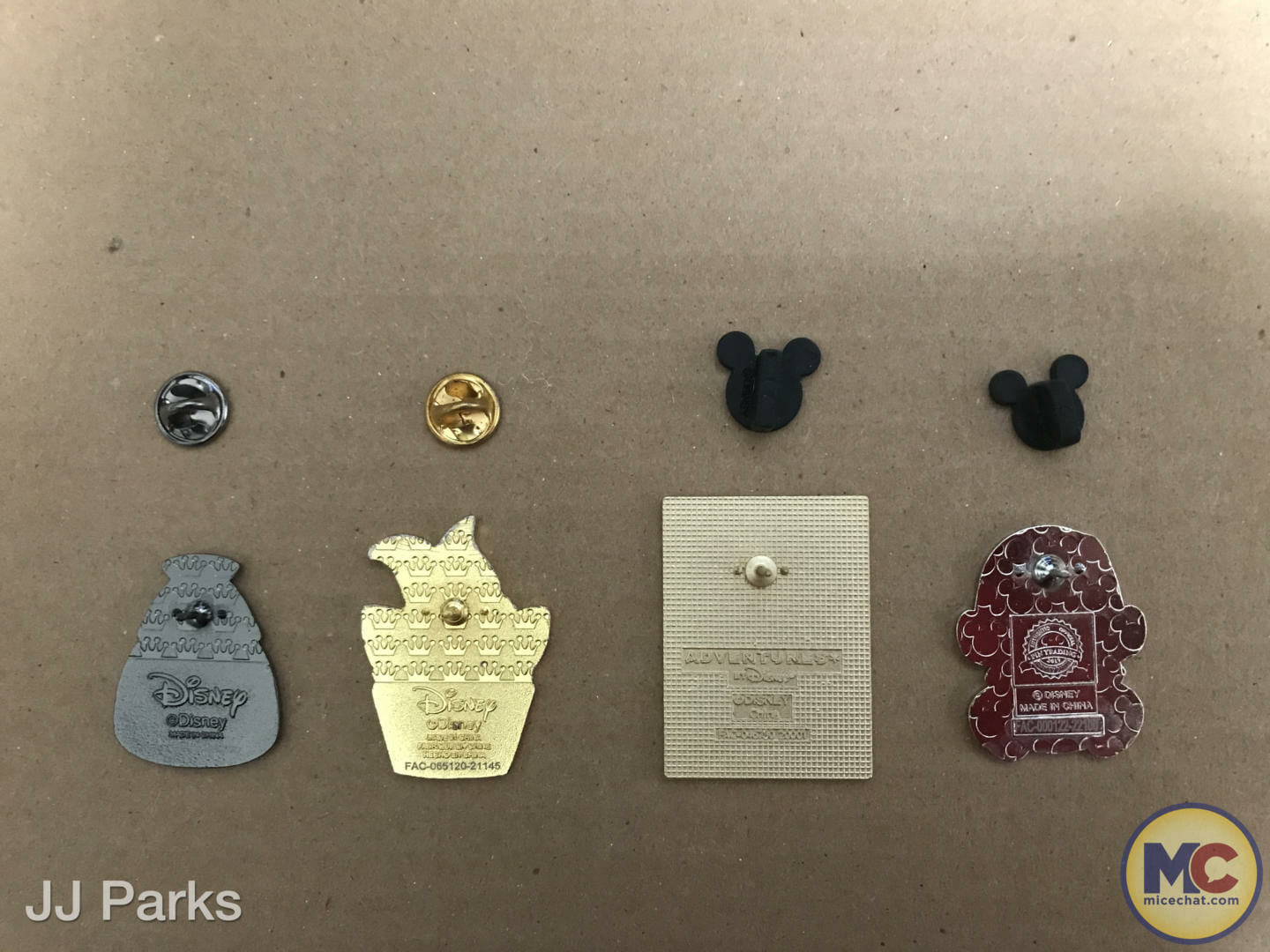
So are they tradeable in the park?
Technically, they should be. But if a Cast Member gets fussy, they may not be.
The other piece of this is in respecting the Cast Members while trading. It should go without saying, but …
Don’t touch a Cast Member or their lanyard without asking. Generally, a Cast Member will ask you to specify or point (from afar) at the pin you like, and they will remove it from their lanyard and hand it to you, taking your pin exchange in their hand and adding it to their lanyard.
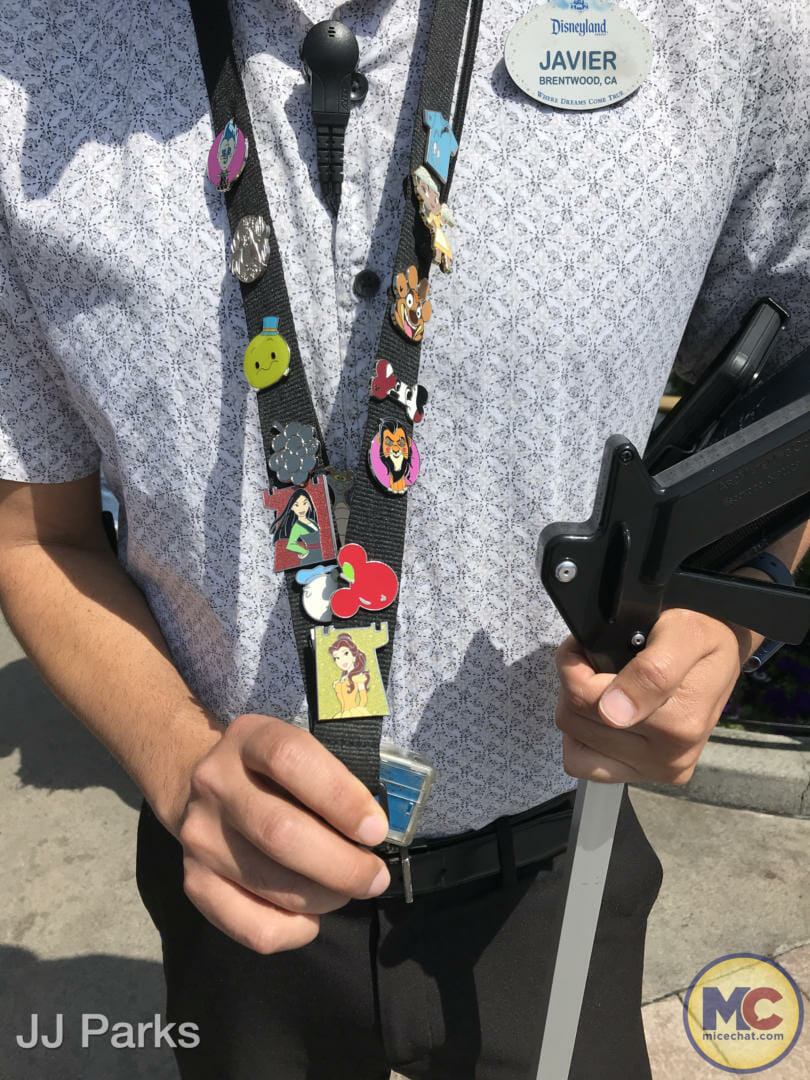
Note: for the boards, some Cast Members prefer to remove the pins themselves, hand them to you, and then add yours. But most will let you do the physical trade yourself. Always listen to the Cast Members if they have specific guidance.
Wait your turn. If others are waiting to trade with a Cast Member, don’t jump ahead of them, nor let your child do so. It’s not just about being polite; it’s about being fair.
But speaking of being polite… Rather than approaching a Cast Member, staring at the lanyard on their chest, and demanding, “That one,” pin trading is an excellent opportunity for everyone, both child and adult, to practice their manners.
Unless I’m just passing by with a glance, if I stop and want to trade with a Cast Member, I meet their eyes, smile, and ask, “May I please see your pins?” If I trade with them, I thank them afterward. If I don’t trade with them, I still thank them for their time. Cast Members deal with many rude and demanding guests, and pin traders can be some of the worst. I try to prove we can also be some of the best.
FAKE PINS (AKA SCRAPPERS)
And finally, we come to the bane of pin collectors everywhere – the scourge of fake pins, which are commonly referred to as “scrappers.”
Fake pins have been around since practically the beginning of pin trading. I remember hearing warnings nearly 20 years ago about specific pins being “faked.” But it really exploded with the growth of pin trading and the sale of cheap lots of fake pins on eBay. (Please don’t buy these. Buy mystery packs with multiple pins in them for value traders instead – they’re not as cheap, but they’re real.)
Fake pins were originally presumed to be factory overruns – where an authorized factory producing authentic pins makes more than the amount ordered and then sells them “out the back door” – or pins that were of such poor quality they were supposed to be thrown away or “scrapped”. Hence the term “scrappers”.
But it’s become a catchall phrase for a problem that has really exploded, which is factories making a large number of cheap pins that copy real Disney pins, then cheaply flood the secondary market where unsuspecting (or sometimes intentionally) people buy them and trade them onto the lanyards. Those who unknowingly trade them may just be trading scrappers for scrappers as the lanyards, boards, and boxes are quickly filled with them, no matter how often Disney Cast Members “refresh” them with real pins. Those who knowingly buy fake pins to trade for real pins are generally doing it for profit. And that stinks.
How can you tell a scrapper pin from a real one?
If you see people walking around with plastic baggies full of pins, yeah, that can be a telltale sign of someone who bought one of those fake pin lots on ebay. (Seriously folks, please don’t buy these. It’s the old “if it sounds too good to be true…” rule.) If you’ve spent real money on authentic pins, you’re not going to treat them like that, getting all scratched up together in a Ziploc, are you?
If you’ve seen the same two dozen or so pins on every lanyard and board you pass, they are likely fakes.
The best way, of course, is to educate yourself about what an authentic version of a pin looks like vs. the scrapper version. But not everyone has the time to dedicate to doing that.
So some quick tells are:
- Weight – Authentic pins feel heavier than the fakes. Scrappers are frequently made of lighter, cheaper, thinner metal.
- Color – Scrappers are made with the cheapest materials available, so the colors on the fake pins are generally off of what the real pins should look like. For example, if the authentic pin background is red, the scrapper may be a raspberry or dark pink. Close, but wrong.
- Fill – On scrappers, to save money, the enamel is often not filled to the top even with the edges of the metal lines of the pin base. If there is a slightly sunken or uneven feeling of dips when you run your finger over the surface, rather than the top of the pin being all at one level, it’s likely a scrapper.
- Backstamp – Authentic Disney pins that have a pattern of Mickey heads on the back should be deeply stamped into the metal and should flow off the edge of the pin. Seeing a border around the back of a pin or seeing smaller, less defined Mickey heads can also be signs of likely scrappers.
These are just some quick methods to eyeball whether a pin is likely real or not. That said, Disney doesn’t always make perfect pins themselves, and real pins may still have errors.
But one final note on these … PLEASE don’t buy cheap pin lots on eBay. Thank you.
I hope you’ve enjoyed this journey into the wild, wonderful world of pins in the parks and that you found this guide useful. If so, please share it with your friends and family! And in the meantime, happy trading!
More Merchandise Reading
An avalanche of holiday merchandise hit the Disneyland Resort this week! Take a look at what’s arrived so far in this guide:
And you can now use a MagicBand+ at the Disneyland Resort! Features are a little different than they are at Walt Disney World, so find out what you can do, what you can’t do, and what you should be able to do in the future here:
https://www.micechat.com/334202-new-disneyland-magicband-set-to-transform-theme-park-experience-this-fall/
Disney Theme Park Tickets and Hotel Discounts
Our travel partners at Get Away Today have worked out the BEST theme park ticket and hotel deals for our readers. (You’ll find extra nights free, big discounts, and special offers as well).
- Purchase discount theme park tickets – HERE
- Book hotel/ticket packages for your family vacation HERE
Check out the latest offers for Disneyland, Walt Disney World, and Universal Studios!
(MiceChat works with Get Away Today to provide you with the best theme park travel deals and we may make a small commission on any sales made through our links)
Let’s Hear from You
Are you a pin collector? Do you enjoy trading pins in the parks? What pins do you collect or have you been on the hunt for? Let us know in the comments below!