


As fans of Walt Disney World, we have been among its many problems. While there is no shortage of complaining amongst us, that complaining doesn’t have the same leverage when we continue to support Walt Disney World with our tourist dollars.
Record numbers are visiting the parks. We complain that the parks have never been worse, yet we continue to renew our annual passes. This contradiction enables the company to continue to exhaust the current resources on property without any efforts to revitalize them. It is time that we as fans take a genuine look at what is actually taking place at Walt Disney World and what truly needs to change to improve our experience.
As fans, we look at the Themed Entertainment attendance numbers as a barometer of success, but they don’t tell a complete story. The area of focus should also include spending per guest, which is deeply rooted in hotel rooms. I suspect that Disney is far more concerned with Universal’s hotel expansion than Transformers, Diagon Alley or King Kong. Historically, Disney was less concerned with guests visiting Universal for a day, as they were often returning to a Disney resort.
As Disney fans, we help enable the Blue Ocean Strategy being implemented by Disney. They choose not to compete with Universal in traditional ways in favor of manipulating guests to stay on property, and we as fans continue to allow this behavior. While fans complain online, they continue to finance these poor decisions. The reality is that the appeal of new attractions helps drive the attendance in the parks and the hotels. Innovative attractions linked to well known intellectual property are the new normal. Despite this, the progress of such additions in Walt Disney World has been glacial.
Since CEO Bob Iger and CFO Jay Rasulo moved to significant positions of power (Jay was originally head of Parks and Resorts), the approach to increasing guest spending has moved away from investing in rides and attractions and towards initiatives designed to keep guests on property. These include:

Disney Vacation Club: Guests pre-pay for discounted vacations for 40+ years.
Magical Express: Keeps guests on property by eliminating need for rental car
Magic Your Way Tickets: Originally introduced with the concept, “The more you play, the less you pay per day.”
Disney Dining Plan: Guests pre-pay for their food, discouraging them from dining elsewhere.
Fastpass+: Guests are guaranteed shorter lines on their favorite rides in advance of their vacation.
The merits of each of these can be debated, but the motivation behind each is the same: keeping guests on property. These choices were made in lieu of or foregoing new attractions that would otherwise entice guests to stay on property and contribute to the organic growth of the parks.
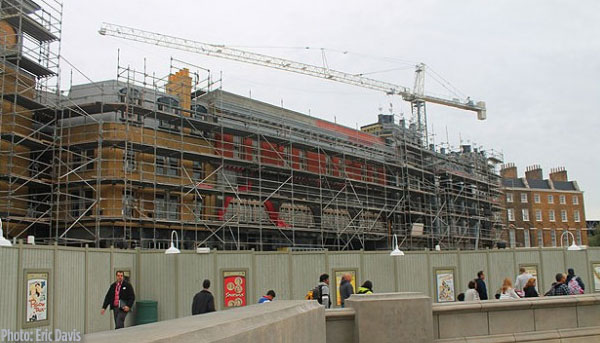
The alternative approach of aggressive construction at Universal Studios is a function of the window of opportunity created by Disney to gain market share. While the aforementioned attendance numbers at Disney haven’t been hurt by Universal’s additions, they haven’t been helped either. As the number of guests visiting Central Florida increases, so too does Universal’s market share. What’s more noticeable is the drop in hotel occupancy rates at Walt Disney World.
- 2007 – 89%
- 2008 – 89%
- 2009 – 87%
- 2010 – 82%
- 2011 – 82%
- 2012 – 81%
- 2013 – 79%
To put it bluntly, guests simply aren’t finding the same value they did even five years ago at Disney resorts. Rather than cheapen the brand by reducing the rack rate across the board, Disney is continuing with heavy discounts on their hotel rooms. Additionally, they are making further changes to lower the average price of a Disney World hotel room without lowering the price of the individual rooms themselves.
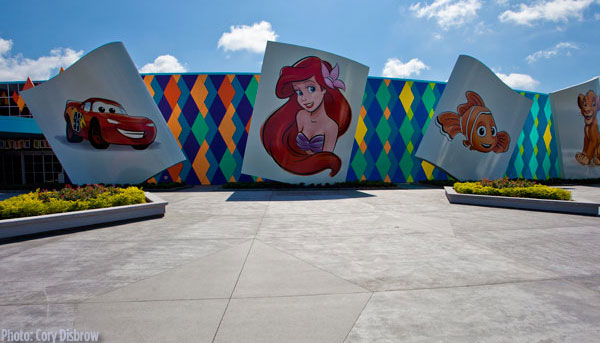
With 1984 new rooms, the Art of Animation resort significantly expanded the amount of value rooms and suites on property. One bedroom rooms start at $110+tax and the value suites start at $266+tax.
The number of non-Disney Vacation Club rooms at Disney’s Polynesian Resort will be reduced from 847 to 483 upon completion. Polynesian Resort rooms start at $429+tax.
WDWMagic user WDW1974 recently indicated that the conversion of deluxe rooms to Disney Vacation Club rooms will continue after the Polynesian Resort. This will decrease the supply of deluxe rooms, lowering the average cost for all Disney rooms, and increase Disney Vacation Club inventory that has yet to be saturated.
The conversion of cash rooms to Disney Vacation Club rooms serves two purposes:
- Immediate revenue for new DVC sales.
- Improved hotel occupancy numbers by taking deluxe rooms offline.
Since Comcast purchased Universal in 2009, they have continued to build organically by investing in tangible assets at the resort. They have seen both an increase in attendance as well as guest spending as a result. Comparatively, Disney has chosen not to compete in the traditional sense. They have increased revenue primarily by raising prices and not through organic growth. The initiatives designed to keep guests on property are losing their effectiveness and a return to quality additions is much needed.
I encourage fans to consciously spend less at Disney. While Disney is reacting in some ways, they are still not reacting in the ways that fans desire. Spend less until new innovative attractions debut. Spend less until food quality increases. Spend less until the resorts match their price point.
Disney is operating like an unprepared student before a final exam. The student is willing to do anything to pass… except study. Disney is trying to increase revenue and is willing to do anything… except build new attractions.
As a Disney fan today, it’s easy to look favorably on the aggressive building taking place at Universal. What many fail to recognize is that Universal is finally capitalizing on their biggest competitive advantage: Universal is not Disney.
Universal can build attractions with little fear or recourse from their fan base. Nostalgia doesn’t dominate the dialog at Universal and character infusion is a non-issue. Thematic intrusions aren’t heavily criticized and appropriateness of intellectual property isn’t questioned. These issues all impede the decision making process at Disney World. Universal is not Disney.
The Universal parks are not considered a rite of passage for the youth of the world.
Disney fans view the parks as a cultural Mecca. The parks are sacred, and so too are the philosophies of the parks. Character integration and intellectual properties are heavily criticized if there’s a moderate break from the surrounding theme. Universal does not face the same criticisms. Universal has the luxury of cycling intellectual property as needed to maintain a freshness in their parks that Disney is unwilling or unable to reproduce.
Thankfully, Disney is realizing that Universal is becoming more than just a one day distraction. While they may not match Disney in market share or delusional fan boy narcosis, they are aggressively refreshing their parks. They have that ability because they aren’t consumed with large scale outcries when something changes.
With that in mind, Disney can still compete with Universal from a relevance standpoint and placate the fans. We all know one of the biggest advantages Disney has versus Universal is the “blessing of size.” This advantage needs to be leveraged in order to maintain the park’s relevance.
While investments in Disney World are down during the Iger administration, money is still being invested in the property. The issue is that very little of that investment will drive attendance or guest spending. New Fantasyland added new attractions, but other investments like Next Gen and hotel additions are essentially infrastructure improvements. They’re there to encourage guests to spend money while they’re being entertained. They are not the entertainment.
The answers to so many of the ailments at Walt Disney World are simple: maintain and upgrade what you have and make regular attraction additions to keep the parks fresh. There was a time when Disney had the goal of a new E-Ticket every 3.75 years. They are looking at an 11 year gap between E-Tickets now (Everest to Avatar). Universal Studios was really struggling prior to the Harry Potter additions. It gave the resort a second life and they have taken that opportunity to be aggressive. The most obvious example of this is the Transformers addition. Yes, it’s a clone. Yes, there was a clause in the contract that required them to build it sooner rather than later. But no, it wasn’t really needed.
Disney needs to realize that the old way of thinking is wrong. The parks are not mature. There is still room for growth. Disney needs to realize that Universal isn’t going away. They’re backed by Comcast who is willing to invest more money in their parks than Disney. Disney needs to realize that homogenization is not only cheaper, it feels cheaper as well.
There is no excuse for Disney being any less than a year into construction of a Star Wars land. There is no excuse for not having another attraction in Pixar place. There is no excuse for the current state of the Imagination Pavilion or the Yeti at Expedition Everest. Addressing those things would have cost less than half of Next Gen. Disney can talk about all of the revenue growth they want – it’s certainly important. But since 2009, their draw of all guests visiting Central Florida has dropped from 74.86% to 71.18%. During that same time, Universal’s has increased from 16% of guests to 21.59%. The parks that lost the greatest percentage during that time? Sea World #1, Epcot #2. Disney rested on their laurels. They let Universal up off the mat and haven’t noticed that they’ve been taking stomach punches for the last 4 years.
Disney clearly has the in house talent to produce world class attractions and environments. The problems arise when Disney asks Imagineers to build something around a particular intellectual property, at a certain budget, in a certain building, and using existing infrastructure (I’m looking at you Norway… or should I say Arendele?).
With or without a particular intellectual property, when Imagineers are given the authority to build something from scratch, they are far more successful.
As newly elected Baseball Hall of Famer Frank Thomas said during his induction speech, “There are no shortcuts to success.” Walt Disney World is stale, and it needs new high quality rides to remain relevant. Hopefully change is coming, but change without quality will not fix the problem. In order for Walt Disney World to undergo that much needed change, they need to let the creative people create.
I sincerely hope that, “From the depths of the Dark Ages [will come] the Age of Enlightenment – the Renaissance.”
Steve Seifert and Jeremy Irons contributed to the content of this article. Additional content was based on continued discussions with WDWMagic.com users WDW1974 and ParentsOf4.