

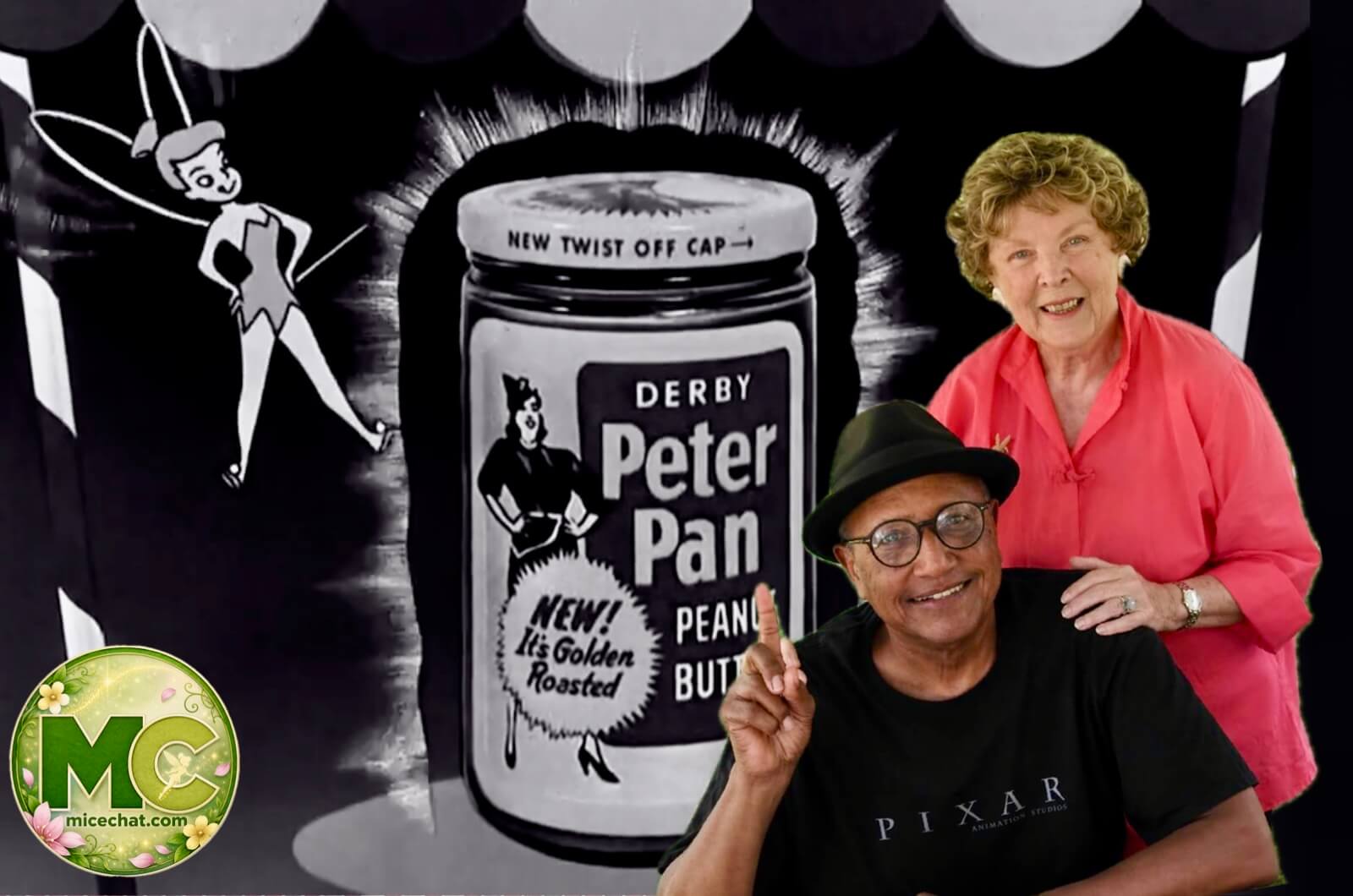
How a forgotten peanut butter campaign connected Margaret Kerry, Floyd Norman, and Walt Disney’s move into television.

The Tinker Bell peanut butter commercials of the 1950s remain one of Disney television’s most fascinating lost chapters. At first glance, they look like charming ads for Peter Pan Peanut Butter. They ran during the early years of Disneyland on television. Look closer, though, and they reveal something larger. These commercials form a forgotten bridge between Disney’s theatrical past and its television future.
Margaret Kerry, Floyd Norman, and a Forgotten Disney Connection
The Disney community recently lost Margaret Kerry, who died on June 11 at age 97. As the live-action reference model for Tinker Bell in 1953’s Peter Pan, Kerry gave Disney’s animators something real to study. Her performance brought posture, timing, attitude, and mischief to the role. Marc Davis and his team then transformed those movements into one of Disney’s most enduring characters. For generations of fans, her spirit still lives inside that flickering, wordless little pixie.

At nearly the same moment, another name from that era is receiving long-overdue recognition. The Academy of Motion Picture Arts and Sciences will award Floyd Norman an Honorary Oscar at the Governors Awards this November. Norman became Disney’s first Black animator when he joined the studio in 1956. His career later spanned productions from Sleeping Beauty to Toy Story 2.
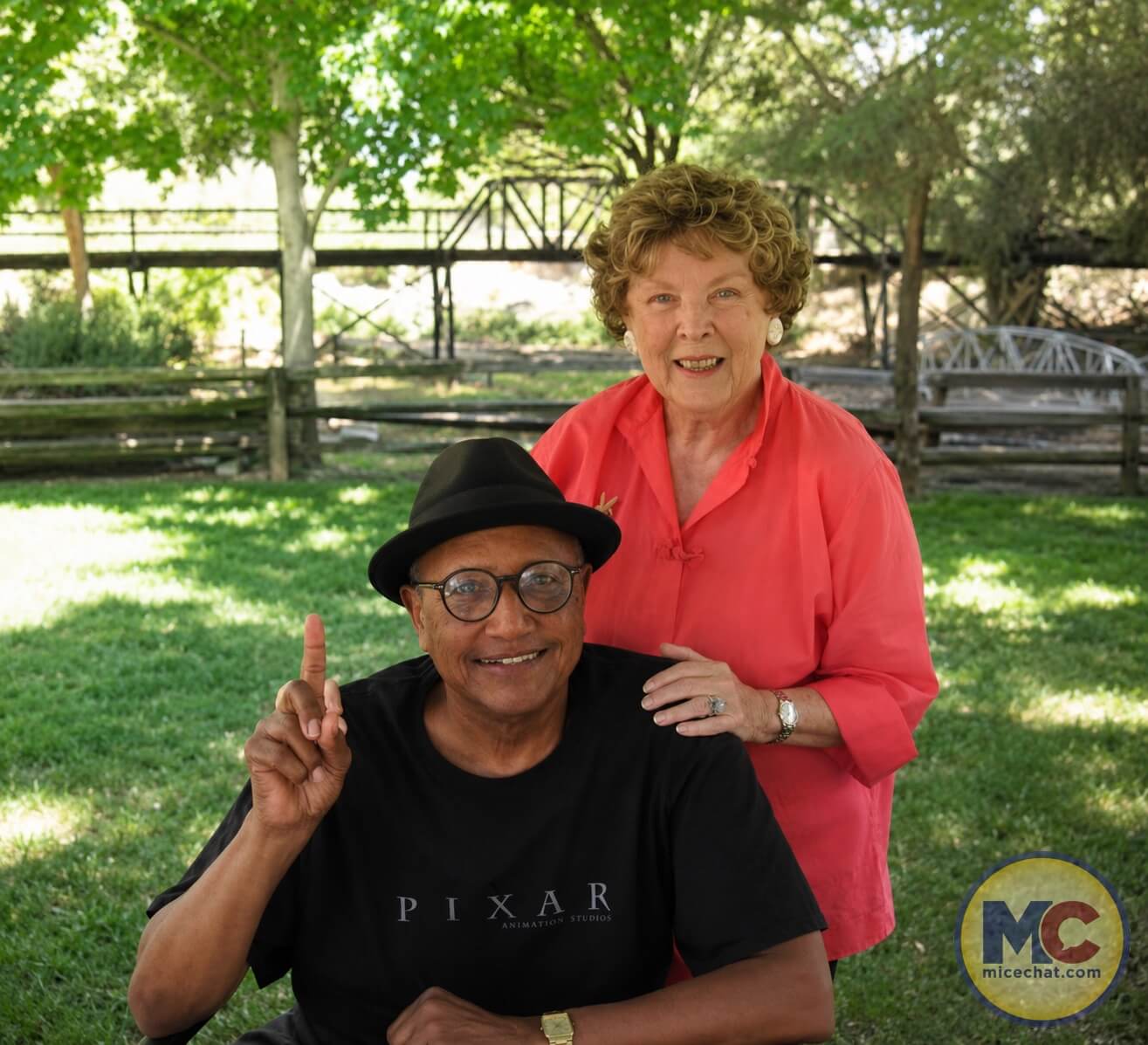
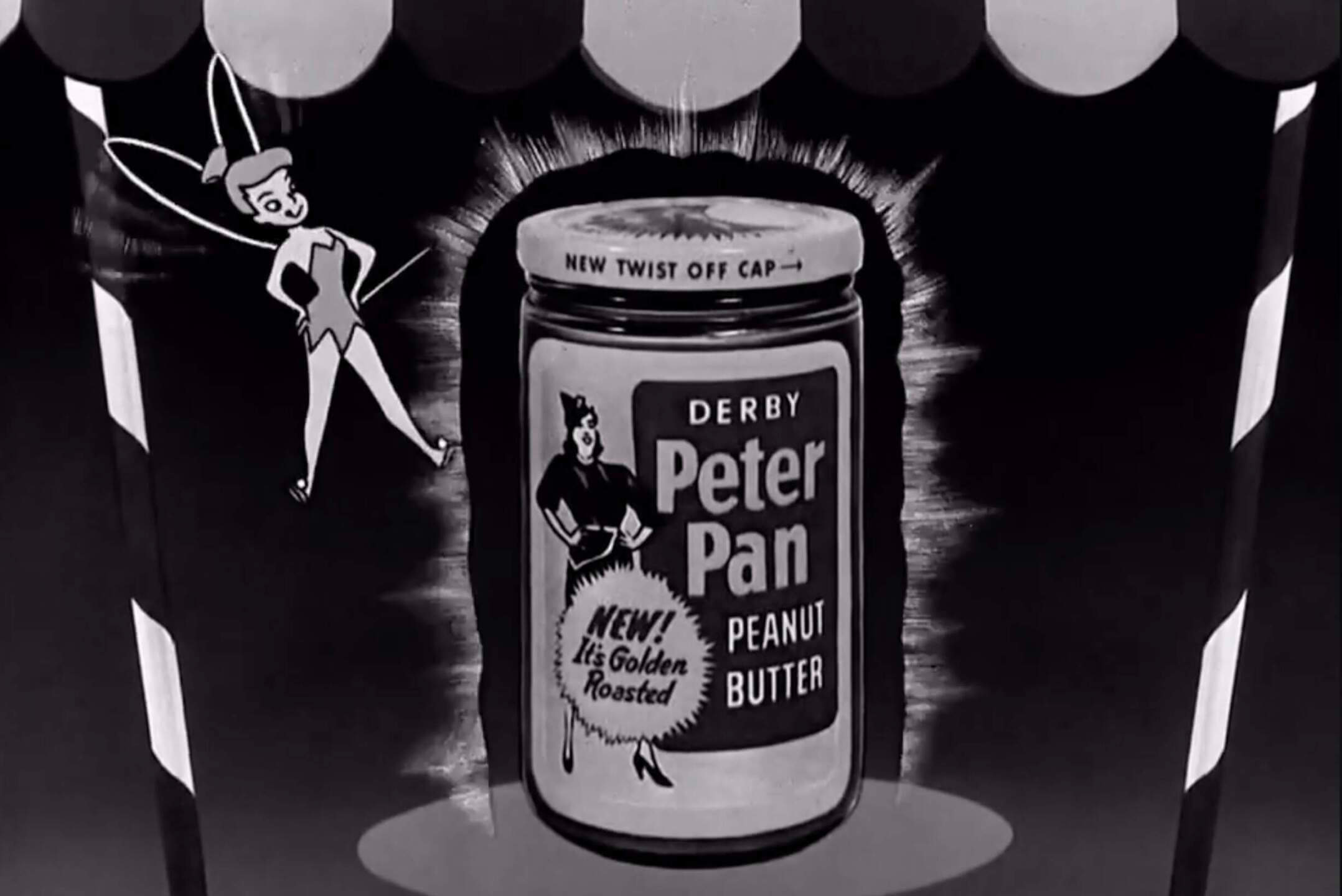
Many fans may not realize that Kerry and Norman crossed paths on a project that has mostly slipped from memory. A few years after Peter Pan left theaters, Tinker Bell returned to television. This time, she appeared in animated commercials for Peter Pan Peanut Butter. Disney built these spots with its own characters, artists, and fresh reference work from Kerry herself. Among the young animators helping keep Tinker Bell in motion was Floyd Norman.
Today, with both names back in the headlines, these forgotten commercials offer a revealing window into Disney history. Tinker Bell was not just opening Disneyland every week. She was also selling peanut butter.
Disney’s Hidden Animation School
When Walt Disney entered television with Disneyland in 1954, the medium was still new. Many Hollywood studios were nervous about it. Television sets were spreading quickly through American living rooms. Still, movie executives worried that the small screen could weaken the magic that filled theaters.
Tinker Bell turned out to be the perfect exception. She already served as the visual mascot of Disneyland, so audiences recognized her instantly. Peter Pan Peanut Butter also became one of the show’s sponsors. The pairing created an obvious opportunity. A beloved fairy could promote a product that already carried the name of her movie.
Soon, Tinker Bell began appearing in short animated spots built for television. She fluttered around oversized peanut butter jars. The character played visual games with children watching at home. Sometimes, she shared the screen with Captain Hook, Mr. Smee, and the ever-hungry Crocodile. Each commercial was simple, bright, and brief. Yet they still felt unmistakably Disney.
That authenticity was no accident. These were not outside commercials trying to imitate Disney. They were Disney productions. Studio artists handled them with a clear understanding of the characters.
Disney Artists Behind the Scenes
By the mid-1950s, theatrical short subjects were fading from movie programs. Commercial work gave Disney’s artists another outlet. The studio also developed an internal production operation for assignments like these. Phil Duncan, Volus Jones, Bill Justice, Bob Carlson, Paul Carlson, and others worked within that commercial pipeline.
A Training Ground for Young Animators
For younger artists, the work became an informal training ground. Before moving deeper into feature films, animators learned through television animation, educational shorts, and sponsored films. Floyd Norman, Jane Baer, and many of their contemporaries came through that world. What looks today like a forgotten ad campaign was also Disney’s own animation classroom.
Character designer Tom Oreb played an important role in adapting the Peter Pan cast for television. Most American homes still had black-and-white sets with limited resolution. So Oreb simplified the characters until they read clearly on the small screen. At the same time, he protected their personalities. His approach anticipated the bold graphic clarity he later brought to Disneyland and WED Enterprises projects.
The Commercial Division’s Bigger Role
Reports from other Disney artists also point to Josh Meador, the studio’s head of effects animation. Meador contributed to spots that combined live action with animation. Even Bill Peet, one of Disney’s most celebrated story artists, worked on the peanut butter account.
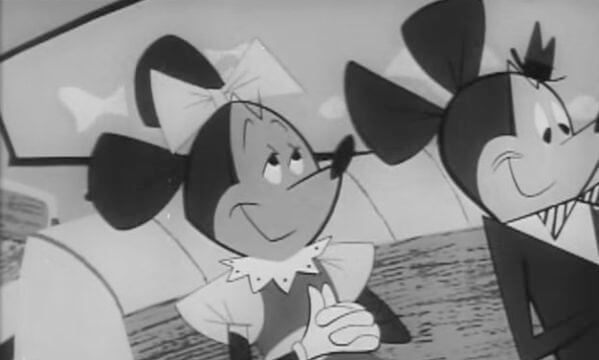
In his autobiography, Peet recalled being reassigned to the commercial division after clashing with Walt Disney over a scene in Sleeping Beauty. What may have started as punishment became part of a larger story. Routine advertising work quietly helped extend Disney animation into a new medium.
Floyd Norman’s Forgotten Connection
One of the richest stories from this chapter comes directly from Floyd Norman himself.
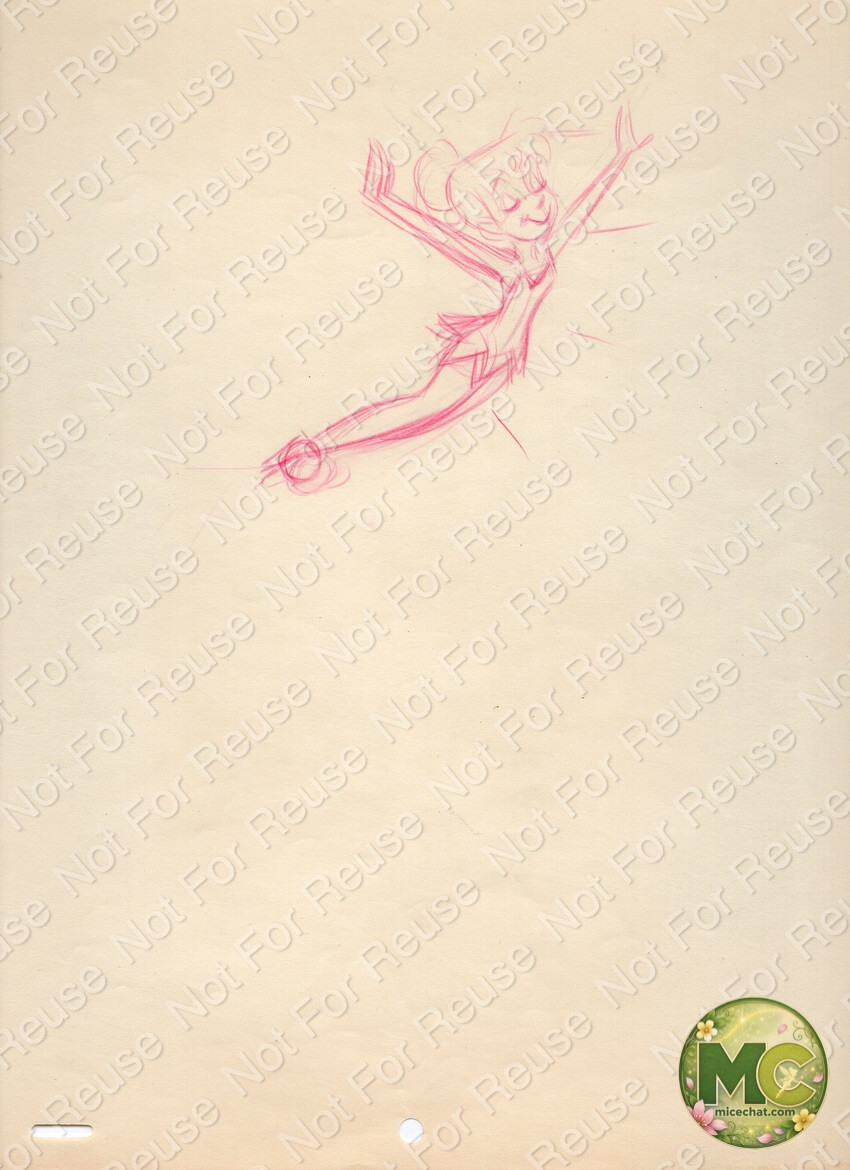
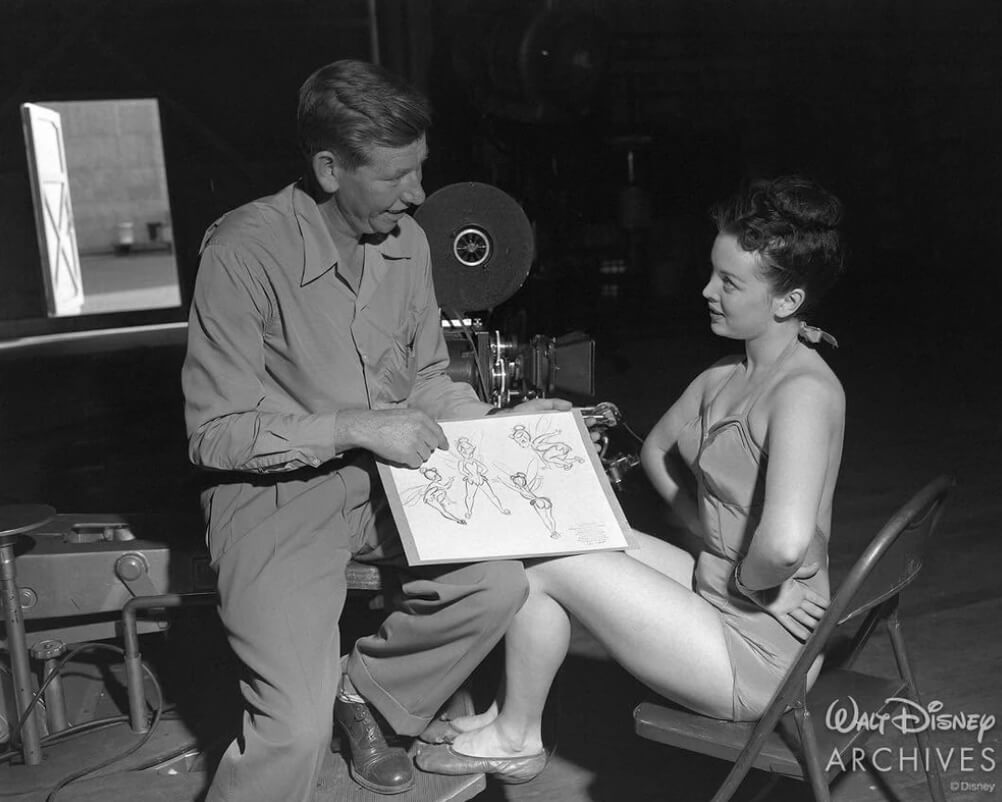
Early in his career, Norman worked on the Tinker Bell peanut butter commercials with fellow animator Freddy Hellmich. One assignment called for Tinker Bell to skip across the screen while clapping in time to music. The timing was difficult, so the animators needed live-action reference. Their solution was inspired. They brought in Margaret Kerry.

Years earlier, Kerry had helped shape Tinker Bell for Peter Pan. Now she returned to the studio to perform for the character again. The animators filmed her movements. After that, they studied the footage frame by frame and used it to animate Tinker Bell for television. In doing so, they picked up a creative thread that ran straight back to the original feature.
Decades later, Norman recalled that Kerry visited the Disney Studio and performed the same little dance from memory. It was as if no time had passed at all.


Remarkably, Norman still possesses some of the original animation drawings from that commercial. He found the sketches years later, tucked away in storage. They remain a rare physical link to this overlooked piece of Disney history. Those drawings also connect directly to the Tinker Bell peanut butter commercials themselves.
Did the Tinker Bell Peanut Butter Commercials Air During the Disneyland Television Show?
Yes, they did. Peter Pan Peanut Butter sponsored Disneyland regularly. Surviving records confirm that several of these commercials aired during the show itself. One documented spot ran during the 1954 episode “The Disneyland Story.”
Technically, the commercials belonged to the ad breaks, not the program content. Most viewers, however, likely never drew that distinction. Moments after seeing Tinker Bell inside the world of Disneyland, audiences saw her return. This time, she was promoting Peter Pan Peanut Butter. The transition felt seamless.
That was part of the magic. Disney’s storytelling did not simply stop when the commercial break began. For a few seconds, it followed the audience into the sponsor message.

Echoes of a Feature Film
At first glance, the Tinker Bell peanut butter commercials might look like a curious footnote. They could be dismissed as a sponsor’s jingle, a few seconds of animation, and nothing more. But they were more than that.
These spots quietly reunited several people connected to Tinker Bell’s original creation. Kerry returned to provide reference performances. Disney-trained animators adapted the character for television while preserving her spirit. Norman and other young artists continued work that had begun only a few years earlier on Peter Pan.
Keeping Disney Characters Alive Between Films
Long before home video, Disney+, theme park meet-and-greets, or modern franchise machinery, Disney knew how to keep characters alive between features. Sometimes that meant a television show. Other times, it meant a sponsorship deal. In this case, it meant a tiny fairy convincing children that peanut butter was worth flying for.
That is what makes these commercials so compelling today. They are not simply ads. They show how Disney adapted to television. The spots also show how studio artists kept working between features. Most importantly, they reveal how a character born in a theatrical film found new life on the small screen.
A Lost Chapter Worth Remembering
As fans honor Margaret Kerry’s legacy and celebrate Floyd Norman’s Honorary Oscar, the commercials offer a timely reminder. Some of the richest stories in Disney history do not live inside the feature films. They hide in the margins, waiting for someone curious enough to go looking.

For a brief stretch in the 1950s, much of Tinker Bell’s creative lineage came together again. It was not for a new movie. It was for a peanut butter commercial. Thanks to Norman’s memory, Kerry’s performance, and the drawings Norman saved, that small chapter never disappeared. It was simply waiting to be found.
Bonus: Floyd Norman Will Receive an Honorary Oscar
Since this article was first conceived, another piece of Disney history has come full circle. Floyd Norman will receive an Honorary Oscar from the Academy of Motion Picture Arts and Sciences at the 2026 Governors Awards.

The recognition honors a career that helped shape Disney animation for more than six decades. It also honors an artist who influenced generations of storytellers. For animation fans, the award feels especially meaningful. Norman’s career connects many eras of studio history, from hand-drawn features to modern animation.
Disney and animation fans can read more about the announcement in The Hollywood Reporter’s coverage of the 2026 Governors Awards honorees.

Continue the Story In-Person With Floyd Norman
If you enjoyed this remarkable chapter of Disney history, we’d love to invite you to experience it in person.
On the weekend before D23 Expo, join the Walt Disney Birthplace, Walt’s granddaughter Joanna Disney Miller, Uncle Robert’s House, and the Walt Disney Storybook Mansion for A Walk in Walt’s Footsteps: An Evening Honoring Disney Legend Floyd Norman.

For the first time, Floyd will personally share the story behind these long-lost Tinker Bell drawings, including his memories of Margaret Kerry, Walt Disney, and the early days of Disneyland television. Guests will also have the rare opportunity to view the original artwork up close before it is publicly exhibited.
The evening goes well beyond Floyd’s presentation. We’ll reveal new details about A Walk in Walt’s Footsteps, our immersive D23 Expo experience connecting the three homes that shaped Walt Disney’s remarkable life: his birthplace in Chicago, Uncle Robert’s House, where Walt and Roy founded the Disney Brothers Studio, and the Storybook Mansion, where Walt raised his family and created many of Disney’s earliest animated classics.
Guests will also enjoy exclusive commemorative keepsakes created exclusively for this special evening.
Most importantly, every ticket helps preserve these three extraordinary places while bringing A Walk in Walt’s Footsteps to thousands of Disney fans at D23 Expo.
Attendance is limited to just 45 guests, and once they’re gone, they’re gone.

We hope you’ll join us for what promises to be one of the most intimate and memorable Disney history events of the year.
🎟️ Tickets for A Walk in Walt’s Footsteps with Floyd Norman are available HERE