


Nostalgia, as the saying goes, is a hell of a drug—and the Disney company has certainly seemed like it’s addicted to it. From live-action versions of its animated features to revived franchises like Indiana Jones, we’ve seen plenty of indications that Disney is content to feed us heaping helpings of yesterday. So there was plenty of reason to worry that X-Men ’97 would be Millennial nostalgia-bait, built on the popularity of the 1992 – 1997 animated series that introduced Marvel’s mutants to a significant percentage of the population.
And it is that—but only partially. Series runner Beau DeMayo certainly leans into the familiar at the outset, returning to the classic series’ opening credits and its iconic Ken Wasserman theme music. The very first image places us squarely in its 1990s timeframe with a skyline of New York City including the Twin Towers of the World Trade Center, and the plot picks up right where the 1990s X-Men series left off in 1997, with human/mutant tensions still rampant and the team trying to figure out what’s next after the loss of their founder and leader, Professor Charles Xavier. Most of the key character dynamics remain, including the awkward romantic triangle involving Cyclops (Ray Chase), Jean Grey (Jennifer Hale) and Wolverine (Cal Dodd, one of a few returning voices from the original series), and the relationship tension between Rogue (Lenore Zann) and Gambit (AJ Locascio).
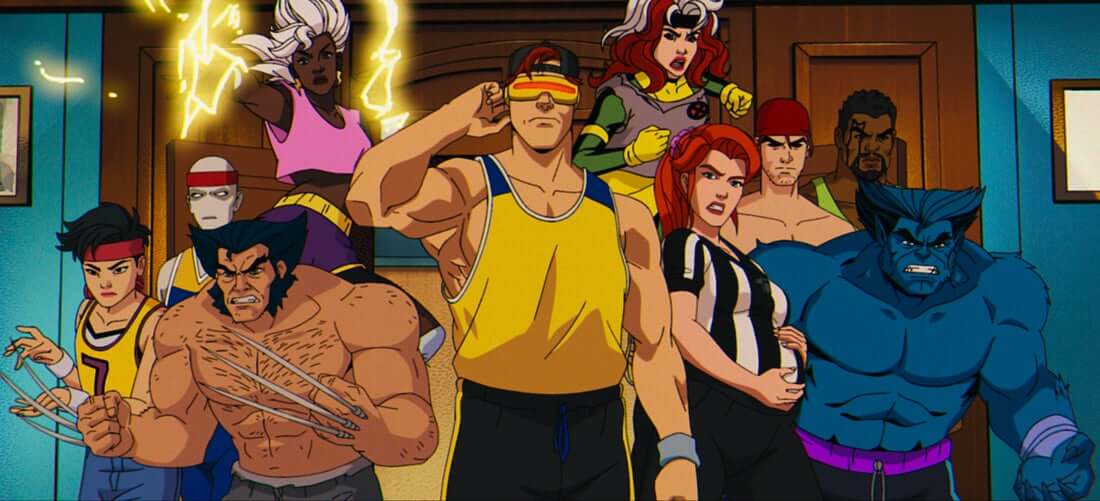
But this incarnation is prepared to head off in its own direction, starting with the impending birth of Cyclops’ and Jean’s child. It becomes clear—and I’m tap-dancing around potential spoilers here—that DeMayo is willing to mess around with the canon from the original series when it serves his purposes, in the long-standing tradition of comic-book ret-conning. To the creators’ credit, they understand that perfect fidelity to the original timeline isn’t as important as delivering satisfying stories.

They are satisfying, as it turns out, at least through the first three episodes available for preview. X-Men ’97 is still firmly anchored in the comic-book series’ allegory for bigotry and persecution and understands how that subtext can be applied to everything from racial and religious minorities to immigrants and LGBTQ people. And for fans of the comics, the show continues to mine the characters’ long publication history for its characters and stories.

Perhaps most surprising, however, is the quality of the animation, which takes a huge step up from the Saturday morning cartoon level of the original series. That’s most evident in the terrific third episode, directed by Emi Yonemura, which gets imaginatively crazy with a scenario full of nightmare imagery. A comparison to Hayao Miyazaki shouldn’t be made lightly, but there’s animation on display here that feels inspired by Spirited Away, giving the show a real aesthetic pop.

It’s always understandable when people—and that includes creative people—want to revisit the things they loved in their youth. There’s a clear line to be drawn between the popularity of the X-Men animated series to the successful X-Men movies to the inception of the Marvel Cinematic Universe, so you can’t really overstate its potential influence on American popular culture. What matters is what the creators do with that nostalgia, and the creators of X-Men ’97 are showing that they’re willing to do more than say, “Hey, remember that other thing?” They want to give you a reason to remember this thing.