


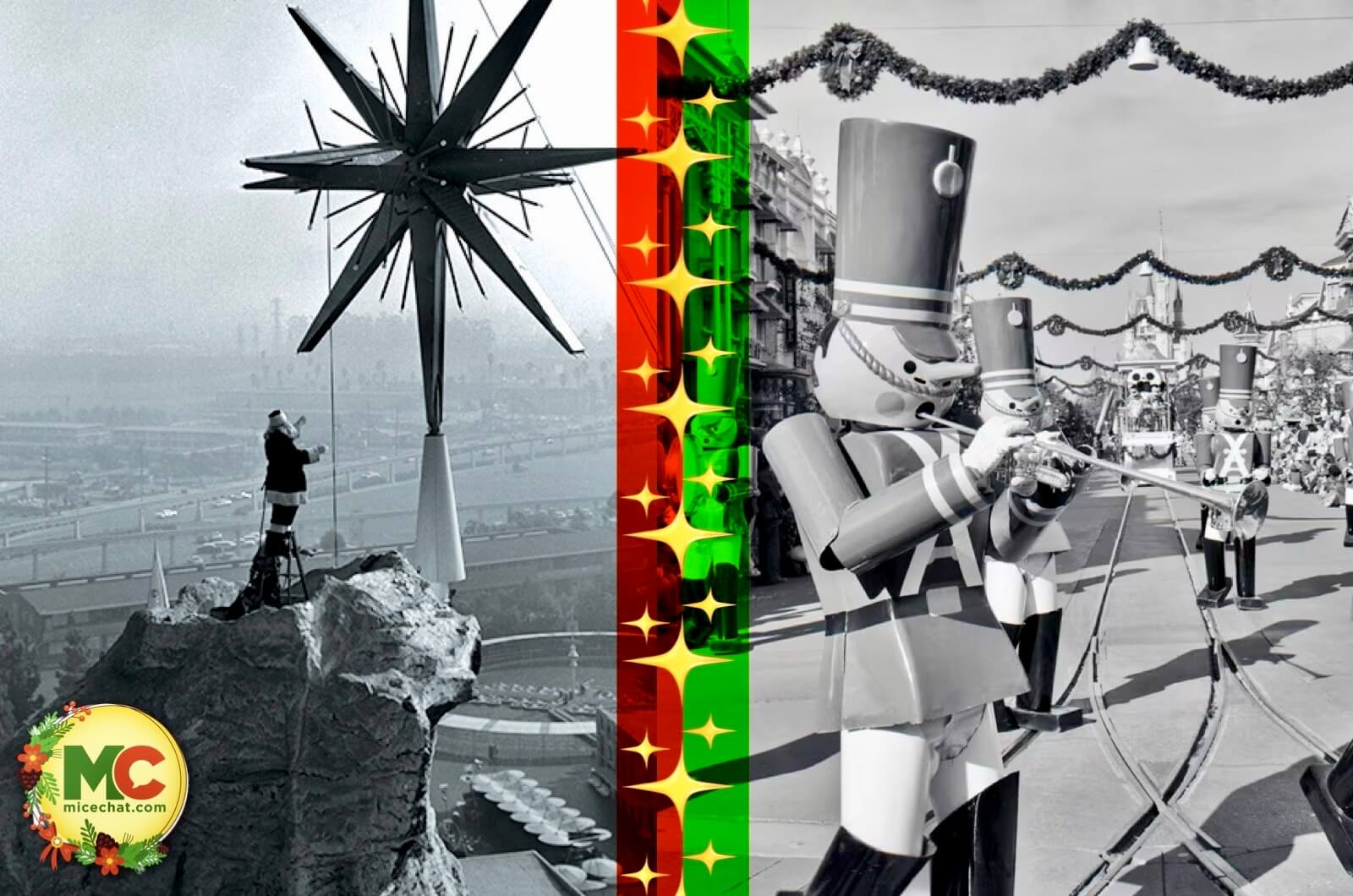
There really is nothing like Christmas on Main Street, is there? That’s hardly a unique sentiment on this site. Nearly all locals want to drop in on Disneyland or Magic Kingdom to see the lights and the tree and hear the music. I did this even when I was increasingly “over” Disney World in the latter half of the 2010s, and included alternate versions of Christmas on Main Street in my huge vintage Walt Disney World audio project. I don’t think it’s an exaggeration to say that Christmastime is “peak Disneyland.”
I am one of those 20th-century Millenials who is not the least bit religious but who loves Christmas with a passion. I have multiple trees, I collect vintage decorations, and I love what Disney does to their themed spaces for the holidays. At its most sublime, Disneyland throws cultural switches in our brains that are powerful and difficult to understand. We feel the effects but aren’t certain where they come from. I’d like to show, in a broad sense, where our Christmas practices originate and how Disneyland uses them so powerfully.
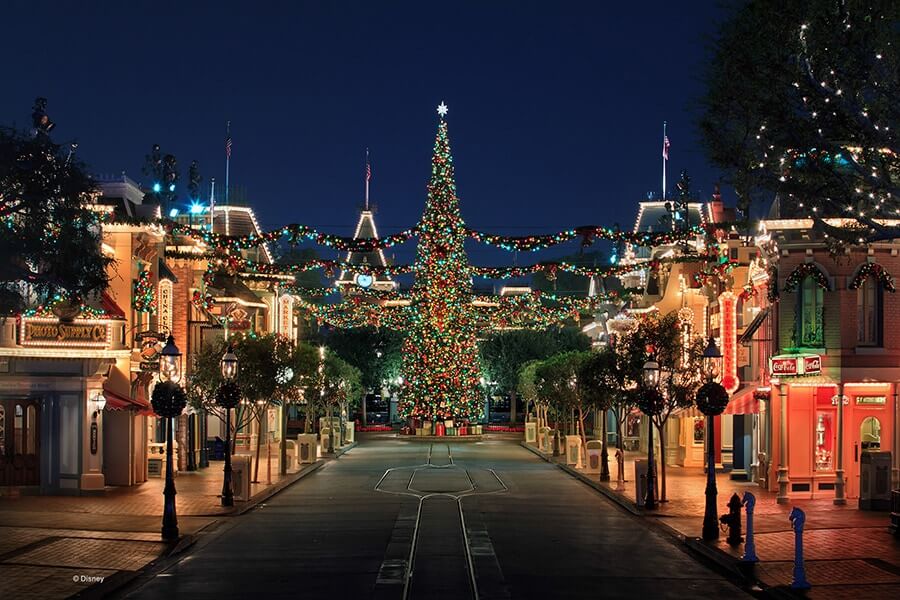
I don’t have time or space here to present the full history of Christmas practices. In the past, I’ve presented Christmas as basically English and Halloween as basically American, but that’s an extreme simplification. I’m going to present the 200-mile view of Christmas as a cultural institution simply so we can apply history to Disneyland.
I’m not going to wade into the religious aspect of the celebration because I’m incredibly ill-suited to do so. It’s enough simply to say that Christmas or some kind of midwinter festival has pretty much always been a thing, even before Christ was born. Following the ascension of the Christian Church as the unifying political power in Europe, the celebration was officially a day of prayer and observance and unofficially a great time to get really drunk.
In the 16th century, Protestant reformers saw veneration of saints as symptoms of papacy and attacked these folk practices on all fronts. The saints didn’t leave – they simply transformed into folk characters – and none were more popular than Saint Nicholas, who became various mythological gift-givers across Europe.
These informal gift-giving and celebration practices were carried to the new world by Dutch settlers. New York was unique in the colonies for its Dutch ancestry, surrounded on all sides by colonies started by English Protestants. By the eighteenth century, the celebration of Christmas through gift-giving and feasting was seen as something specific to New York City, descended from Dutch folk practices.
It’s important to point out that this was unique in the New World. Puritans and other religious reformers had fled England and Europe during the reign of Charles I and had established colonies governed by protestant and Puritan doctrines in the New World; most of these religious extremists especially hated the folk traditions of drinking and carousing on Christmas Day and banned the holiday. Resistance to Christmas practices (outside the walls of a church) continued in the colonies well into the eighteenth century, with the sole exception of the city of New York. In time, this stance softened as the colonies cut ties with England, endured the revolution, reformed itself through constitutions and legislatures, and suddenly stood poised on the cusp of the 19th century with no clear cultural idea of what it was. The break with England was too recent to look to Europe, and there seemed to be scant “local” history to form a bond with.
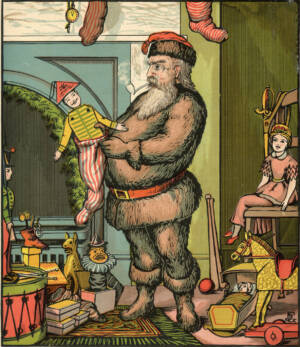
Until this one guy, Washington Irving, wrote a book. Today, if you know Washington Irving at all, it is for The Legend of Sleepy Hollow, but in his time he was the first internationally famous American author. Irving wrote The History of New York in 1809, and the whole book was basically a huge attempt to troll the New York Historical Society. He wrote it in character as the curmudgeonly Diedrich Knickerbocker, who tied every major event and feature of New York back to its Dutch period as New Amsterdam. In doing so, Irving gave American history and mythology to an American people who really needed it. In the book, Knickerbocker imagines New Amsterdam, and later New York, to be under the protection of St. Nicholas, and includes some startlingly familiar images:
“And when St. Nicholas had smoked his pipe he twisted it in his hatband, and laying his finger beside his nose, gave the astonished Van Kortlandt a very significant look, then mounting his wagon, he returned over the treetops and disappeared.”
“At this early period was instituted that pious ceremony, still religiously observed in all our ancient families of the right breed, of hanging up a stocking in the chimney on St. Nicholas Eve; which stocking is always found in the morning miraculously filled; for the good St. Nicholas has ever been a great giver of gifts, particularly to children.”
“As of yore, in the better days of man, the deities were wont to visit him on earth and bless his rural habitations, so we are told. In the sylvan days of New Amsterdam, the good St. Nicholas would often make his appearance in his beloved city, of a holiday afternoon, riding jollily among the treetops, or over the roofs of houses, now and then drawing forth magnificent presents from his breeches pockets, and dropping them down the chimneys of his favorites. Whereas, in these degenerate days of iron and brass he never shows us the light of his countenance, nor ever visits us, save one night in the year; when he rattles down the chimneys of the descendants of the patriarchs, confining his presents merely to the children, in token of the degeneracy of the parents.”
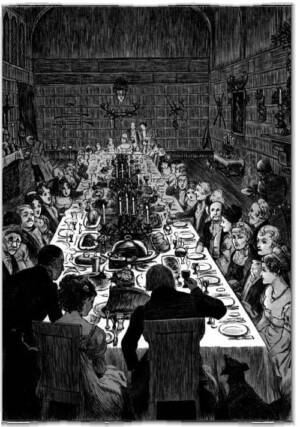
Yeah, that’s right. The man who wrote The Legend of Sleepy Hollow invented Santa Claus. But that’s not all, for in his next book The Sketch-Book of Geoffrey Crayon, Irving goes on to describe “traditional Christmas festivities” at the fictional Bracebridge Hall, in England. The book was serialized in installments, and the entirety of the fifth installment, published on Jaurary 1, 1820, is devoted to describing these celebrations, including a great feast, giving of presents, singing of “carols”, burning of a yule log, and telling ghost stories. Throughout, Irving presents these festivities as “almost dead in Britain” and the Squire Bracebridge as an eccentric keeping ancient customs alive.
These five chapters were such a hit that Irving’s next novel was straight up called Bracebridge Hall, and his fanciful descriptions of “Merrie Old English” Christmas turned from fantasy into practice. This was such a powerfully influential piece of literature that noted Irving fanboy Charles Dickens drew much of the tone and detail of the celebration for A Christmas Carol, the work which turned the celebration into a superstar in England and America.
So we can see that by the Victorian era, the English-speaking world had Christmas. “Up on the House Top,” “Jolly Old Saint Nicholas,” and “Jingle Bells” date from the 1860s, and “O Tennenbaum” became “O Christmas Tree” upon translation to English. But Christmas was still primarily a domestic holiday, practiced with your family inside the walls of your own home. How did it become a public holiday, one that extended beyond the walls of your home and into the streets?
Well, you can blame department stores.
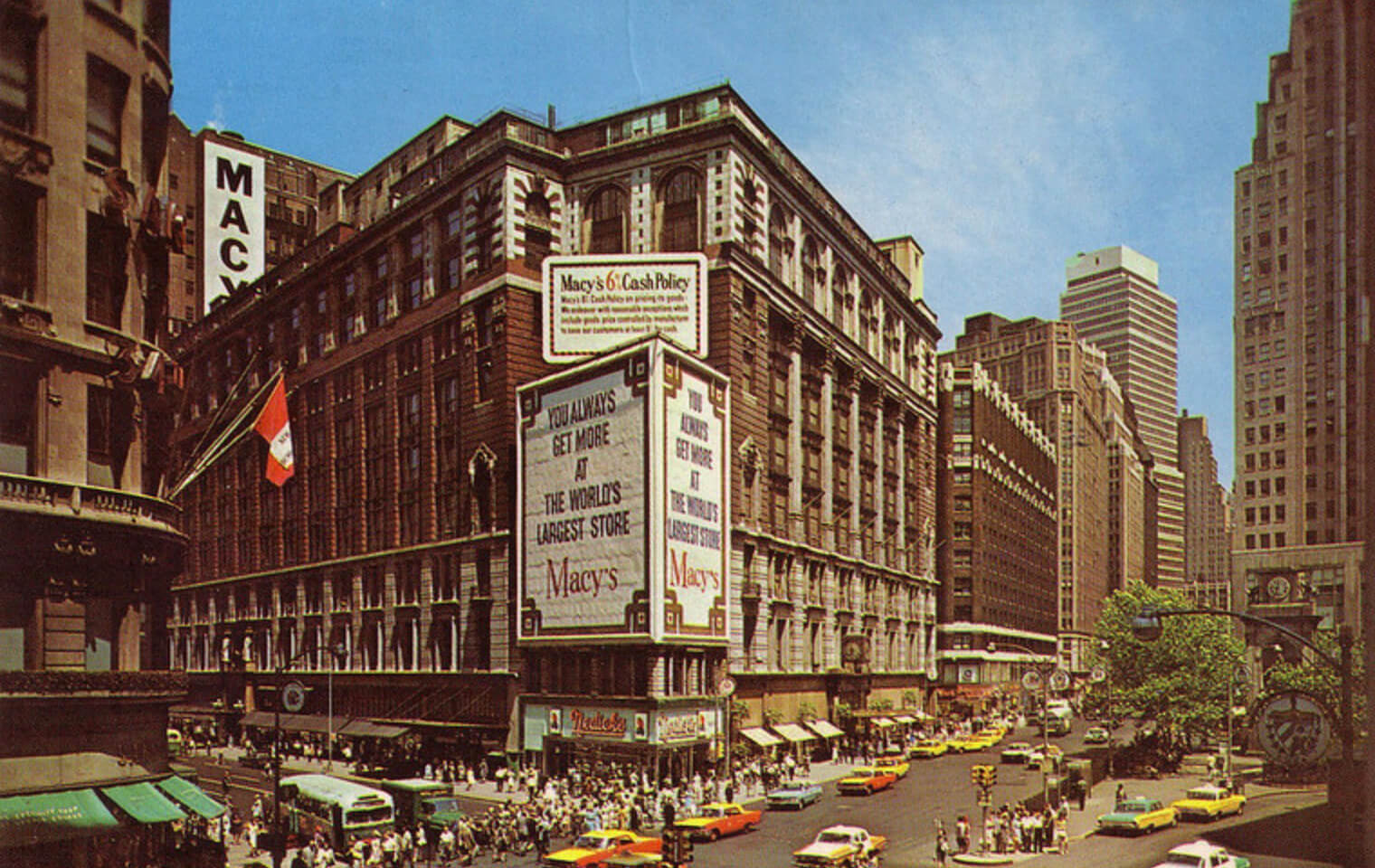
Since their inception in the Civil War era and in the turbulent decades that followed, Department stores were immediately recognized as powerful cultural forces. In the year following the Civil War, rural Americans streamed into cities and really needed places to buy cheap things. Mass transit solutions began to appear, and especially the electric trolley car allowed everyone to descend on central bargain stores and shop to their heart’s content. Many trolley lines actually invested in the creation of such stores to drive ridership, and if you made the connection that the exact same economic partnership created the amusement park at the same time, then you may buy yourself a churro.
Today’s reader accustomed to viewing all such temples of consumption suspiciously may be surprised to hear, but department stores were considered to be both technologically impressive and socially progressive at the height of their power. Department stores pioneered such concepts as credit, ready-to-wear clothes, volume selling, and displays of the latest fashions. The important distinction is that the department store catered to the lady clientele, who now could step forth out of the house into an appropriately feminine, safely controlled environment and make decisions without the man of the house looking over her shoulder.
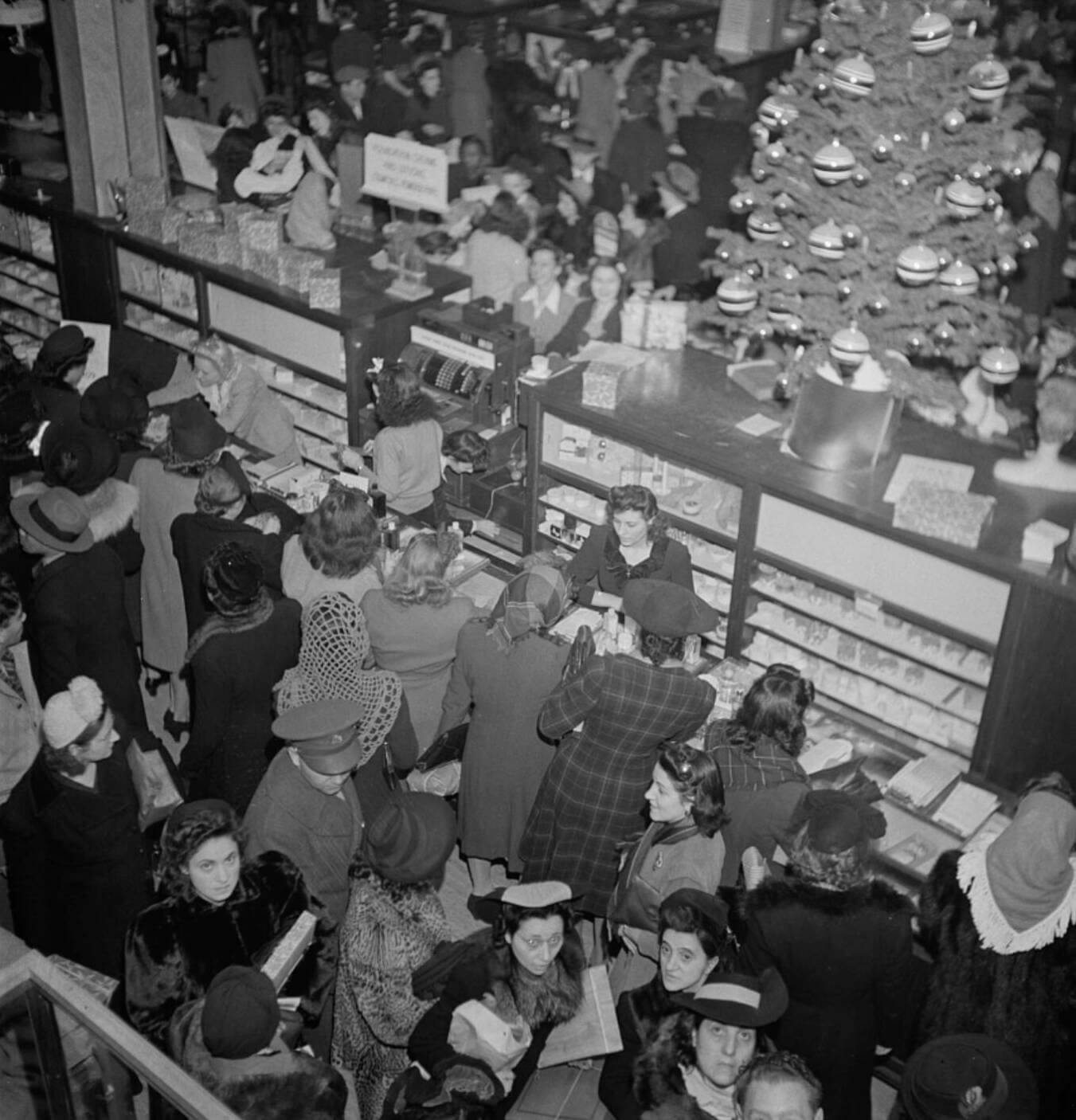
Like the modern-day viral craft beer brewery plopped into a sleepy downtown, entire commercial strips were transformed at once. Smaller businesses were forced to close as property values soared. Eventually, enough high-class shops surrounding the stores were present for the stores to band together as Merchant Associations and begin pushing for civic improvements like gas lighting and proper traffic safety control. Citizens responded to these progressive notions by increasingly flooding the urban areas where these department stores were located. What might have previously been a ramshackle collection of bars, hotels, and livery stables were transformed into “Downtowns” with all of the cultural prestige and political power that the term implies.
Of all the times to go to a department store, none was better than Christmas. In the days before movies, the telephone, the radio – or even widespread literacy – department stores flooded their front windows with increasingly intricate displays which wowed passers-by and drew foot traffic into the store. Eventually, these displays would spill outside of the walls of the store itself and down the street in front, elaborate displays paid for by Merchant Associations. An especially powerful department store could drive traffic by rail and streetcar not just for a neighborhood or city but the whole region.
And just as they had led the drive towards gas flame lighting, merchant associations and department stores led the charge into the adoption of electricity. In the days before Thomas Edison perfected the lightbulb into a replaceable commodity, downtown areas experimented with early forms of electric lighting. These areas became known as Great White Ways, with folks coming in from the country in all directions to see the newfangled electric lights and gaze at the majesty of the department store. From about 1900 to 1940, department stores owned Christmas in a way that almost no one ever has since. There is a reason why the very first true Christmas movie, Miracle on 34th Street in 1947, is set in and around a department store.
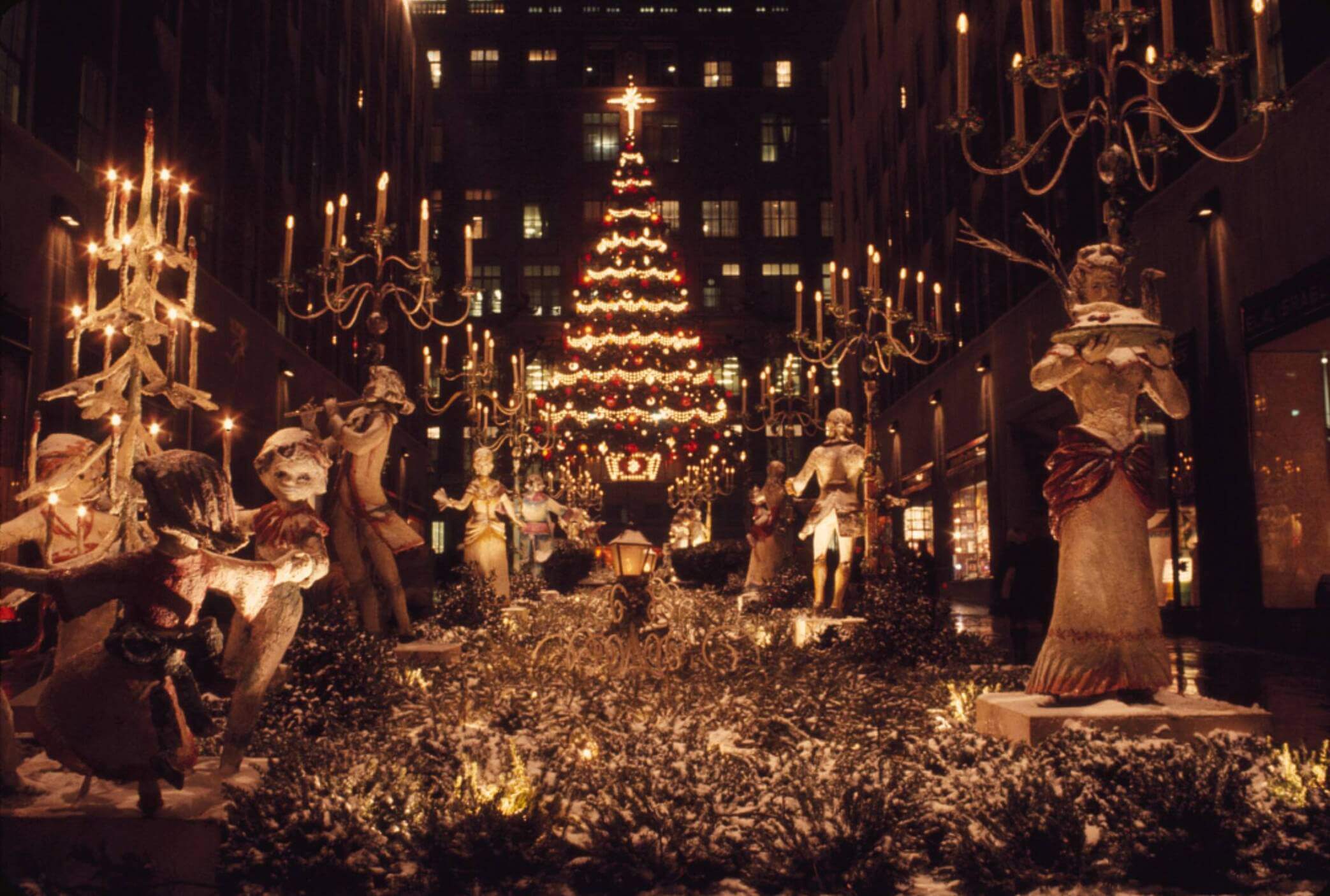
Edward Johnson, a Vice President at Edison Electric, was the first to light up a Christmas tree in 1882 as he individually wired electric bulbs and colored them with crêpe paper. The tree was a sensation, especially amongst the wealthy, who began to hire electricians to do the same to their seasonal trees. In 1912, the very first municipal Christmas tree went up in Madison Square Garden, just two blocks away from Macy’s. It was electrically lit and astonished pedestrians. By the 1920s, home versions of Christmas tree lights had become de rigeur in electrified households.
Considering all of this, it’s intriguing to notice that the Christmas movie isn’t really a thing until after World War II, where physically and emotionally damaged GIs were returning home to a nation totally different than they had known upon leaving. The nostalgic reveries of It’s A Wonderful Life and Miracle on 34th St. are backwards looking, reflecting on the meaning and practices of a holiday that now reminded everyone of more innocent times.
That war created the G.I. Bill, and families were moving out of downtowns in huge droves into new commoditized spaces known as suburbs, where they now commuted into the city in their newly affordable American automobiles.
But almost all of these first-generation suburb adopters had grown up in cities, and it was lonely out there where everyone lived in identical houses. It probably wasn’t long before the Christmas tree migrated out of the family room and into the front window, and from there, it was natural to begin replicating the decorated downtowns of Christmas past along the quiet suburban streets. With no more Merchants Associations or Municipal Governments to pay for their holiday cheer, suburban Do-It-Yourselfers turned cul-de-sacs into their own Great White Ways.

Okay, let’s check our Disneyland Christmas scorecard. We’ve got presents, Santa Claus, electric lights, stores with window displays, and a Christmas Tree in the town square. The last really important thing we’re missing is….. music.
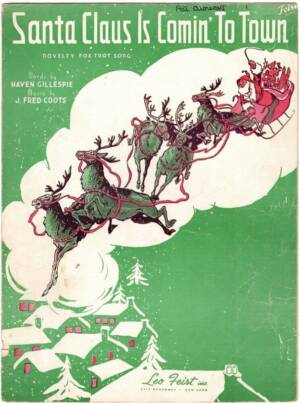
It was November 1934. Comedian Eddie Cantor, who was especially popular with children, was broadcasting his radio show live from the Macy’s Thanksgiving Day Parade. He stepped before the microphone and sang Santa Claus is Coming To Town. It went through the roof. Within 24 hours, 30,000 records had been sold.
But surprisingly, the song did not mint the genre of Christmas pop music. That would come a few years later, with Irving Berlin’s White Christmas. As sung by Bing Crosby in Holiday Inn, the song was a jolt of comfort to a nation who had just declared war on Japan and Germany. The song won an Acadamy Award, and the single was so popular the master recording was worn out.
One hit begat imitators, and very soon, “I’ll Be Home For Christmas,” “Have Yourself A Merry Little Christmas,” “The Christmas Song,” “Let It Snow,” and more followed. Decca Records pressured Bing Crosby into recording a few traditional carols like Adeste Fideles and God Rest Ye Merry Gentlemen and slapped all of these recordings together into an album called Merry Christmas. That album has been in print continually since 1945.
In the late 40s, Columbia released the long-playing microgrove record. In short order, the LP had become the most popular music format in the country, and seemingly every new suburban house in America was outfitted with one of those monstrous coffin-sized record players on which a stack of LPs could be played continuously for hours. The 1950s and 60s in America were arguably the peak years for Christmas music, with hit after hit being written in this new pop category. Gen Xers and elder Millenials like me will no doubt remember our grandmothers playing a seemingly endless array of Christmas records on those monoliths, seemingly the only time of the year they were ever put to use.

It’s interesting to consider that all of these ingredients of the classic Christmas actually represented cutting-edge novelties in the 50s and 60s. Continuously flowing background music, a home in the fashionable suburbs, even a new car or a tiny electric train circling the Christmas tree, all made possible by modern materials. For a holiday so often written off as merely backward-looking, Christmas has also been an opportunity to display the latest in modern materials and methods. Even the blow-molded Santa on the front step was innovative once.
This is a lot like Disneyland, where the attitude and aesthetics are nostalgic, but the place is made up of absolutely modern stuff. That castle may look medieval, but it’s built of cutting-edge (for 1955) fiberglass. And understanding that dynamic is, I think, key to understanding why Disneyland really “stuck.” Disneyland saw the cultural trends and crafted a response to the emotional needs of midcentury suburban Americans.

And that is an answer as to why Christmas on Main Street resonates so strongly. If you actually try to pick apart every element, as we have done, then you’ll see that the holiday traditions represented range in relevancy from about 1900 to 1960. But none of that matters because Christmas is the ultimate midcentury celebration, and Disneyland is the ultimate midcentury place. Of course, the combination is irresistible, even if the music is straight from grandma’s Dumont stereo console circa 1965.
But there’s one other thing to consider. Christmas has always been about nostalgia. Even the earliest commercially packaged vision of Christmas – Washington Irving’s description of the holidays at Bracebridge Hall – emphasizes again and again the ancient nature of the practices, lodging the holiday firmly in the “Merrie Olde England” of the imagination. Irving Berlin wrote “White Christmas,” thinking of his family back in New York while he was in California. GIs listened to “I’ll Be Home For Christmas,” knowing they may never be home again.
Like so much mainstream popular culture during the 50s and 60s, Christmas was about comfort. You watched the same television specials, you listened to the same music. You strung pretty lights and spent time with your family. That’s how it’s always been.
And that is absolutely what Disneyland and Main Street, in particular, are all about. When you add holiday cheer to that already heady mix, the result is a dopamine hit of comfort that’s powerful in almost uncanny ways. So have yourself a merry little Christmas, or Hanukkah, or Yule, or whatever it is you’d like to celebrate. It really is the most wonderful time of the year… especially on Main Street.
Don’t Miss The New Book From Foxx
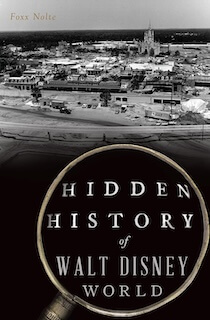
Foxx Nolte is the author of three books on Disney history, including the forthcoming “Hidden History of Walt Disney World” from History Press, full of weird tidbits and new research for newbies and superfans alike. The book releases next February, but it can be pre-ordered now, at this link: Hidden History of Walt Disney World Preorder.
When she’s not writing essays on cultural events. Foxx likes cooking, movies, old video games, shopping for clothes, and drawing. She needs to make her own website and perhaps will be forced to this year by dint of being nationally published???
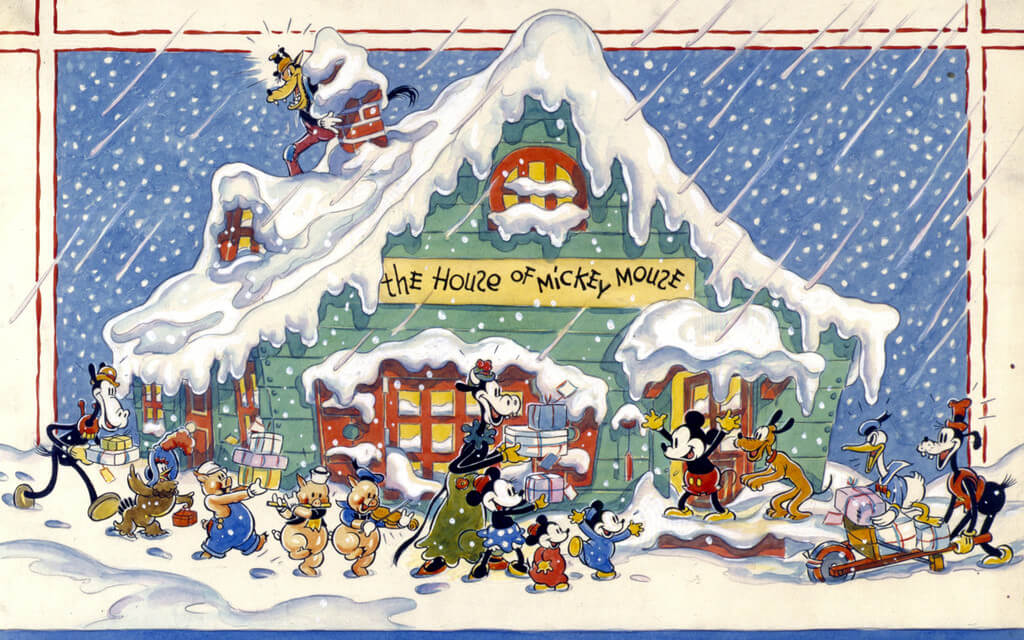
Article Sources
- Knickerbocker Santa Claus
- How New York invented the Christmas tree
- Who invented electric Christmas lights?
- Give the Lady What She Wants: The Story of Marshall Field & Company
- City Lights: Illuminating the American Night by John A. Jake
- Service and Style: How the American Department Store Fashioned the Middle Class by Jan Whittaker
- Knickerbocker: The Myth behind New York by Elizabeth L. Bradley