


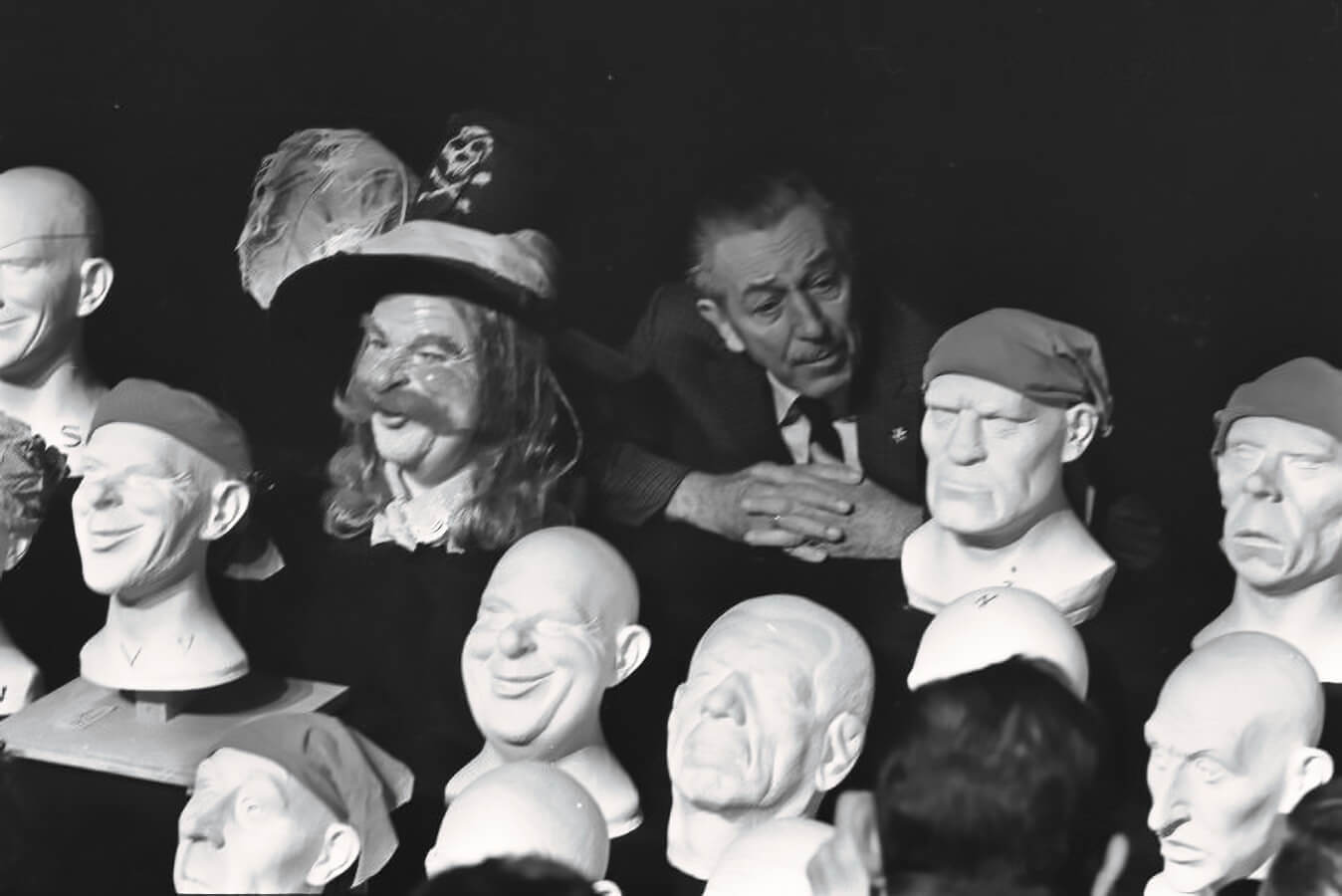
There is a folk tradition of describing a visit to the Disney Parks as one in which you have to act like a programmed audio-animatronic to enjoy yourself. There’s no shortage of online missives decrying Disney’s rule-bound nature, often from people who seem to believe that the entrance fee gives one license to act like a heel.
This is actually a combination of humor and hyperbole – it’s not as if being asked to move to the end of the row at the Tiki Room is a violation of your free will. But there has always been a dance between rules and play at Disney theme parks, between what you’d like to do and what you’re allowed to do.

This dance begins almost immediately. One of the goals of building Disneyland was to expand the production capability of the Disney Studio. One of the reasons why Disneyland turned out the way it did was because the areas reflected the types of movies that Walt Disney expected to make: small-town pictures and westerns. There was a very real plan to film the Mickey Mouse Club on what eventually became Tom Sawyer Island. More broadly, the location of Anaheim was chosen because it is still within Hollywood’s “Thirty Mile Zone.” Disney fully expected Disneyland to be – at least partially – a functioning backlot.
In the end, the park was simply so successful that it made more sense to keep it available at all times as an amusement park and Disney ended up buying the Golden Oak Ranch north of Los Angeles in 1959 to build western sets, storefronts, and faux residential streets.

So we can see that from the very start, the demands of theme park visitors surprised Disney and caused best-laid plans to go awry. I’d like to take a look at the history of Disney’s efforts to control their paying customers, a history that goes back to day one.

There is, most fundamentally, the switchback queue. Most amusement rides in history had a wait of some kind, but after Walt experienced the switchback at Knott’s Berry Farm’s Mine Train ride, Disneyland formalized the switchback as the standard. Those “cattle chutes” were there from the very start, especially in Fantasyland, where demand for Peter Pan’s Flight has been greatly exceeded by the ride’s capacity for six decades now. Disneyland has always been defined by its wait times.
And speaking of those days when Walt Disney still cavorted through the Orange Groves of Anaheim, one much-discussed aspect of the early Disney Parks can be seen as the very first attempt to manipulate crowd patterns. This was the introduction of the famous ride Ticket Books in October 1955. The stated goal of this promotion was to set a fixed price for a day at Disneyland, with admission plus a couple of ride experiences all bundled together. With no existing institutional knowledge of what was at Disneyland, too many would pay to enter, walk around, buy a coffee and leave.
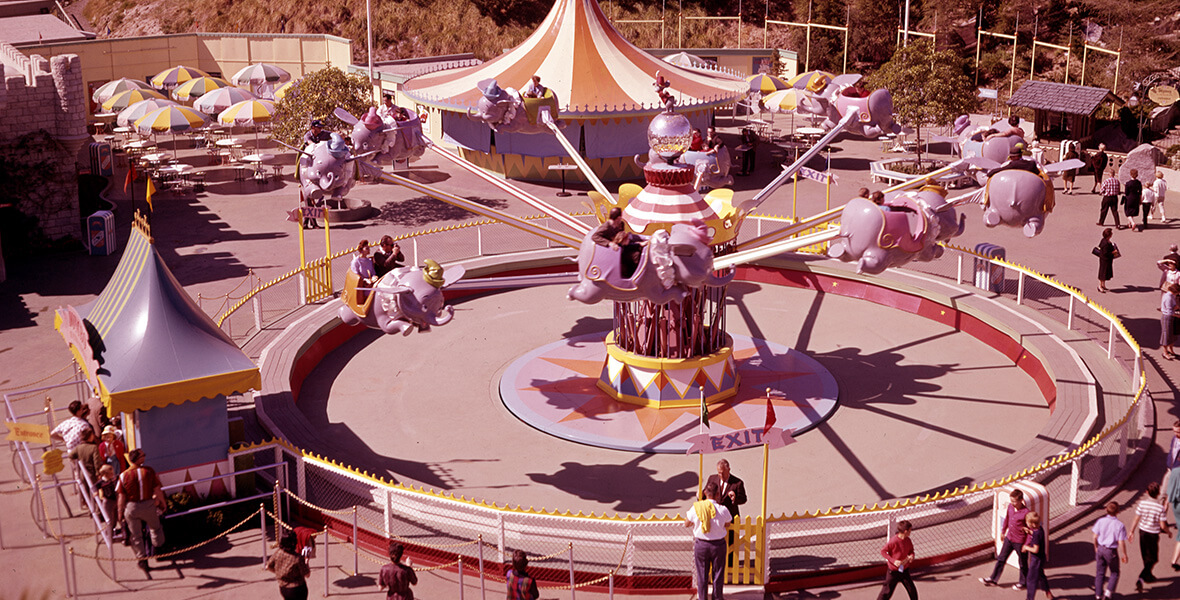
However, the Ticket Book system encouraged visitors to actually take advantage of the various facilities in the park instead of paying admission, balking at the wait time for Peter Pan’s Flight, and leaving. Because visitors had ‘already paid’ for a coupon, they were much more likely to take the trip inside the Satellite View of America or the Main Street Cinema. This helped Disneyland better absorb crowds and helped every facility make more money.
This brilliant system is a large part of what allowed Disneyland to expand as quickly as it did through the 50s and 60s because attractions could make back their development cost directly. This could be a pretty significant chunk of change; consider that in September 1967 Life Magazine reported that Pirates of the Caribbean was selling one million E Tickets a month. One million a month!!
But of course, if the Ticket Book system created an incentive to check out obscure corners of the park, it also created an economy of scarcity around the most coveted attractions. Through the 1970s the number of E Tickets in each ticket book continued to grow. The system would not be sustainable for much longer, unless Disney wanted to intentionally regress by building smaller attractions to soak up the extra demand – a practice that had pretty much ended by the early 60s. The rise of pay-one-price admission was pretty much inevitable.
That said, I would argue that of all the crowd control systems Disney has come up with, the Ticket Book is still the most graceful solution to the problem. It allows visitors to have an illusion of choice, to choose to subject themselves to long wait times or simply to go elsewhere. It put all visitors at the same disadvantage.
Walt Disney World added its own complications in 1971. Because East Coast vacationers knew less about the nature of each attraction, they tended to prioritize the “D” and “E” attractions and ignore everything else. Once Disney figured this out, they began to intentionally price attractions to push crowds towards them, which resulted in the Riverboat, Tom Sawyer Island, and Tomorrowland Star Jets all “costing” the same as the Enchanted Tiki Room. This caused some serious adverse comments amongst time-strapped vacationers. And so starting in 1977, Disney began experimenting with discontinuing the tiered ticket system at Walt Disney World, eventually rolling out their new all-inclusive pass to Disneyland and Epcot.
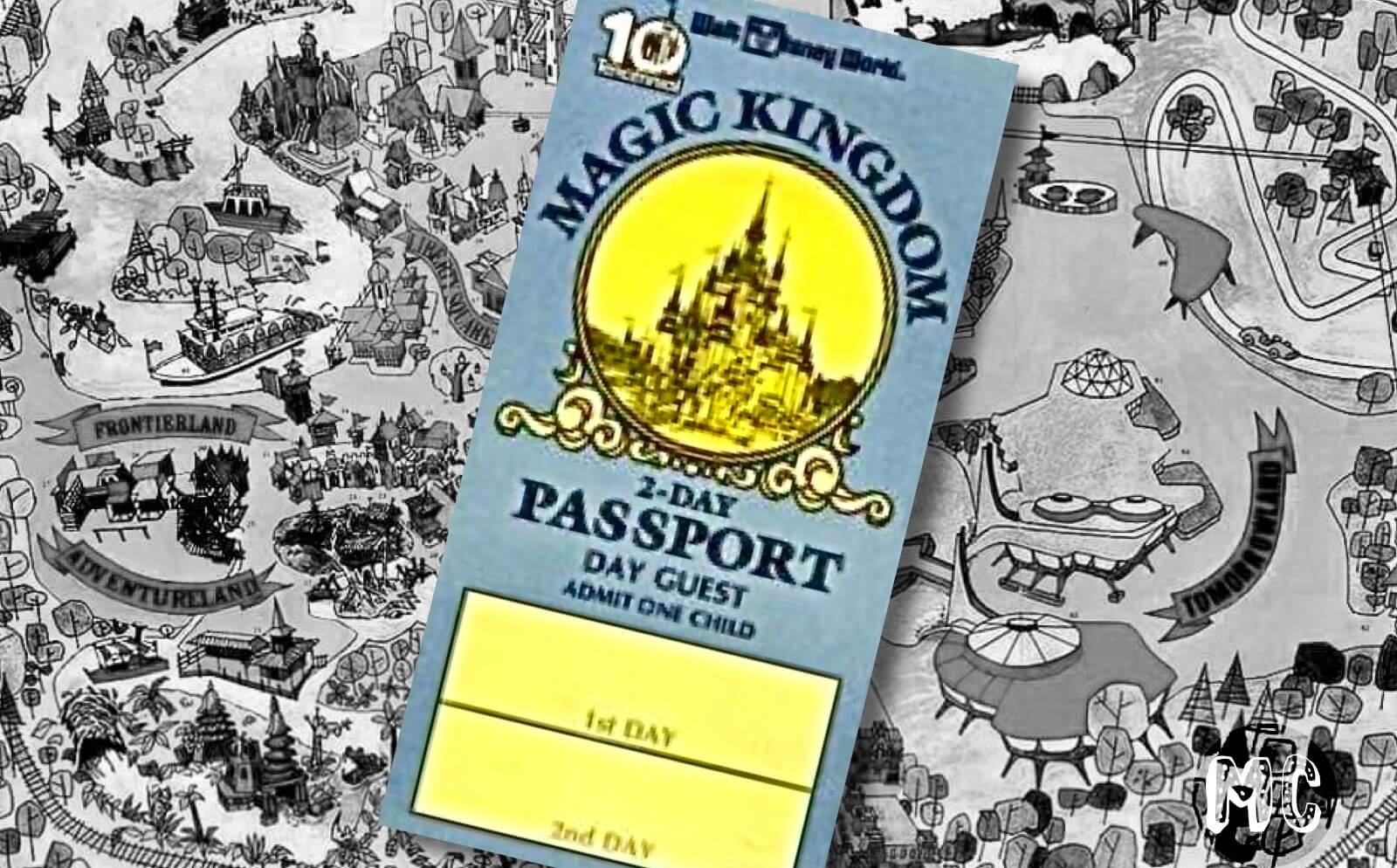
This had two immediate effects. First of all, it meant that the parks no longer had to expand to make more money, a discovery that Michael Eisner made very quickly upon becoming CEO of Walt Disney Productions. This decoupling of profit and attendance growth was initially offset by aggressive expansion initiatives at Walt Disney World, which expanded far quicker than demand had kept pace with. Many problems could be swept under the rug as long as prices continued to increase, due to natural variances in demand.
For instance, Disney had pretty much expected that getting out ahead of Universal by opening their Disney-MGM Studios in 1989 would cause Universal to withdraw from Orlando. But Universal did not withdraw and instead revised the design of their park to be more competitive with Disney’s offering. And despite opening a year after Disney-MGM, the Universal park was a better park than Disney’s studio park, and had immediate effects on Walt Disney World – even more pronounced back in the early 90s when Orlando had “only” 25 million visitors a year.
For the first time in the history of the Disney company, they saw what the average visitor would do when confronted with real competition. And what they did was they kept going to Magic Kingdom and the new MGM Studios, but ditched Epcot in favor of Universal. In other words, the Studios ended up cannibalizing their own attendance, not growing it. This put Disney in the position of having to spend money at EPCOT that they were not prepared to spend to funnel attendance back into that park. This set the standard for crowd dynamics that still play out today, with Magic Kingdom enjoying reliably steady crows but the other three parks constantly rising and falling in demand depending on their latest offerings. It’s a budgetary game of Whack-a-Mole that Walt Disney World has been trapped in since the 80s.
 Another attempt to grow the length of stay – Animal Kingdom – backfired, as tourists opted to simply split the morning of an existing day to see the new theme park. Animal Kingdom is a quarter century old this year, with little signs of breaking this long-standing tradition, as tourists simply up and leave in huge numbers around 3 pm.
In other words, Walt Disney World had pretty much hit the glass ceiling of American vacation practices in 1998, far too early for its own good. You need to understand this to understand the next 25 years of the resort.
In theory, the balance of supply and demand should have kept everything in check. Walt Disney World had added two theme parks, two water parks, a shopping complex and an astonishing eighteen hotels between 1984 and 2000. There was a false sense of security through the early 2000s amongst Disney management that all of this would be more than enough to keep demand in check for now.
How wrong they were.
We are going to spend the rest of this article looking at Walt Disney World, the site of Disney’s guinea pig experiments in crowd control. Despite efforts to turn Disneyland into an international vacation destination resort, it’s still largely a park for locals, which means the crowds pretty much take care of themselves. In contrast, at Walt Disney World in the early 2000s, there were basically three “buckets” of guests that Disney could expect to service on a given day.
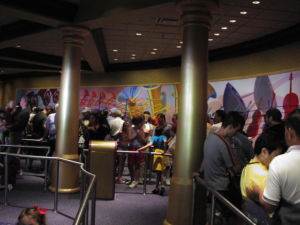
The first of these were resort guests; people staying at a Disney-owned hotel. Based on check-ins, Disney could reasonably accurately forecast attendance at Magic Kingdom and Epcot, the two parks which tended to be experienced first on a vacation. Therefore, resort guests were Disney’s preferred demographic.
But it was impossible to accurately forecast actual attendance, thanks to the second two “buckets”: Annual Passholders and day guests. Annual Passholders could be deterred by blockout dates, weather, or simply bad traffic on the highway, although it was impossible to deter all Passholders on all days. Day guests – those people who drove in from International Drive, paid for day parking, and bought their tickets at the gate – were a larger problem. The vast majority of these visitors would arrive with no real conception of what was at Walt Disney World and attempt to tour the parks the way they may a Six Flags. As a result, fatigue and dissatisfaction among these guests was high, which you would think Walt Disney World would care about. But what Disney really disliked was how these day guests messed up their math.
To explain, a large, labor-heavy attraction like Pirates of the Caribbean may have as much as sixty people working at it in a single day. That’s without factoring in energy costs, wear and tear – the costs of doing business, basically. Ideally, Disney would only schedule as many people as they would actually need, but in practice, this was an impossibility.
As a result, it was not uncommon for Cast Members to be moved to another attraction, to be released from their shift early, or be otherwise subject to the whims of attendance on any given day. Factor in the fact that Disney pays report pay, where you get paid for a few hours just for showing up, even if they don’t need you or move you elsewhere. Once you multiply that scenario over hundreds and hundreds of attractions, shops, restaurants, etc you begin to see why Disney was wasting significant money and effort in an attempt to stay ahead of demand. “If only we could find a way to get these tourists to stick to a plan!” they screamed in despair from the depths of an unfathomable horde of money.
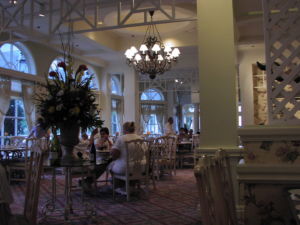
Well… everybody needs to eat, right? As a result in 2009 Disney World announced that they would begin accepting Advance Dining Reservations…. 180 days in advance. This had several knock-on effects – some good, many bad – but it was successful at giving Disney another metric to use in budgeting, scheduling and yield management. But as helpful as this move was in predicting attendance, it still was a drop in the bucket of the wide totality of guests. Who cares… no big deal… they wanted more.
Now, in the background during this whole era, you must realize that Disney was caught flat-footed by demand. The Great Recession had caused businesses to fail and markets to implode all around the world; Disney expected a slowdown worse than what they experienced in the aftermath of September 11. But… weirdly… that’s not what happened.
If anything, demand began to increase, and it took Disney several years to realize that they were behind the curve. The over-expansion of Walt Disney World in the 1990s created a false sense of security that Disney could simply optimize their problems away, that they had more than enough attractions.
All of the sudden it was a real problem that they needed to expand but were institutionally incapable of keeping pace with demand (Disney moves so slowly that even the most aggressively budgeted and fast-tracked new attraction cannot possibly open in less than five years). Even worse, Universal opened their Wizarding World of Harry Potter in 2010 and finally began to really challenge Disney for market share. All of this was hitting the fan concurrent with the rise of smartphones, social media, and a drastic need to rebuild Disney’s back-of-house tech infrastructure.
Disney’s ambitious plan was that basically everything at Disney World should be an Advance Dining Reservation – rides, fireworks, meeting Mickey Mouse – everything. They dreamed heady dreams of tourists shuffling from frictionless experience to frictionless experience, shuttled along like Twinkies on a conveyor belt. In theory, the customer upside would be a totally integrated experience, with payment cards, park tickets, room keys and Fastpasses all working through an unobtrusive wristband. The Disney upside would be constant real-time tracking. They envisioned being able to pick out a single person using a toilet in Fantasyland and being able to track their discomfort back to a malfunctioning pizza heat lamp in Tomorrowland.
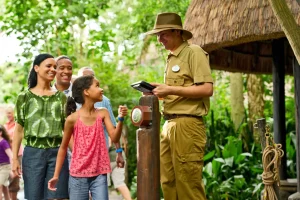
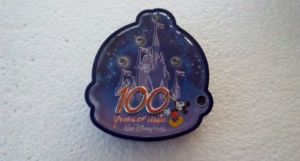
This is absolute fantasy thinking but Disney had been chasing this particular dream for a long time. Those of you who walked the earth during the Clinton administration may recall the 100 Years of Magic “celebration” (2001 – 2003), ostensibly in recognition of the 100th anniversary of Walt Disney’s birth. The big hotness that year was Pin Trading, an activity deemed so essential to the celebration of Walt Disney that the event’s promotional icon – a huge Sorcercer’s hat – was actually a store devoted to selling pins. It was Disney’s answer to the Beanie Baby.
Unique to the promotion was a special thick plastic pin that was promised to “interact” with “magical moments” throughout Walt Disney World. Said interaction consisted of strobing lights during parades and fireworks as well as at specific moments in classic attractions (the only interesting one of these I remember was the flashing lights synchronizing to the bride’s heartbeat in the Haunted Mansion). This trick was accomplished with RFID admitters stashed all around Walt Disney World that the plastic pins could recognize. But behind the scenes, these same RFID emitters were silently tracking how many pins they interacted with on a daily basis. I can clearly remember watching Fantasy in the Sky one night and seeing dozens of these little pins lighting up and bouncing around everywhere I looked. The numbers must have been good because within a few years, Disney rolled out Phase 2 of their plan.
This was Pal Mickey, a stuffed Mickey Mouse toy with, um, “interactivity”. Pal Mickey had an RFID transmitter in his nose which could interact with emitters placed around the parks. In this way, Mickey could vibrate to tell you jokes, point out interesting pieces of trivia, or even let you know if a nearby attraction had a short line. All of this for the low price of $25 dollars a day plus a $50 deposit!
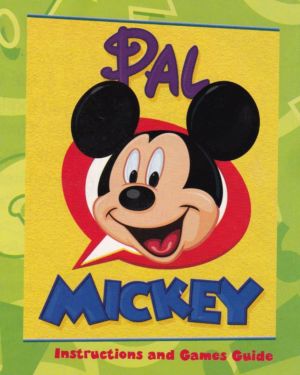
If all of this sounds like a lot of money for something not that impressive, that’s what guests thought too and Pal Mickey bombed almost immediately. But the not-so-subtle intent behind Pal Mickey was guest tracking. Each Pal Mickey had a unique digital signature, meaning reconstructing a guest’s day based on transmission signals was relatively easy. The plushes were ferried back and forth from a command center to each merchandise location for reasons that we front-line Cast were not privy to. This is why the plush was rented rather than sold; Disney was gathering this data. Disney World had grand ambitions.
—
I worked at Walt Disney World through this whole era and here I should stop to relate my “NextGen” story.
One week in late 2009, I had been scheduled an unusually late shift at the Haunted Mansion… something like 7 pm to 1 am. Upon arriving at work I discovered that the park was actually closing at 9, and myself and three other cast members were to stay afterward and help with some sort of testing that our managers absolutely refused to explain to us.
At first, this seemed like a great gig: sitting around and not dealing with customers all night! But as the night went on it became increasingly clear what Disney was up to. Shortly after the park closed a bunch of tech guys appeared with huge rolling bags, folding tables and laptops and set up a command center in the Library scene. Then a gaggle of Office and Technical employees, maybe around sixty of them, appeared in the load area. Each of them was given a plastic wristband and given a specific arm to wear it on.

These testers would be loaded onto the attraction and sent down through a thicket of sensors built around the ride track in the Library. Sometimes they would be asked to hold the Doombuggy handlebar, sometimes they would be asked to place their hands in their lap. After every occupied buggy had passed through the sensors, we operations cast would be telephoned and told to turn off the ride. Then we would walk the ride path, opening each buggy and walking the staff back to Load, where we would start again.
At first, this was novel, even amusing. But after hours of this, the tedium began to gnaw at my insides. I really began to wish I were doing anything else. I could be home, or cooking, but instead, I was stuck at work with this awful task. The enthusiasm of the testers ground down rapidly, too – the ride was operating in Maintenance mode, meaning the show was turned off and the work lights were on, so it’s not as if they were actually riding the Mansion. The night’s early enthusiasm had evaporated.
The testing wrapped up around 1 am, and we operations staff handed the attraction keys over to Maitenence and headed home. The bus from Magic Kingdom to the Parking Lot, ordinarily jammed full of employees, was empty except for us four Cast Members.
We all just looked at each other. The orange street lights passed by outside. Even the music was turned off. Finally, one of us spoke up and said what we all were thinking: “Disney shouldn’t have this technology.” We all silently agreed. All four of us found new jobs within the year.
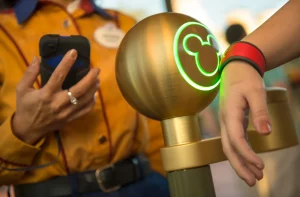
NextGen ended up being cynically sold to the public as “MyMagic+”, but the guest tracking component never really got off the ground. RFID sensors lurked on the roof of Cosmic Rays’ alongside one of Magic Kingdom’s busiest walkways for a few years before vanishing unceremoniously. Disney was simply too busy putting out fires in the rest of their 2 billion dollar dumpster inferno to bother. Most of the ambitions went off course or were never implemented.
I don’t need to re-litigate the failures of NextGen and Fastpass+… the damage to the guest experience, the waste of billions of dollars that could’ve gone towards expansion, the departure of Tom Staggs, the ascent of Bob Chapek. The NextGen tech initiative may have been the single worst decision ever made by the Walt Disney Company.
Which brings us to Disney’s latest way to insist that you play by their rules, the park reservation system.
As a former ride op, when this system was announced, I predicted it would never go away. It simply gave Disney everything they’ve wanted for the past twenty years – finally, a reliable, absolutely clear way to forecast and control attendance. The repeated references during earnings calls to the Park Pass system as the “cornerstone of the success” of the theme park division only reinforced my belief. And yet, the pass system has started to be rolled back at Walt Disney World.
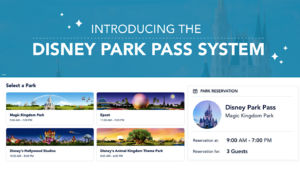
I’d be curious to know the full story behind the decision. It’s not as if the move towards increasingly “choreographing” the park experience, so borrow Disney’s phrase, did not begin with Disney CEO Bob Iger’s approval. But the speed with which this crown jewel of Disney’s was undone suggests that many business units within Walt Disney World were in concord. And so they willingly gave up on a goal they had been chasing for two decades. This must have been exceptionally painful for some within the company.
Looking back on all of this it’s startling how deeply the last 20 years of these initiatives have been entirely about improving Disney’s operation of the parks and not at all about the guest experience. And that’s really what hurts this author the most. Even while I still lived in Florida I stopped going to Disney World around 2016 – it was just more trouble than it was worth. I’ve actually flown out to Disneyland more frequently in the last seven years than I’ve set foot in the East Coast parks. Disneyland is, yes, not without its flaws but it suits my touring style and temperament better.
And so I did not celebrate the end of ParkPass at Walt Disney World or dare to suggest that this is a rare win for consumer-friendly practices at Walt Disney World. I was surprised, yes, but I’m a realist and I’ve seen too much. Because if history tells us anything, it’s that right now, as you read these words, Disney is working on another way to control your vacation.
Foxx Nolte has been writing about Disney World since 2006 and is currently working on their second (and third) book! Check out their first book Boundless Realm: Deep Explorations Inside Disney’s Haunted Mansion through Amazon, Barnes & Noble, or Bookshop.org while waiting for more! Thank you for supporting independent Disney historians.