


The Marvel Universe is a favorite getaway destination at my house. Whether my family is reading comic books, watching television, playing games, or going to the movies, we’re often on a Marvel kick. There is a certain magic to the world, a sense of awe, and wonder that long-time Walt Disney fans can also relate to. This is thanks in part to the founding fathers: people like Jack Kirby, Steve Ditko, John Romita Sr., and of course Stan Lee.

Stan was best known as a writer for Marvel. He worked his way up the ranks, going from errand boy, to editor, and eventually creative director, and producer. Mr. Lee, like Walt himself, had a special way of connecting with his audience. He didn’t have a weekly television show, or a “Marvel-land” that people could visit. Instead Stan got his message across through his monthly comic books, specifically his “Stan’s Soapbox” editorials. The way he brought characters to life was a master class in creativity. He could get readers hooked on every tale. Whether he was writing about a doctor-turned-sorcerer, a scientist becoming a monster, or a teen bitten by a radioactive spider, fans were born with each story. The worlds that Lee created were translated into dozens of languages, and managed to reach every corner of the globe. These properties are now associated with great movies. No less important are the hit games that have been released in the past few years. One of the most successful titles, Marvel Contest of Champions, is now celebrating its fourth anniversary. This is a feat in and of itself because most mobile games are popular for a few months and then fade away. Being relevant and commercially successful year after year takes a lot of hard work.
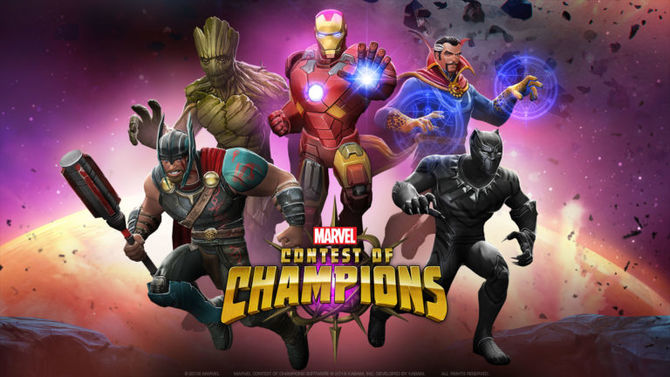
Marvel Contest of Champions (MCoC) is a mobile game developed by Kabam in Vancouver. Chances are you’ve seen the title even if you don’t have it on your phone. It is featured at most pop culture conventions, including the D23 Expo. Historically, the majority of comic book-based video games have been duds. Every now and then studios get the properties right, and MCoC is one of the good ones.
There are many reasons why the title has a dedicated following. The game itself is very unique. At the core it is a fighting game, but that is an oversimplification. Traditional fighting games like Street Fighter or Tekken are sometimes very technical, but also very linear. Most fighting games require six buttons and a joystick or pad to input controls. Kabam simplified this input for the touch screens. Players can still move easily, attack, defend and perform combination strikes with simple taps. Traditional fighting games are also similar every play through. Characters do not grow and change from day to day. MCoC on the other hand is constantly evolving. Just like comic books, the adventure is different each time you play. New characters, new stories, and new challenges are introduced with each major update. It also allows for single-player experiences, and even 30-player “Alliances.” There is tremendous strategy involved with each main quest or side quest you play. Kabam changed the way we think about fighting games by incorporating elements from role-playing and dungeon crawling games. Yet at no point does it lose its accessibility. All of these things are almost impossible to recreate in a traditional fighting game. Even though the game is four years old, you can still start playing today and not be at a loss. Keeping players engaged for the long haul takes a lot of hard work. This is where the team at Kabam shines.
Stan Lee did not run the Marvel empire by himself. There was a board of directors that helped shape the company. There were also hundreds of talented writers, artists and editors to get new comics, cartoons, television shows and movies made. The ones that were knowledgeable and passionate about the IP often succeeded. They knew the right people to hire, and which direction to head in. Think about how great Marvel is now with live action film and television. It is no accident that senior executives are intimate with the comics. They choose the writers, actors and directors that best fit the projects. The same insight works in gaming as well. Kabam is a studio filled with with many Marvel fans. It shows in the quality of their game. It shows in the stories they tell, the characters they select, and the details they layer throughout. Each team member uses their knowledge and expertise to help bring the Marvel Universe to life. After all, you could fill any game with dozens of characters, but making it fun is where the real talent comes in. I had the fortune of having two voices at Kabam, Scott Bradford – Quest Designer, and Dominic O’Grady – Lead Quest Designer answer a few questions for me.

What was your earliest Marvel memory?
Scott: I have very vivid memories of getting those wrist-mounted silly string web shooters for Christmas one year, and going crazy and spraying silly string around the house. I think there’s probably still some stuck to the stucco in my mom’s house that never got cleaned up. If we’re talking comic runs, one of the first I ever read was New X-Men Vol. 2. A friend of mine would read each issue and then pass it off to me, and it would make it through our friends group.
Dominic: Like a lot of adults my age, one of my first interactions with anything Marvel was the now-famous 90s Spider-Man cartoon. I was immediately hooked on the action and the colourful characters, and quickly dove into the universe at large. I also have distinct memories of playing an Avengers beat ‘em up on the SNES that was fun, but brutally difficult. It made me a fan of Iron Man because his long-range beams allowed for safer play!
Any plans to adapt Marvel Contest of Champions to a traditional 2-player console fighting game?
Scott: As a game designer, I’m always a bit leery of games that are purpose built for one platform when they get ported to another. It’s not just about mapping controls to a keyboard or controller, there’s plenty more than just controls to consider. One of our character designers did actually map the controls to a controller for fun once just to see how it would work, and it definitely does, but there were new problems that arise that you don’t foresee. When we design events and systems, they’re designed with the platform in mind so while it’s technically possible, there’s a lot more to design beyond just the controls. That’s the long answer, but the simple answer is: we’re really happy on mobile because it allows us to reach the largest possible audience.
Dominic: Scott outlines it pretty clearly above. It’s a really cool idea, and we’ve definitely kicked it around internally, but so, so much more goes into something like that than just trading out a control scheme, to the point where it’s just not feasible.
Despite not being announced for the consoles MCoC is actually being ported over to arcades with the help of Raw Thrills (H2Overdrive, Injustice Arcade, Jurassic Park Arcade). The two-player cabinets will begin turning up at Dave & Buster arcades just in time for the premier of Captain Marvel on March 8.
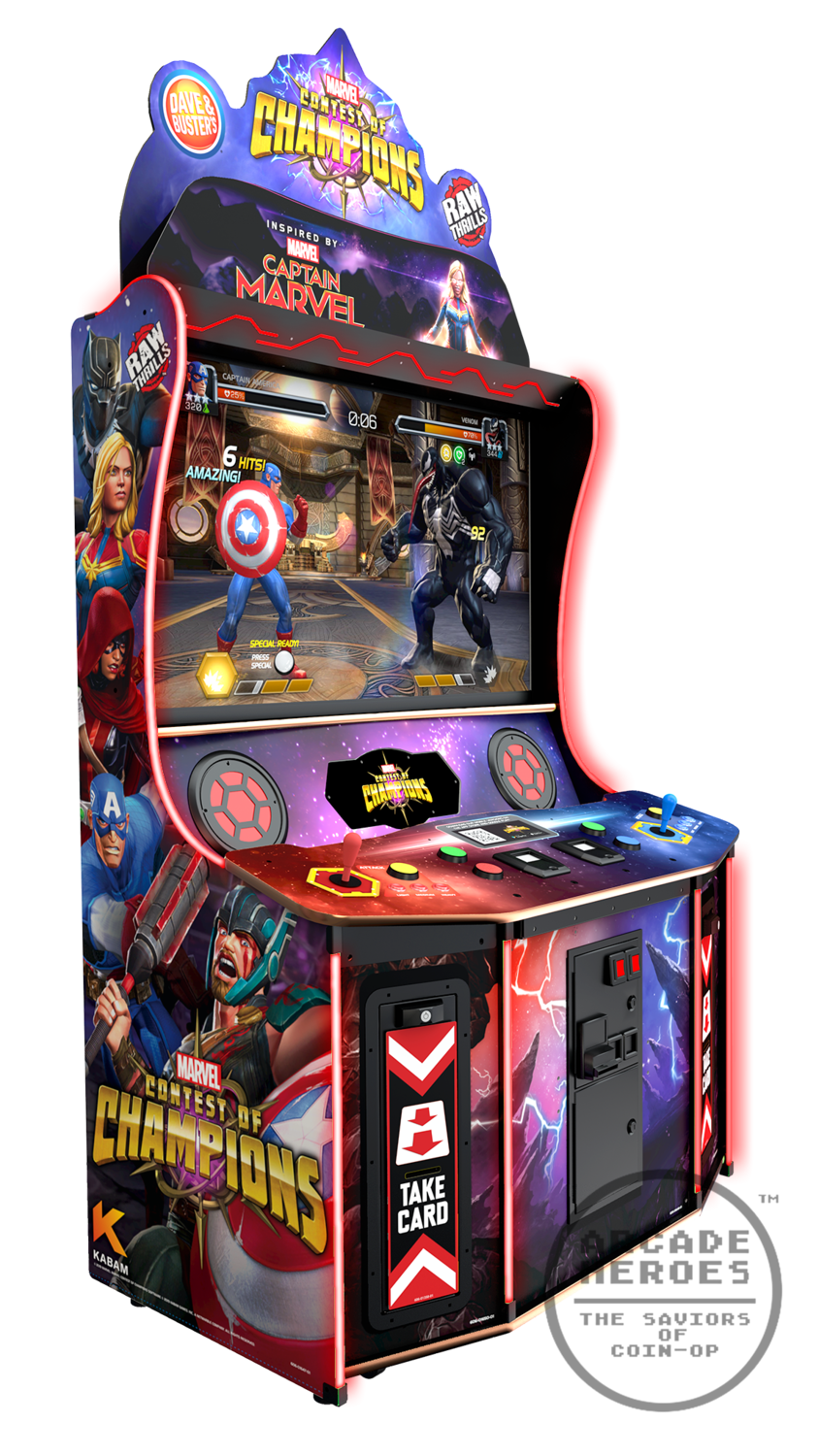
Click to visit rawthrills.com/
Mobile games don’t get much attention, especially on Disney community sites, but this game has earned some press. When Marvel Contest of Champions debuted in 2015 it got over 40 million downloads, and garnered over $100 million in revenue. That is more than double what Marvel Future Fight by Netmarble Monster Inc. made the same year. This is remarkable considering that MCoC is free to download, and free to play. Like many popular mobile games it actually makes revenue from micro transactions. Audiences can play for free. They can “farm” or play levels over and over for days at a time in the hopes of earning a rare item. Or they can spend a dollar here and there to buy guaranteed rare items, and collectibles. Think about how some people spend $6 on coffee every morning. Paying $1 for a rare in-game item is a bargain by comparison. Now multiply that occasional dollar across millions of players. This is how micro transactions rapidly add up. There is a major challenge to mobile games however. Games can fall out of favor as quickly as they appeared, and those micro transactions can dry up overnight. Keeping players engaged takes a lot of work. The studio has to patch the game, help balance the characters, give audiences a reason to collect and return for new challenges. There were no comic book-based mobile fighting games to draw inspiration from. Kabam had to start from scratch.

How did you overcome your biggest challenge during the early stages of Marvel Contest of Champions?
Dominic: Early on, it was figuring out how we would tell stories in the game. Initially our Champion releases in the first months of updates weren’t as themed as they are now, so when we decided to start trying monthly event quests that WEREN’T related to movies we had to come up with our own reasoning on why these new characters would be paired together. Quickly we realized we could tell our own cool stories, and Marvel was massively supportive in letting us weave together our own setting and narrative that worked in the game.
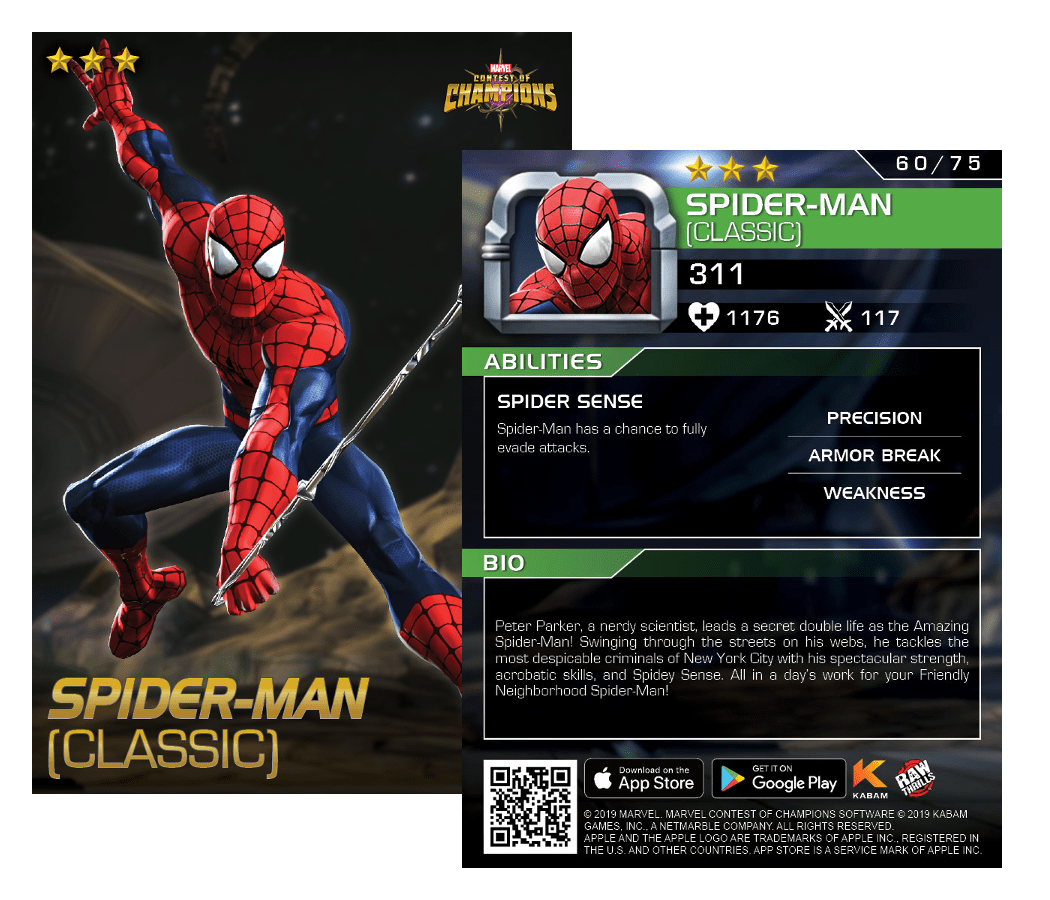
That support from Marvel was due in part to the stellar numbers the game generated. When we think of Marvel’s biggest hits we often think about the success at the box office. What if I told you that MCoC has earned as much money as some of the biggest movie blockbusters? As of this writing it is ranked #15 on the top grossing games list, with about $146,000 in daily revenue. Those daily numbers fluctuate, with top performers earning millions a day. The title has been the #1 ranked free to play game on several occasions. Check out the stats on thinkgaming.com
In 2017 MCoC was ranked the eighth most successful Android game, earning over $170 million. It recaptured the #1 spot for mobile, when it passed $3.1 million in player spending on July 4, 2018. Thanks to the introduction of the Ant-Man and Wasp, which coincided with the release of the movie. There was another spike on Cyber Monday in 2018 when it earned over $3 million in one day as well. The conservative estimate is that MCoC has generated over $400 million since its debut. It would make this mobile game comparable to the success of Iron Man 3, or Captain America: Civil War. Of course, this game keeps on going and becomes more valuable each day.
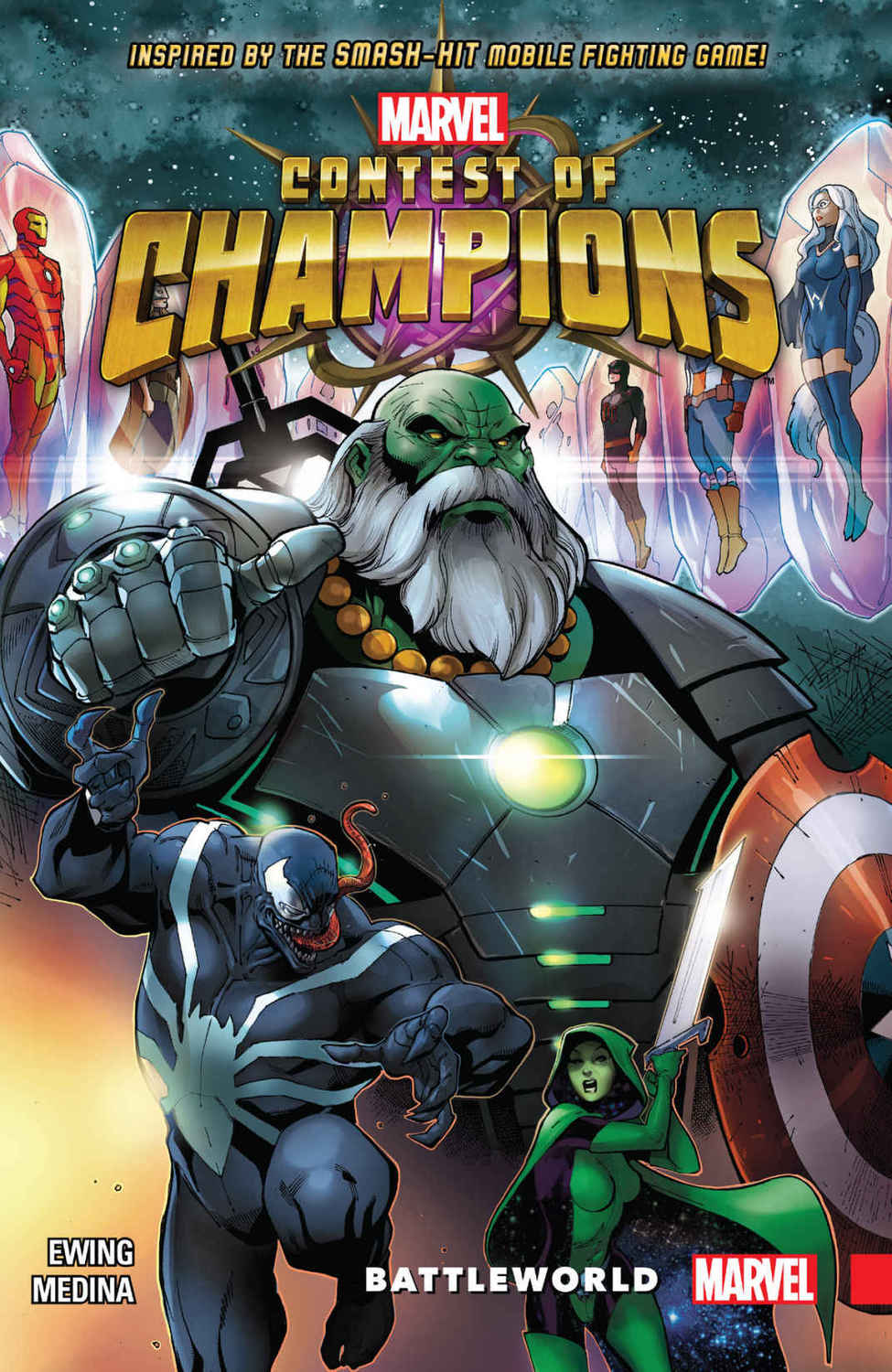
The Marvel company explored MCoC in different ways. A 10-issue Marvel Contest of Champions comic book was published in 2015 to help introduce audiences to the Battlerealm, the setting for the game. Later on a digital comic written by Gabriel Frizzera, the Creative / Art Director on MCoC, and Marvel artist Luke Ross was released. The Young Elders Tale from 2018 expanded on the origins of Taneleer Tivan, better known as the Collector, and his brother En Dwi Gast aka the Grandmaster. The duo of eccentric “Elders” became much better understood (and more sympathetic) thanks to this story. A two-figure toy pack by Hasbro featuring the Collector and the Civil Warrior (an original version of Steve Rogers in Iron Man armor from the MCoC) was released as part of the Marvel Gamerverse toy line.

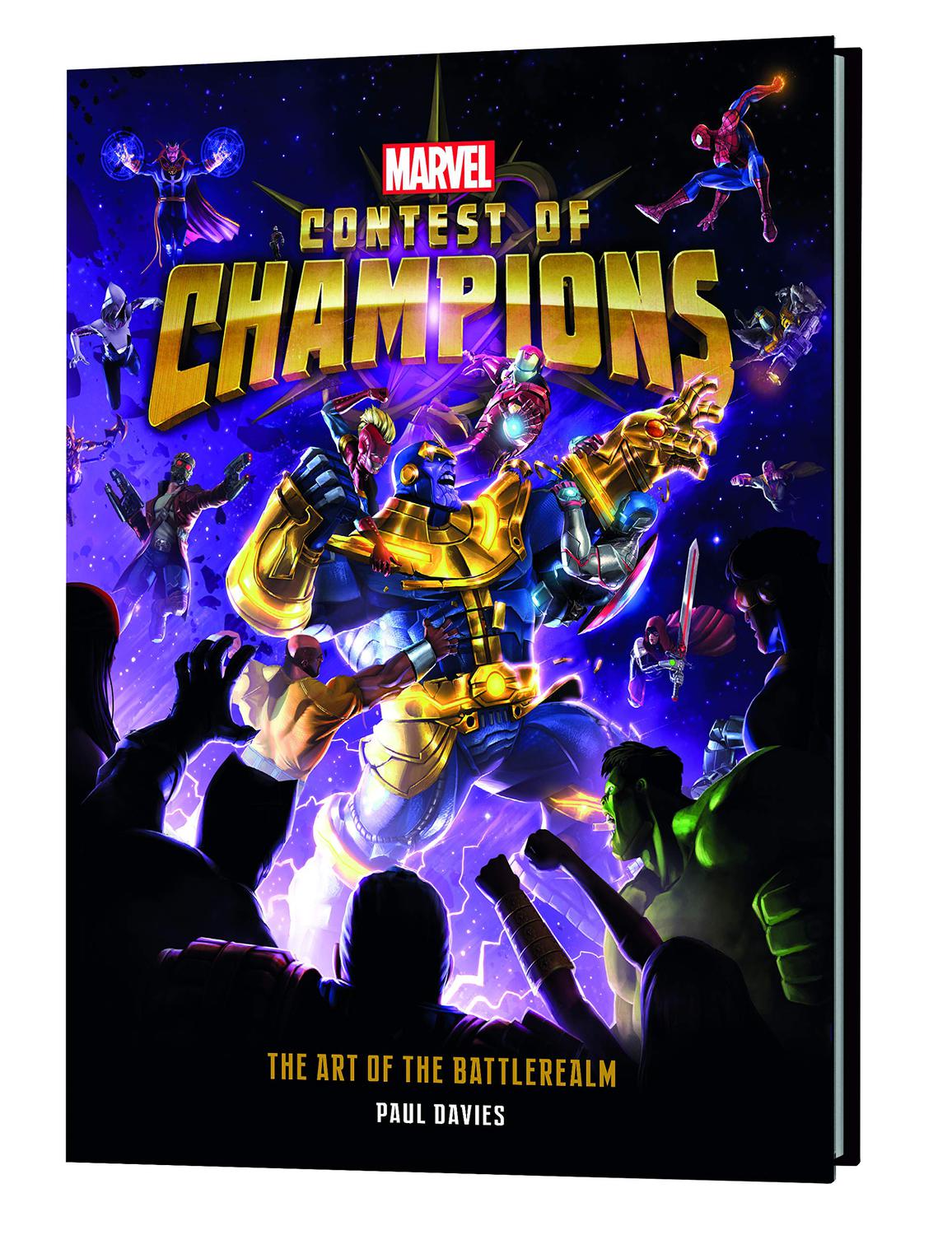
The game has even celebrated the release of a hardcover coffee table book. Marvel Contest of Champions Art of the Battlerealm by Paul Davies is a must get for Marvel fans. It is the only book that I have picked up based on a mobile game. It gives notes from the designers, shows rare concept art and catches audiences up to the last few years of development.
Marvel Contest of Champions had a comic book, and digital motion comic published. How do you feel knowing that your slice of the universe is now part of Marvel canon?
Scott: It’s pretty amazing. Marvel means a lot to a number of people and they’ve spent 80 years now doing amazing things. I think more than anything, what we feel is honoured.
Dominic: It’s humbling and exciting. As Scott says, we’re just honoured to be part of the team in a real way!
Would you like to see more comic books based on your game?
Dominic: Yes, yes, and yes. Bonus points if we could work closely with the writers and artists to tie it into the game’s existing narrative even more! Our format can sometimes be limiting for storytelling, so being able to explore moments in or between the stories we’ve told in greater detail would be very exciting.
There are many things that are appealing in the Contest of Champions. The game itself is fun, the narrative is rich and the character designs are among the best I’ve ever seen. Do you think the MCoC would work as a movie, television show, toy series or even theme park (attraction)?
Scott: I totally think it could – I mean, it kind of did already in Thor: Ragnarok. If you remember, The Contest of Champions is what the Grandmaster is running on Sakaar. I think the format could work really well as a TV show especially – there’s plenty of drama to be had in pitting all these characters against each other.

Dominic: We’ll take all four, please! At this point our list of characters is so broad we could tell a huge variety of stories. There would be something for everybody!
The sense of scale for a mobile game is possibly the most impressive thing Kabam has accomplished. The known universe of MCoC has been mapped in the Art of the Battlerealm book, but there are large unknown swaths on the map. Despite four years there is still a lot left to explore. Kabam does not follow a particular story arc from the movies or comics. Instead they have gathered the heroes and villains together for a new plot involving a prize known as the ISO-Sphere. This item can change the very fabric of reality and the Collector has to have it. There are many side adventures that happen during the quest to retrieve the ISO-Sphere fragments.

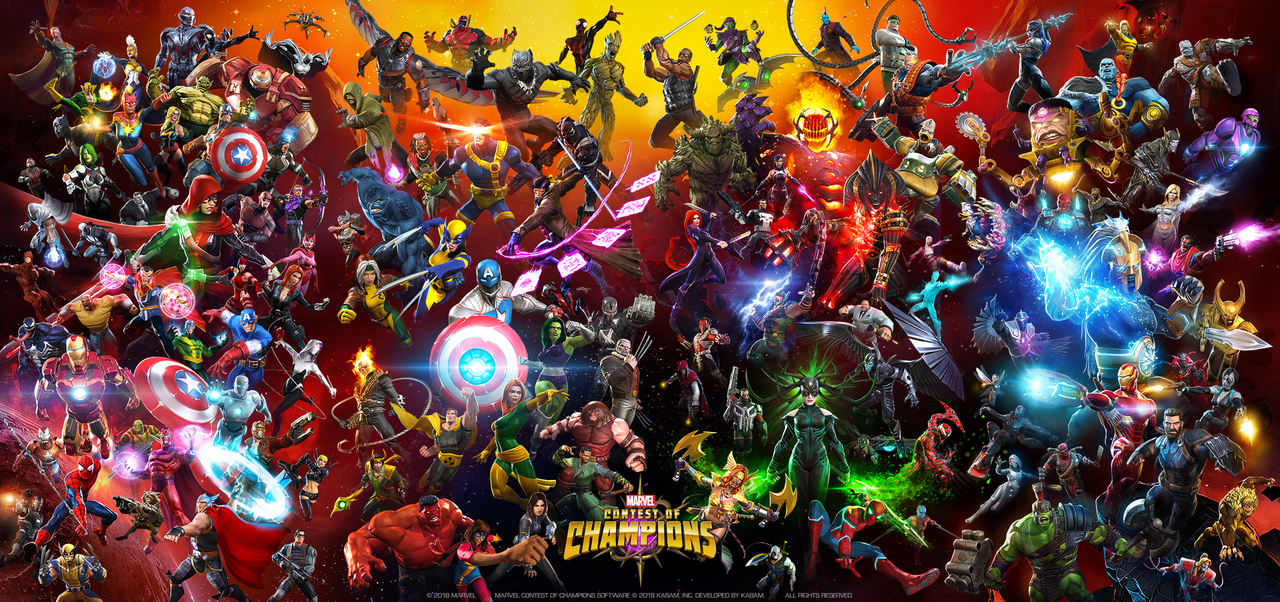
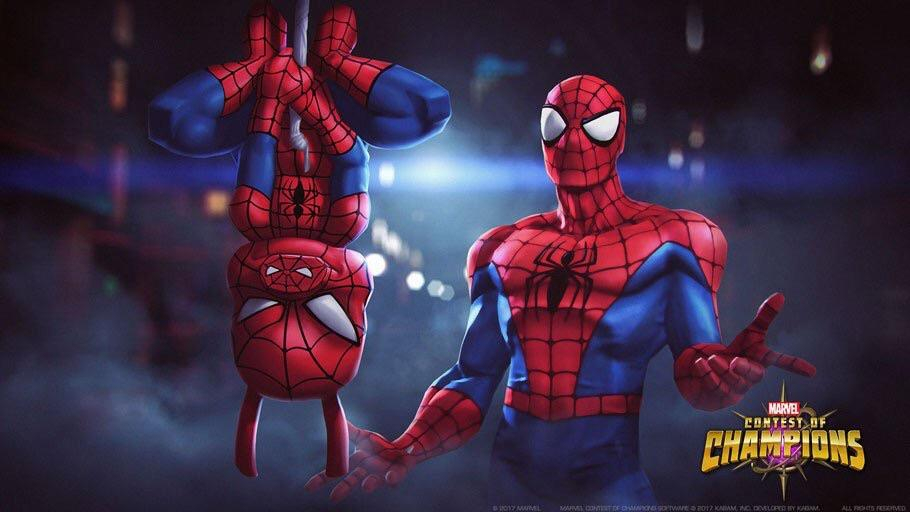
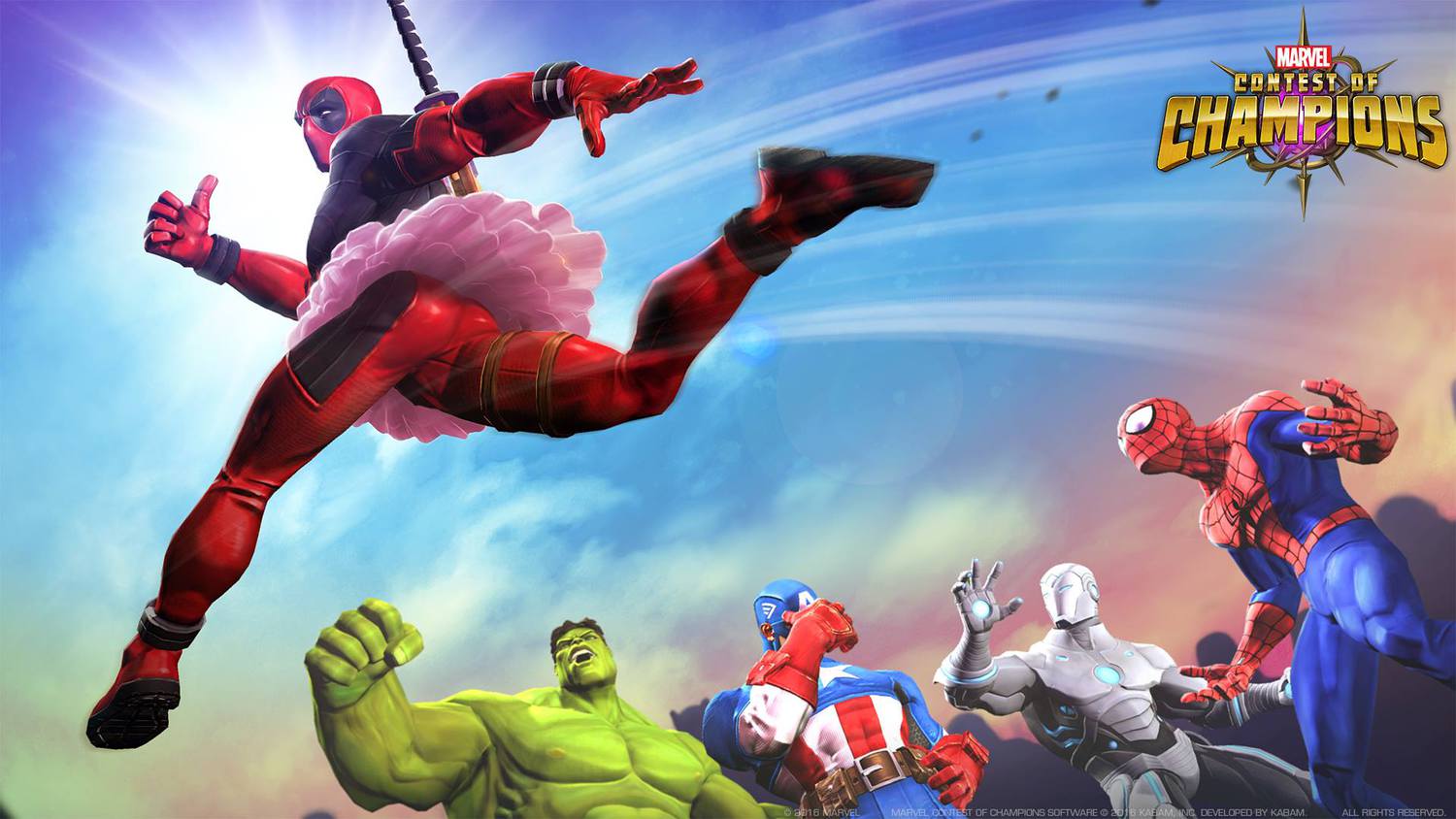
The studio has the creative freedom to introduce new faces, such as Guillotine, a sword-fighting French heroine and Ægon, an alien gladiator. Or they can use classic characters like the Incredible Hulk, modern revisions like the Miles Morales Spider-Man, and even live-action versions such as Captain America from Infinity War in their title. It is this mix of faces which is most interesting. The studio expands the idea of the multiverse, something you may have gotten a glimpse of from the Spider-Man Into the Spider-Verse film. There can be different versions of Spider-Man, Iron Man or the Hulk existing at the same time. They each come from different dimensions. Each one plays slightly different than the others. The almost 150 fighters in the series are not available right off the bat. They are introduced through the various chapters. In this way players are surprised with each new person they encounter, and unlock.
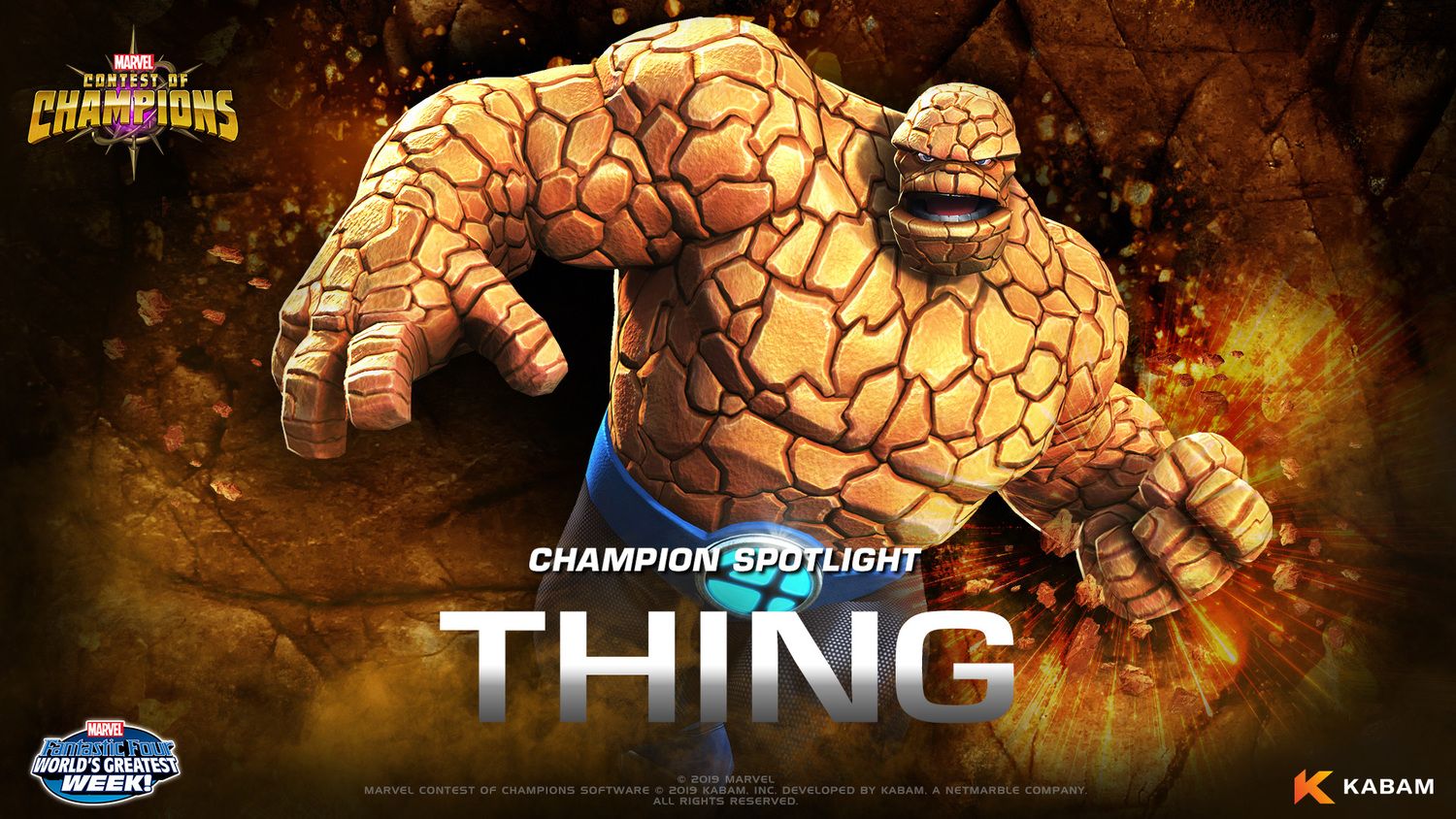
Kabam has been building up to something big recently and that was revealed at the end of 2018. Ben Grimm, better known as the Thing from the Fantastic Four comics made his debut in the game. Kabam plans to release the remaining three members; the Invisible Woman, Mr. Fantastic and the Human Torch through 2019. Unlike the live action films, which Fox Studios had the rights to, Marvel has no problem using the Fantastic Four in a video game. Fans speculated that other supporting characters like Dr. Doom, the Silver Surfer, and Galactus might also be planned for the future. I asked about this.
You probably can’t say how or when the remaining three will be revealed, so instead, which of the four are you most like?
Scott: Tough call… I’d probably have to go with Thing. I don’t have blue eyes, but Ben’s heroically loyal to his friends and family – I’d like to think I have the same character.
Dominic: Human Torch is my favourite, you just can’t beat how slick his powers look. And for the record, we have some really cool stuff planned for each of them, and for the team as a whole.
I look forward to seeing what else is planned for MCoC beyond 2019. I hope that this has gotten you a little more interested in the title if you are not already playing. For the readers considering a job in the game industry. Kabam is filled with talented men and women from all over the world.
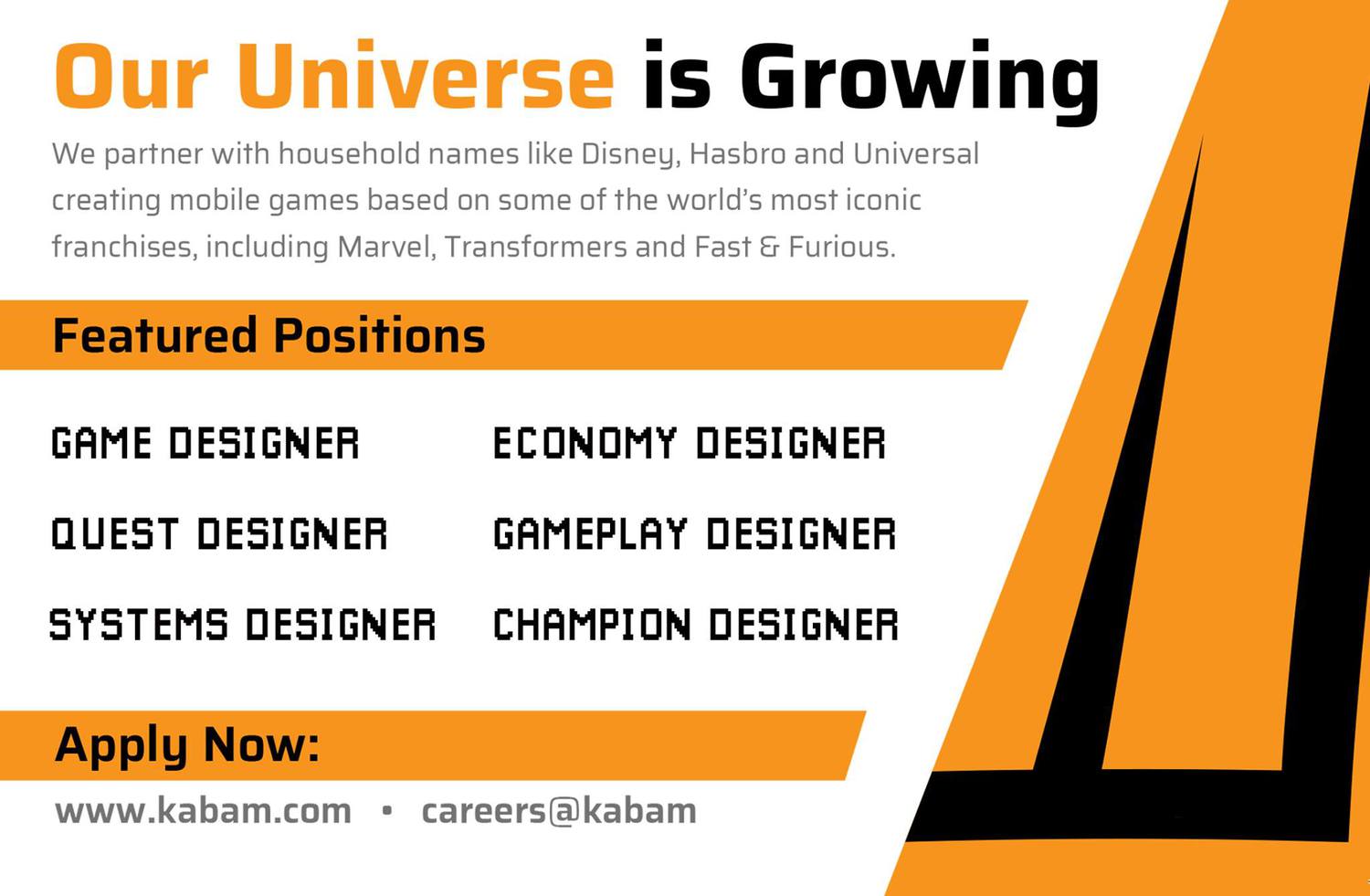
What advice would you give readers if they wanted to join your team? What skills or experience do they need?
Special thanks to Vincent H. at Kabam and Becka M. at Marvel for helping me secure the interviews.
Learn more: