


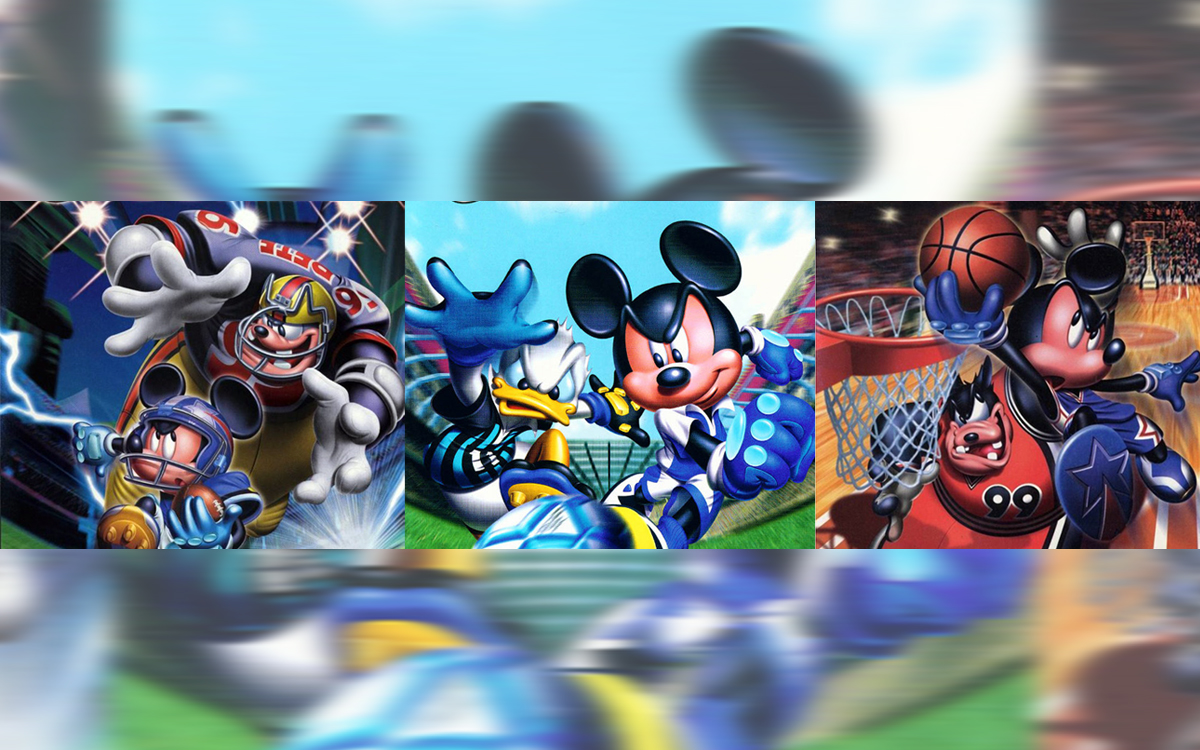
Ed. Note: Noe’s back with another installment about the DSN games. I loved all of the Disney callouts in these games! But first a quick event reminder for this weekend:

If you want to Tiki Party with Fab, Noe, Dusty and more of the MiceChat family:
Tiki Night in Hollywood is THIS SATURDAY. Full Polynesian review at 8:30pm, Mai Tai Dole Whips, island-inspired sweets and treats, and you can trade your mugs with other guests.
Proceeds benefit the National MS Society. (Remembering Annette Funicello, whom we lost to MS).
GENERAL ADMISSION TICKETS ($35) include 8:00pm entry, access to all Tiki Night activities, and the Polynesian Review. – Tickets Here
VIP TICKETS ($50) include 7:30pm early entry, a complimentary Tiki Mug, access to all Tiki Night activities, and VIP seating for the Polynesian Review. – Tickets Here
- Schedule
- 7:30p – VIP Early Entry and Tiki Mug pick up
- 8:00p – General Admission Entry
- 8:00p – Tiki mug trading begins (if you brought a mug to trade)
- 9:00p – Polynesian Review
They’ll also have Polynesian inspired sweet treats courtesy of Sweet! Hollywood, A No Host Bar (Proceeds go directly to the MS Society), Raffle Prizes, and a few other surprises we’re working on!
All advance ticket sales will also be entered to win a pair of Disney theme park tickets good AROUND THE WORLD (except Tokyo).
If you want to make a Disney Day of it, Flubber is playing at Disney’s El Capitan Theatre at 10:00am, 1:00pm, 4:00pm and 7:00pm just across the street! Buy tickets online at https://elcapitantheatre.com.

Take it, Noe!
Disney Sports Soccer
Disney Sports Soccer was a certifiable hit when it was released for the Nintendo GameCube in 2002. It was competing against established soccer franchises and holding its own. Audiences were surprised how fun it was, considering that Konami and Disney Interactive weren’t known for cartoon sports titles. It controlled smoothly, was easy to learn and yet difficult to master. It found that balance between an introductory sports game and something for seasoned players to enjoy. The game worked well for single and multiple players as well. It had the features that audiences came to expect from modern sports games. They could do basic team management, change formations, change players, names and upgrade their stats by winning games. Every team had its own strength and weakness, some were fast, some had great stamina, and some were strong defensively. There were also multiple game modes and difficulty levels as well.
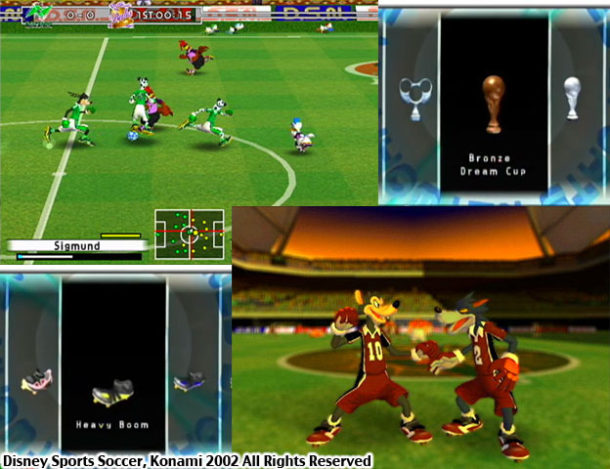
Where it set itself apart from traditional soccer titles was by featuring special boots players could unlock and equip. The boots made sense in the Disney cartoon universe, it didn’t really matter if they worked by science or magic, they just worked. When equipped, these shoes offered special abilities to the players. Some allowed characters to run blindingly fast. Some caused them to turn the ball into a fireball when they kicked it, any nearby players would be scorched by the shot. Some boots allowed players to teleport across the screen or defend themselves with an electric shield while running through the opposition. These elements lasted just a few seconds but they added a great dynamic to the game. To be fair, the computer opponents also had the ability to choose random magical boots. The AI was smart enough to know exactly when to use them and keep the game close. This made every match fast paced and exciting. Even non-soccer fans could enjoy the title because of how easy it was to pick up and play.
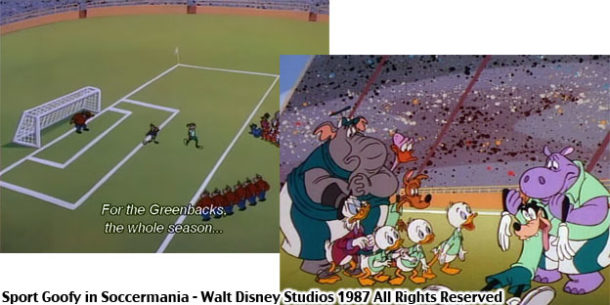
The road to Disney Sports Soccer was a long time coming. Disney was synonymous with many things: cartoons, music, and family features being at the top of most lists. Disney and sports also went hand-in-hand. The tradition started in 1941 with the Art of Skiing. The first in a series of cartoons featuring Goofy trying to demonstrate a pastime. Since that time he has been in more than a dozen “How to” videos, and our favorite cartoon stuntman has earned the nickname Sport Goofy. The last movie featuring Sport Goofy was called Soccermania. It debuted on TV in 1987 and featured Scrooge McDuck bankrolling his nephew’s soccer club. Goofy was the star player and central to a contest against the Beagle Boys. The Sport Goofy films were an invaluable resource when creating new assets for the game.
In the early days, video game animators were not far removed from their television and movie counterparts. They would create 2D pixel art for a game and animate them one frame at a time in a traditional method. Of course, they substituted computer screens for layers of plastic cells. As technology changed so did the roles of the animators. Animation now demanded that the same artists also move to 3D. Modeling the various cartoon mascots in 3D introduced a whole slew of new challenges different from traditional art.
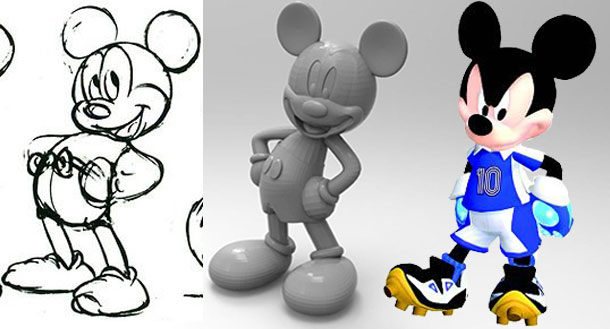
The team at Disney Interactive had to accurately recreate how a cartoon body would move, respond and react across different disciplines. It was one thing to do this in a sketch or painting. but an entirely different beast when creating a 3D object. Cartoon bodies are far more pliable than their human counterparts. They have to be able to “stretch and squash” in the old style of animation, yet still have a sense of weight and depth. In this regard, Disney Interactive and Konami went above and beyond. Each of the mascots and supporting characters featured in the series were built from scratch. Their geometry, their skeletons and costumes were all original. They easily matched their 2D counterparts and were some of the most beautiful Disney characters ever to appear in a game. The other challenge that the developers had to solve was how would these characters be organized. How would teams be built? What positions would each character play? What was the underlying narrative for the game? Disney Interactive didn’t have to look far for inspiration.

The consumer goods part of the company had been making sports jerseys featuring the mascots for decades. Baseball, hockey, basketball and beyond, there was a jersey for every sport. The shirts featured the icons in various poses, wearing certain colors, they all looked like actual team graphics. The designers were very clever, putting in a name or year that reflected some insight into the character. Mickey Mouse, for example, might end up on the jersey for the Steamboats and his number would be 28. These things signaled his breakout appearance in the 1928 film Steamboat Willie. Other jerseys might feature Mickey in a wizard robe, with the number 40 as the logo for the Sorcerers, a nod to his appearance in the 1940 film Fantasia. Many team names were based on the temperament of certain characters. Donald was a tough mascot, Goofy was athletic, and even newer icons like Stitch and Jack Sparrow had their own personalities reflected on a jersey. Konami and Disney Interactive created entirely new teams, each with its own color set, logo, and theme that followed each character through the various sports games.

This version of the Disney universe featured each cartoon icon as a marquee player for their own franchise. There was a lot of forethought as to the names of the teams and what colors would be assigned to them. These things were revisited in every game in the DSN universe so that they became consistent. Mickey Mouse led the Superstars, Minnie had the Charmers, Donald had the Seaducks, Mortimer had the Imperials, the Big Bad Wolf had the Wolfgangs, Goofy had the SpaceNuts, Daisy had the Belles and Pete had the Steamrollers. The best level of insight the studio had with the mascots was seen with the Seaducks.
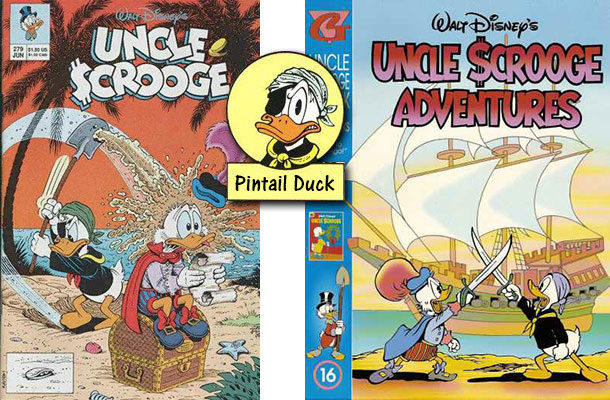
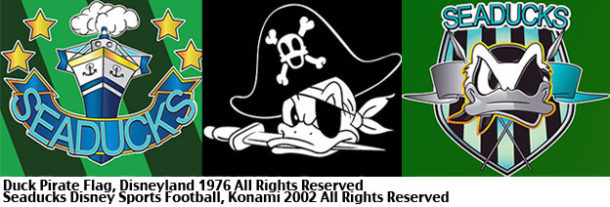
Originally Donald Duck’s team was going to feature a battleship but it was changed it to a duck wearing an eye patch. This character was actually a part of Disney lore. Legendary cartoonists Carl Barks and Don Rosa established that one of Donald Duck’s ancestors was an eyepatch-wearing pirate named Pintail Duck. A version of this character appeared on a black flag that Disneyland sold in the mid 1970’s in Adventureland / New Orleans Square. Parents complained that the pirate duck with a dagger in its bill was too menacing so the flag was pulled. I’m sure you thought that Disneyland editing pirate behavior was a new concept! The final version of the Seaducks logo melded the colors of the battleship with Pintail. I considered it the greatest team mascot of all time.
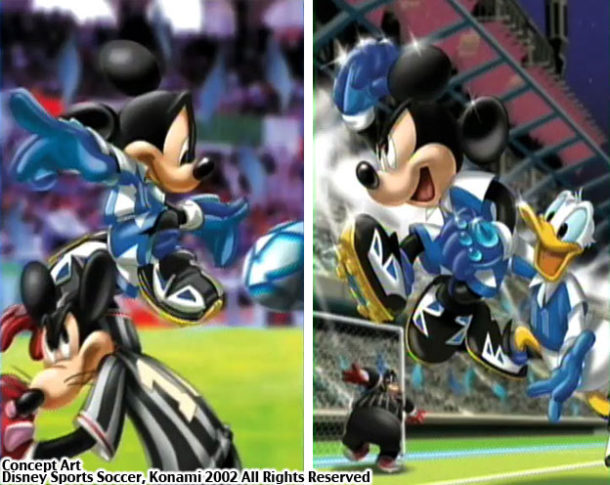
Every team in the series also had their own fans sitting in the bleachers. They wore team colors and could be seen waving team flags in each venue. The end of each Championship season was celebrated with an All-Star match. Mickey Mouse had his own all-star team, consisting of Minnie, Donald, Daisy and Goofy. They had a blue color uniform with a little crown sewn into the sleeve to designate their status. This was a nod to real-world professional teams. National uniforms in FIFA (the organizing group in International play) had little stars sewn above each team patch to designate the number of World Cups won by that nation. Pete was the captain of the Steamrollers but also the captain of the rival All-Star team featuring Mortimer and the Big Bad Wolf. Their uniforms were black and gray striped, again with a little crown logo. All of the teams in the series were highlighted in the introductory animation for that game.
Konami needed to fill out an entire roster for each club. This included alternates, making it up to two dozen positions to fill. It was impossible to license that many big-name Disney characters and have them ready for the debut of the new Nintendo console. Dozens of voice actors would have to record hundreds of lines, new models would have to be created, animated, and made playable. So instead Konami created generic animal characters that complimented the star player, and none of them had speaking parts. Pete was a big and burly character, his team was balanced out with enormous hogs. Goofy being tall and slim had lanky dalmatians in his lineup. Mickey was short and swift so had small blue fox teammates. The Belle’s had brown roosters, the Wolfgangs were made up of wolves, the Charmers had small pink bunnies, the Seaducks had white roosters and the Imperials had dobermans. Each of these teammates had their own personalities which showed up during the celebration animations. Pete’s team was filled with brutes that mocked the competition, Goofy’s were playful and Minnie danced with her bunny friends.
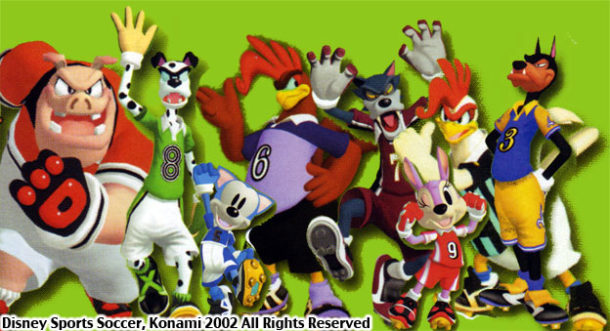
None of these star players or their teams played exactly alike. Each character and team had their own strengths and weaknesses. Mickey was a good all-around player but didn’t excel in one area. His Superstars were a good choice for beginners. Donald was by far the fastest player with the fastest team. The trade off for Donald was that his team didn’t have the highest stamina. His team was very fast in the first half, average in the second half and much slower during extra time. Pete was about power and defense, he and his hogs didn’t have speed or ball control on their side but they could kick and pass the ball very far and very quickly. Mortimer was excellent at dribbling and could almost dance around the competition. Audiences that beat the various tournaments earned points that allowed them to upgrade the stats on their players. Let me just say that the Seaducks with high stamina were almost unstoppable. The creators at Disney Interactive were obsessed with minutiae. Every team in the Disney Sports series had its own role-players and sharp-eyed fans would see familiar names assigned to the rest of the squad. Mickey’s Superstars had players named Walt, Roy and Wayne in their roster. Every team included their own nod to the history of the company.

The positions given to each main character on their respective All-Star teams were appropriate to their abilities. Some were excellent strikers so they were placed as forwards, those that controlled the ball well were in center position and defensive powerhouses were in the backfield. Players could unlock each of the All-Star teams if they beat them once each during the Championship Mode, i.e. only a good guy team could unlock a bad guy team and vice-versa. Creating a game that made each character unique and playable required an exceptional level of planning from both sides of the Pacific. Balancing massive characters against small characters without breaking the pace of the game must have taken some effort. With all these personalities you might imagine that it would be chaos on the pitch. Well, that wasn’t really the case. Disney Sports Soccer observed all of the rules of actual soccer, including out-of-bounds, offsides, free kicks and penalties. It even had a special guest to ensure fair play.
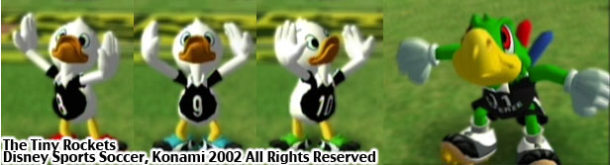
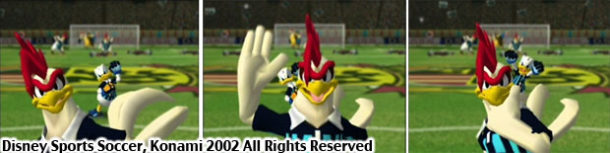
Jose Carioca, who you might remember from the Three Caballeros, was the field referee. No Disney character could be more qualified to cover soccer than the Brazilian legend. He followed the action on the pitch and was accompanied by the line referees Huey, Dewey and Louie. The triplets ran along the sidelines, one holding a flag, one holding a pair of binoculars and one holding a magnifying glass. They made sure nobody went out of bounds. Konami had a surprise in store for audiences. If they managed to unlock every magic boot in the game then they also unlocked the refs as playable characters. This team was called the Tiny Rockets. With Jose as captain, they were exceptionally good. The licensed characters were the only ones allowed to use magic boots in the game and since the Tiny Rockets had four star members they could use four boots. Second only to Mickey’s All-Stars as the most powerful team in the game. Konami managed to create a logo for the squad but didn’t have their team uniforms ready when the game was published. Because of this the Tiny Rockets played in their ref costumes. An actual Tiny Rockets uniform would appear in future DSN games. With the teams in place, Konami set about giving them a place to play. We will explore the scene-stealing arenas in the next blog. Until then please leave a question or comment and I’ll try to get back to you.
Get Caught Up:
The Disney Game Franchise You Don’t Remember – Part 1
The Disney Game Franchise You Don’t Remember – Part 2
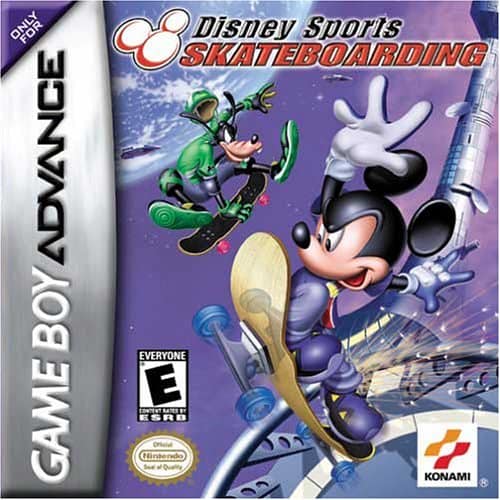
You can find these games on Amazon.com with this helper link or by clicking on the image below:
Please help support MiceChat by clicking here! Michelle and I are on Patreon, and support AITAF and Ryman Arts.