



Time for another addition of “Disney Notes” – a look at the music and sounds of Disney.
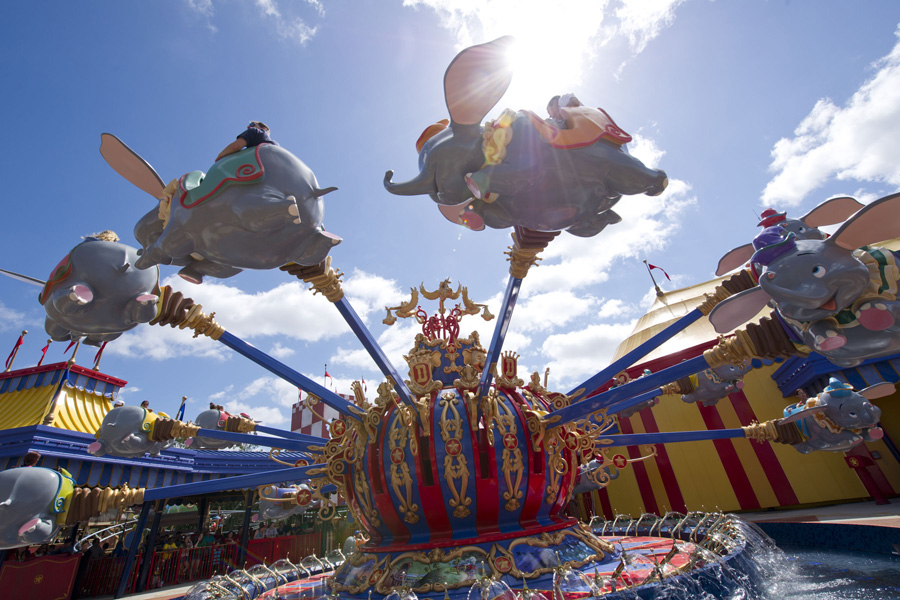
One wonders whether the mass of humanity waiting in a line line for the “Dumbo” attraction at a Disney park ever stops to think about the movie itself. Perhaps singing some of the Dumbo songs would help the line to move a little bit faster? It is sad, but true, that most of those in line – parents and children alike – are probably not even interested in one of Disney’s most important animated films.
In fact, the film Dumbo stands in Disney history as one of the most ironic productions ever attempted. It was the shortest of all Disney features because the purpose of the film was mostly to cover for great financial losses with Pinocchio and Fantasia. The concern for quality was far less, and the plot was considered too simple to be memorable. Perhaps most ironic, however, was the fact that the film suffered from a crippling animator’s strike at the Disney studios, and to most in Hollywood it seemed nearly inevitable that the box office results would be completely disastrous.

Against this backdrop, Dumbo became a critically acclaimed and highly profitable film, keeping the Disney Company afloat and providing an impetus for the features of the late 40’s and 50’s. Dumbo stood alongside of Snow White and the Seven Dwarfs as the only feature films to that date that would see a profit.

The song “When I See an Elephant Fly” is the most important song of the film if only because the clever lyrics depict two crows singing about the impossibility of an elephant in flight, as if to mock Timothy Mouse and his claim that it actually happened. On the one hand you have those who believe the impossible and know in their hearts that it happened. On the other hand, you have the doubters and cynics who stand by and discredit the others. In a very real sense, this was the life of Walt Disney. While dealing with a shocking strike that would claim the social closeness of the Disney Studios forever, and at the same time handling the criticisms of those who claimed the studio would not survive, Walt stood out as a Timothy Mouse giving homage to what the studio has already accomplished and looking with high expectations toward the future of Disney productions.
It is highly proper, then, that this simple 64-minute film about an elephant who overcomes difficulties would be a boon to Walt Disney and his struggling company. These types of ironies would be similar to many others in Walt’s life as his art would always find a kinship with his life.